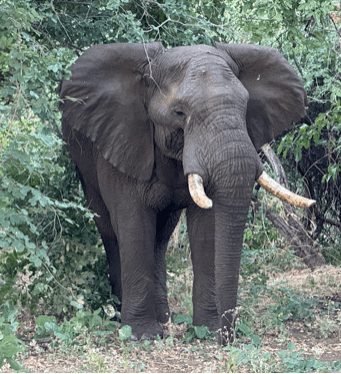
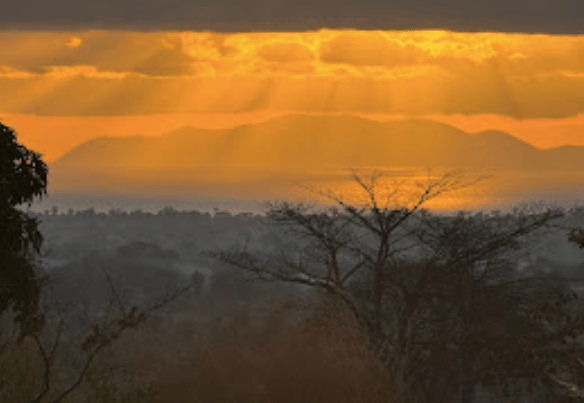
Camera traps or trail cams are an essential tool in Wildlife Action Group’s (WAG) daily operations. They remotely take pictures of what passes in front of them and store them on a memory card which can then be downloaded to a computer for storage and analysis. They are an essential tool in monitoring wildlife and illegal activity in the forest reserves.
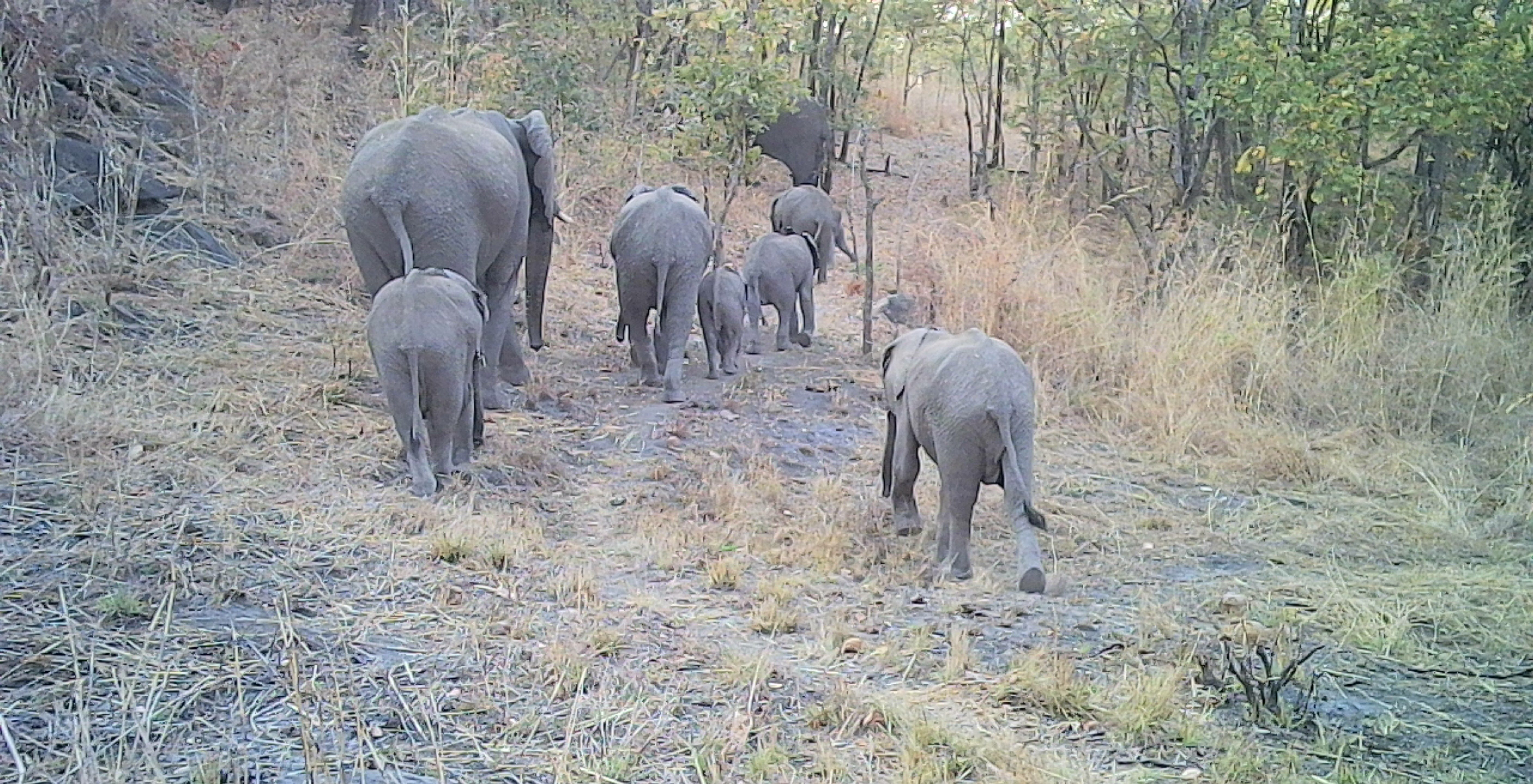
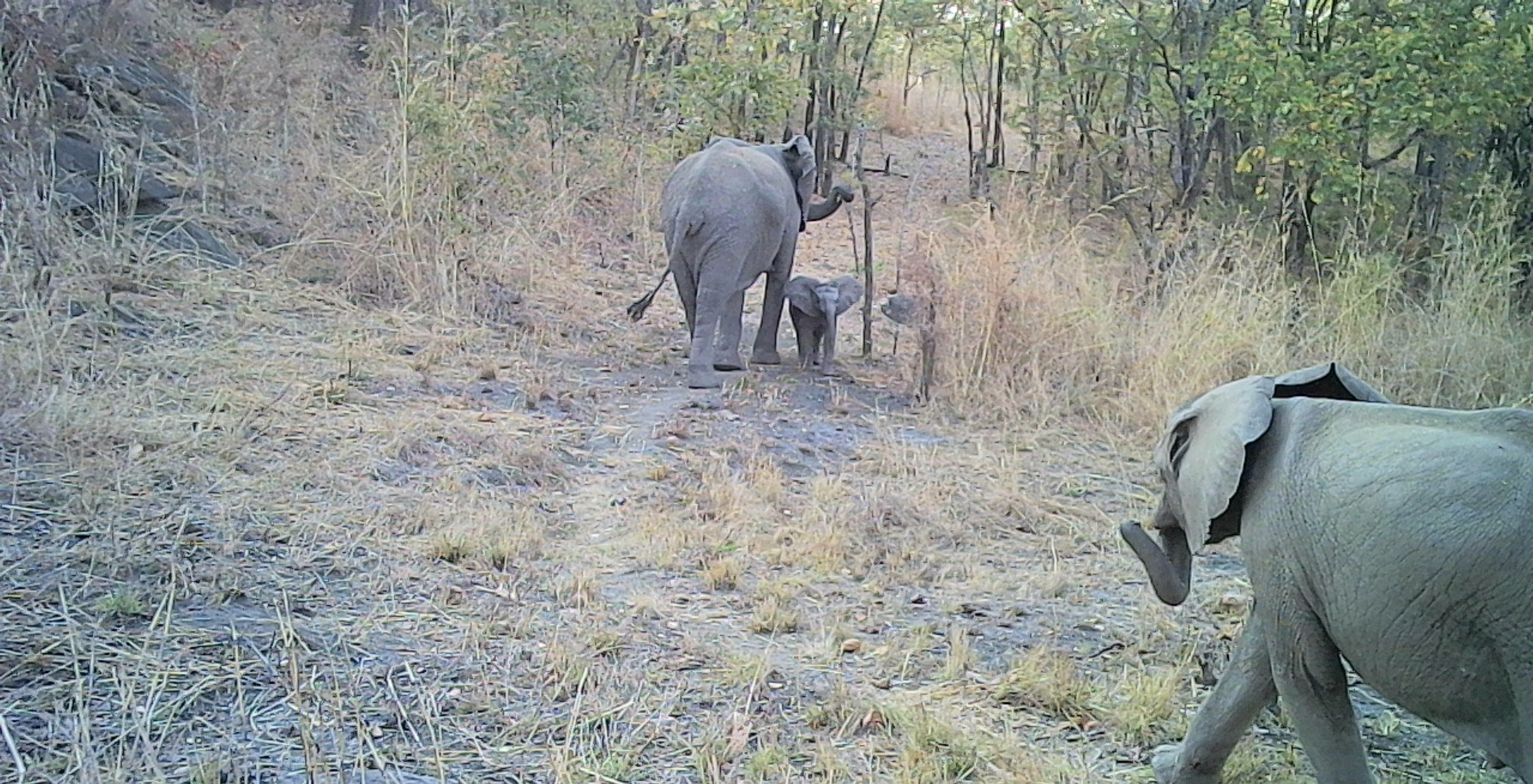
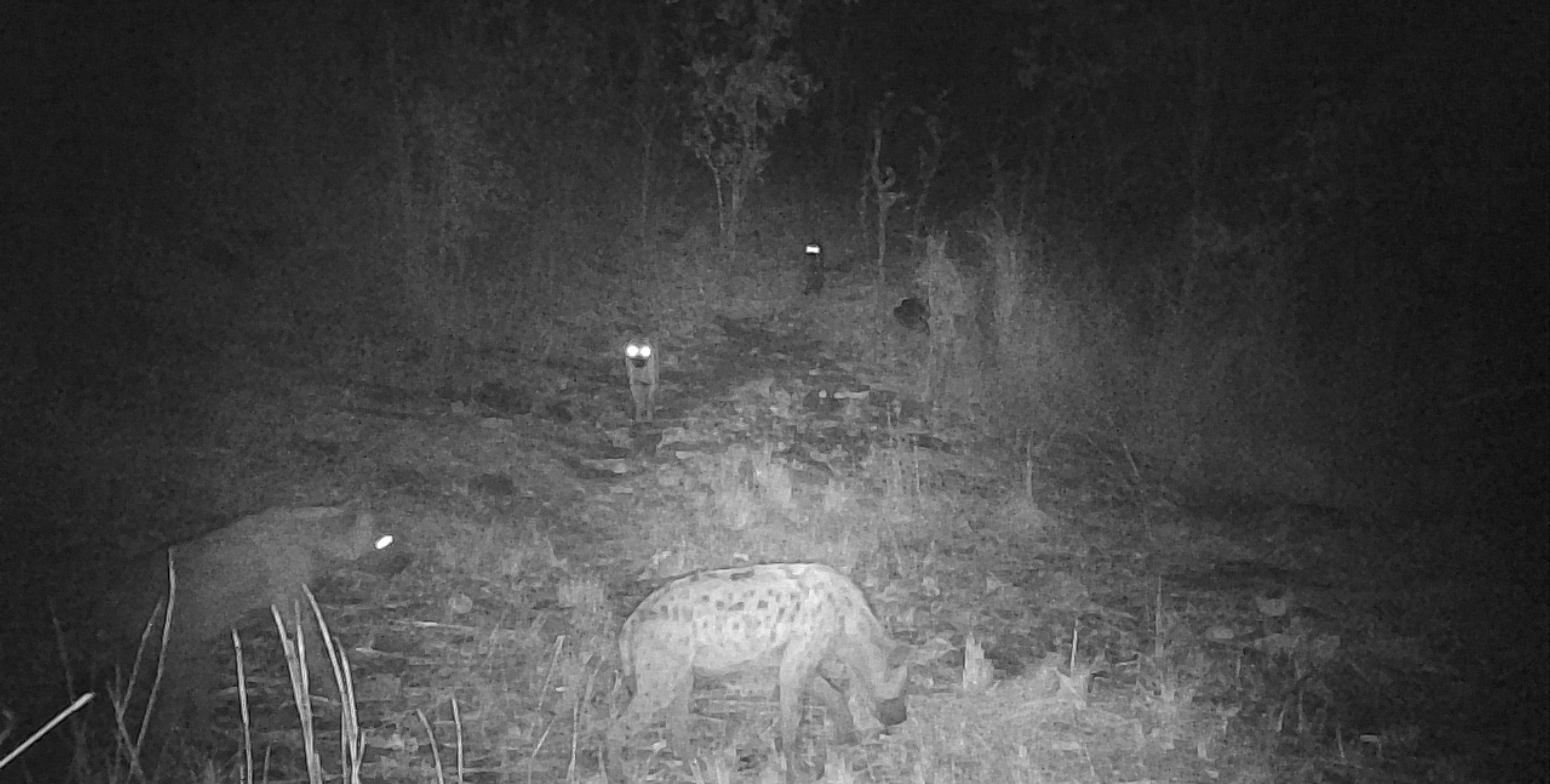
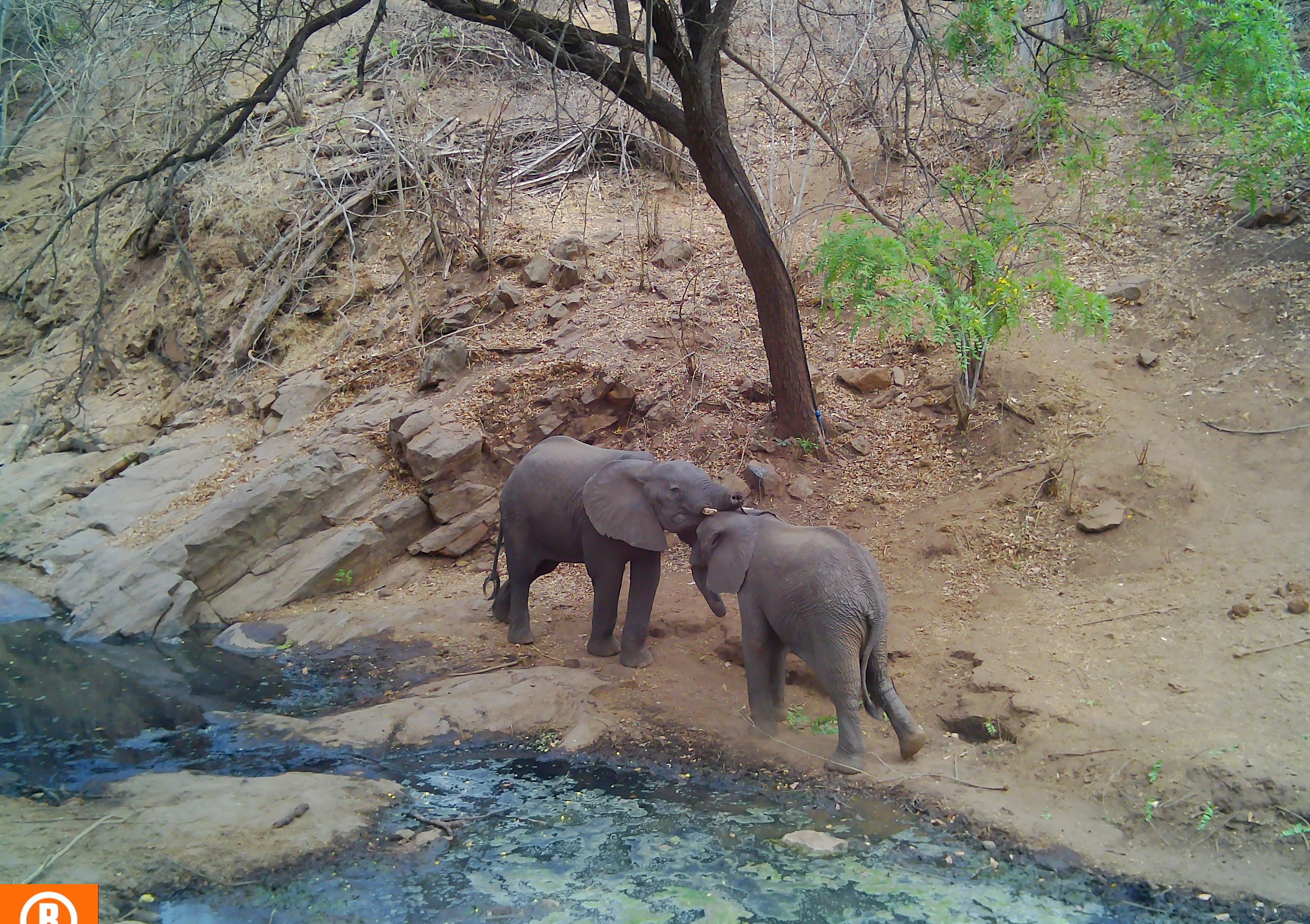
WAG’s old camera traps were outdated and in some cases inoperable so Elefence stepped up and purchased 10 new cameras which were then delivered in person to WAG in the spring of 2025. In addition to the cameras Elefence provided memory cards and rechargeable batteries for the cameras. The extra memory cards and batteries could be swapped out in the field so the cameras would not have to be brought to the office to download the pictures. In addition the new cams had a longer range of detection and infrared ability to take pictures in the dark. The ten new cameras gave WAG a much greater surveillance capability for their wildlife surveys and forest monitoring and greatly aided the rangers in their field operations. Following are some photos from the cams.
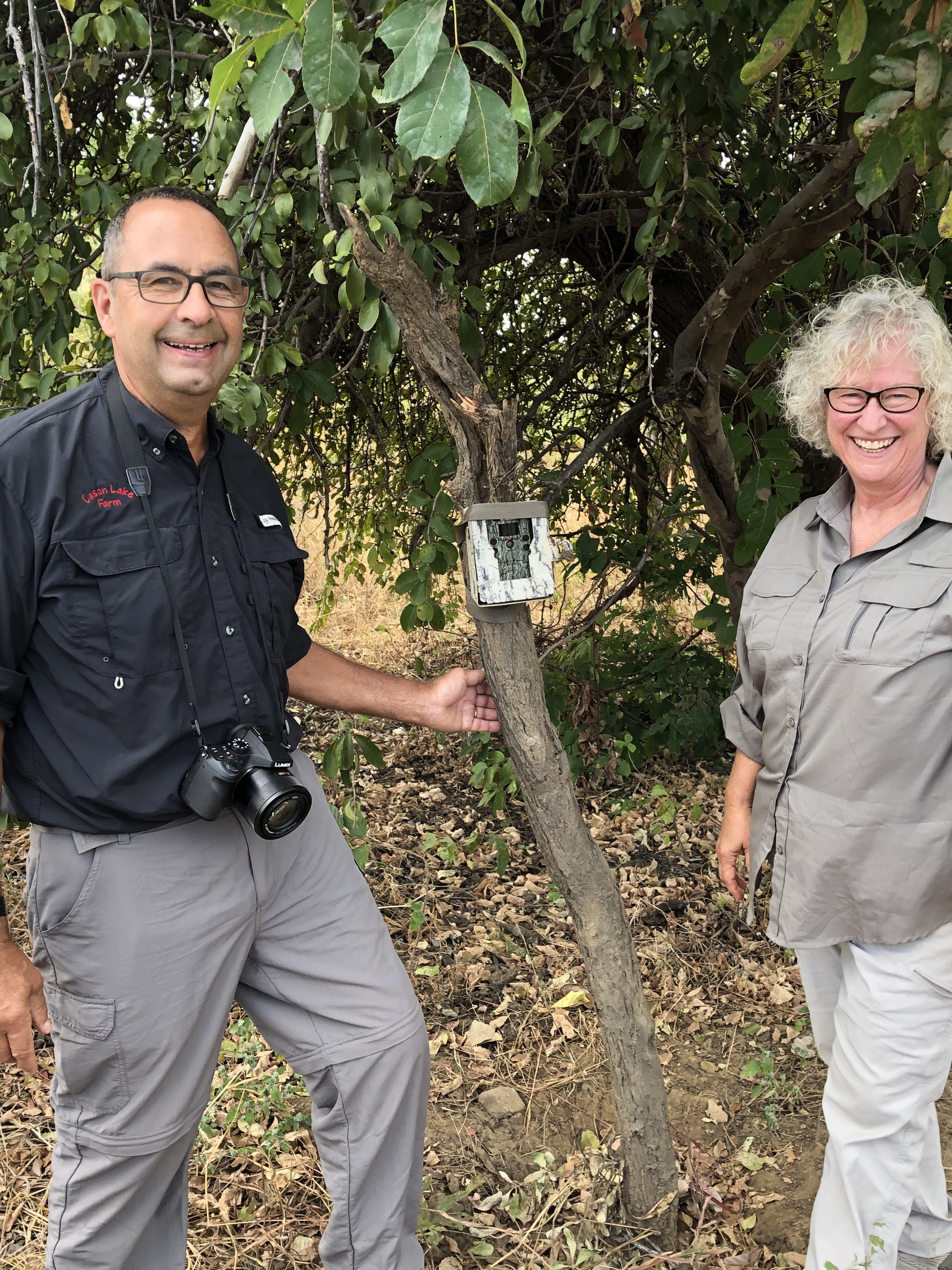
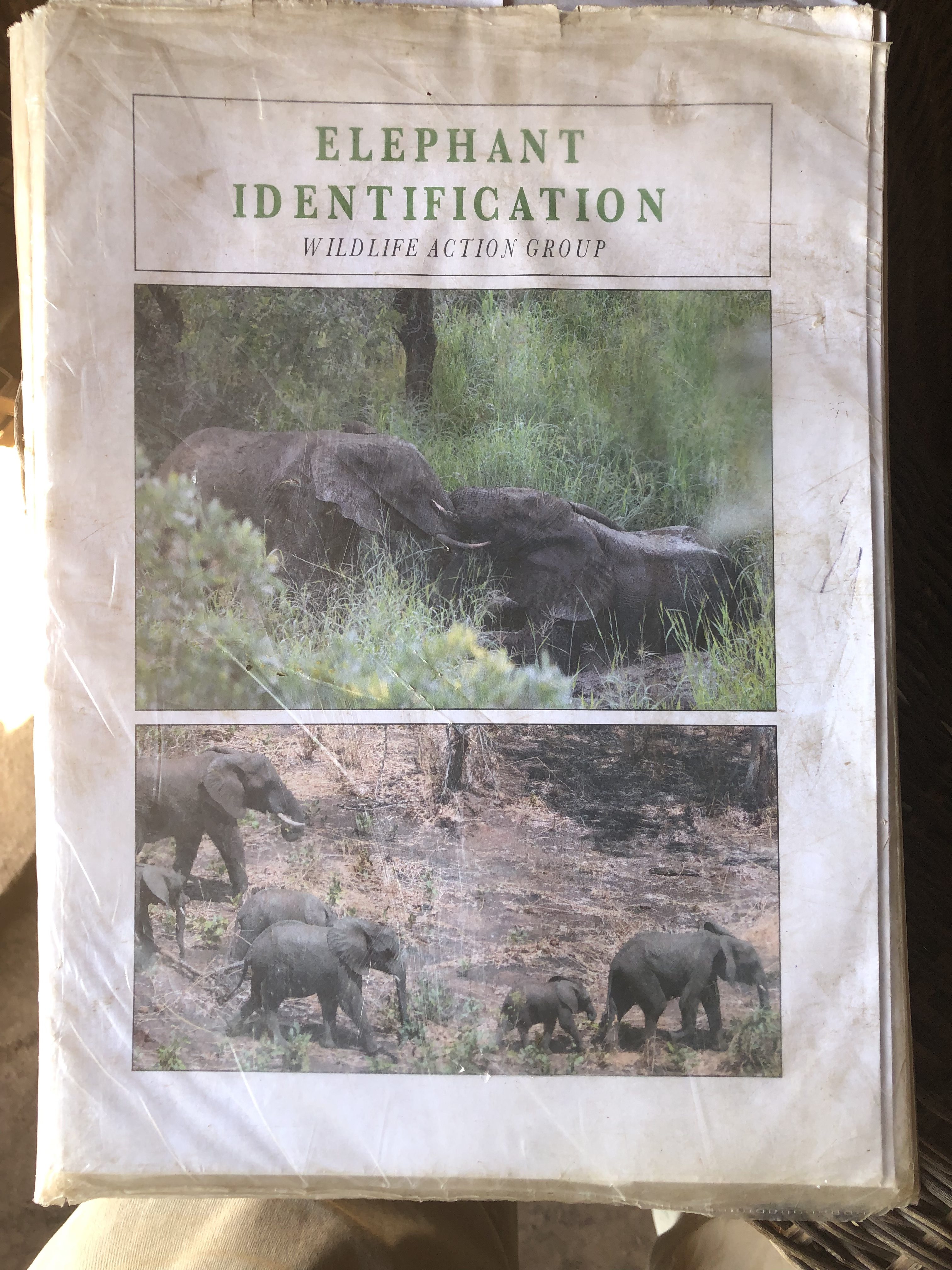
Elephant family. The number of young elephants points to a healthy population. In lean times elephants will limit reproduction of the herd to preserve the health of the whole group.Hyenas being photographed after dark.Kathy & Greg Housel, two of our generous supporters who helped deliver the camera traps.C[P] R0S9 T89F:P0000 CORE_CAM M3WAG keeps detailed records of many animals, especially elephants, in the reserves. Elephants can be identified by their physical characteristics, primarily by their ears. This is essential to determine travel patterns and record any elephants which escape the reserves and cause trouble.
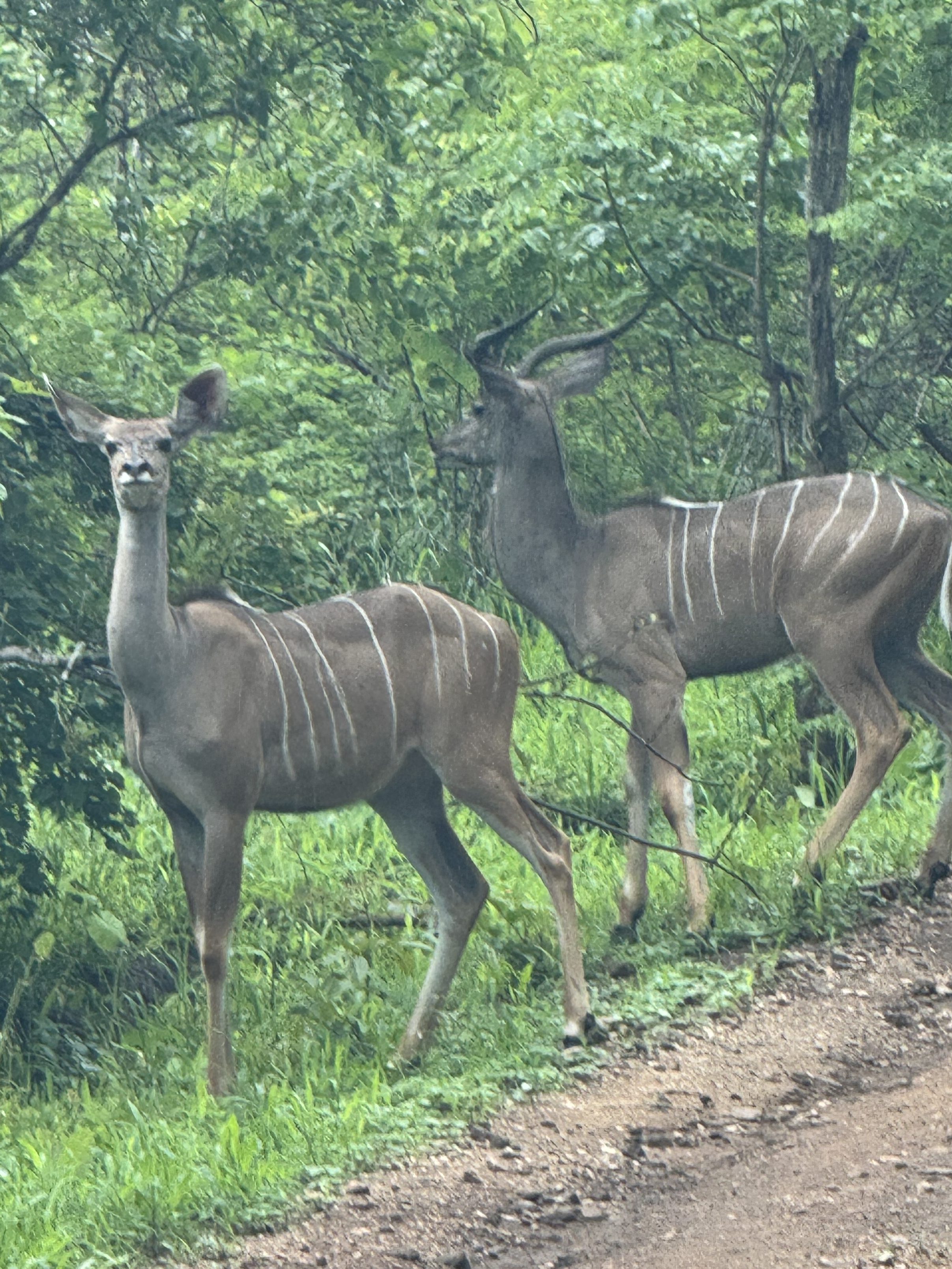
Kudu
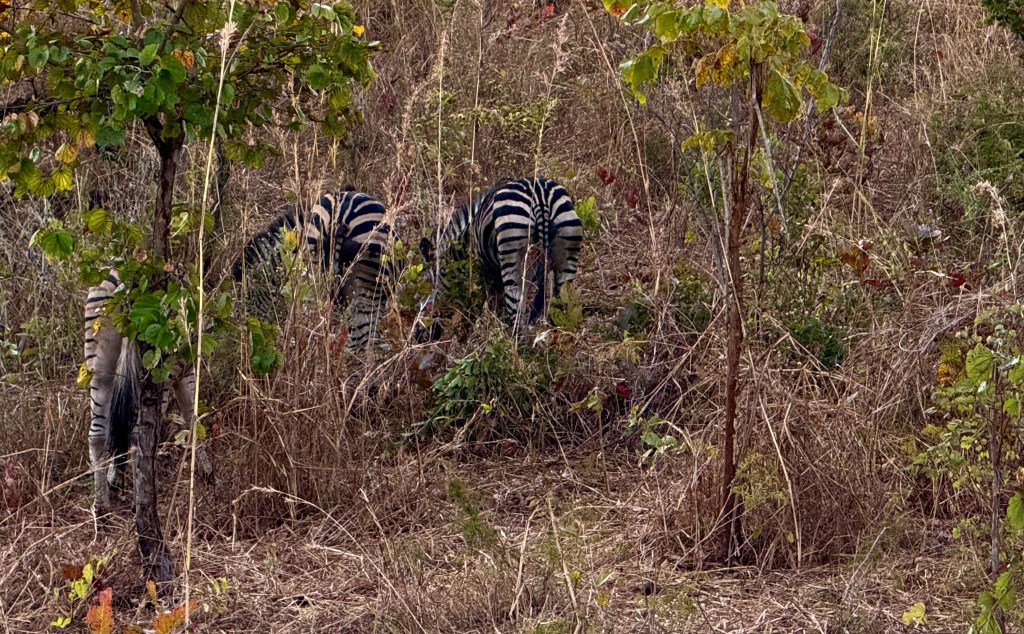
Zebra. The correct pronunciation is with a short e, not Zeeebra.
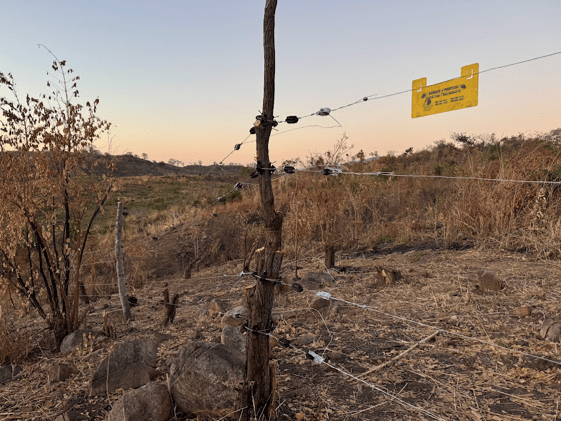
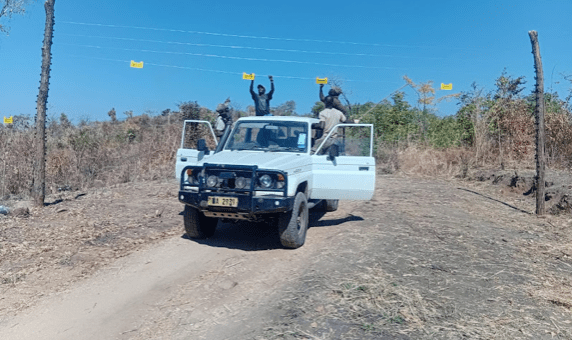
After several months of delays due to weather, logistics, and bureaucracy our fence project has been completed. This was made possible through the dedication of Wildlife Action Group and funds provided by the Elephant Protection Initiative Fund and Elefence International Inc. EPIF purchased the materials and Elefence paid for the labor, freight and site survey. WAG did all the groundwork and all the coordination with the local villages involved. As you will see in the detailed report the installation of a fence provides mutual benefits for the people, wildlife and the forest. Our thanks go out to all the parties involved and especially our generous Elefence donors.
The Following is the report from Wildlife Action Group
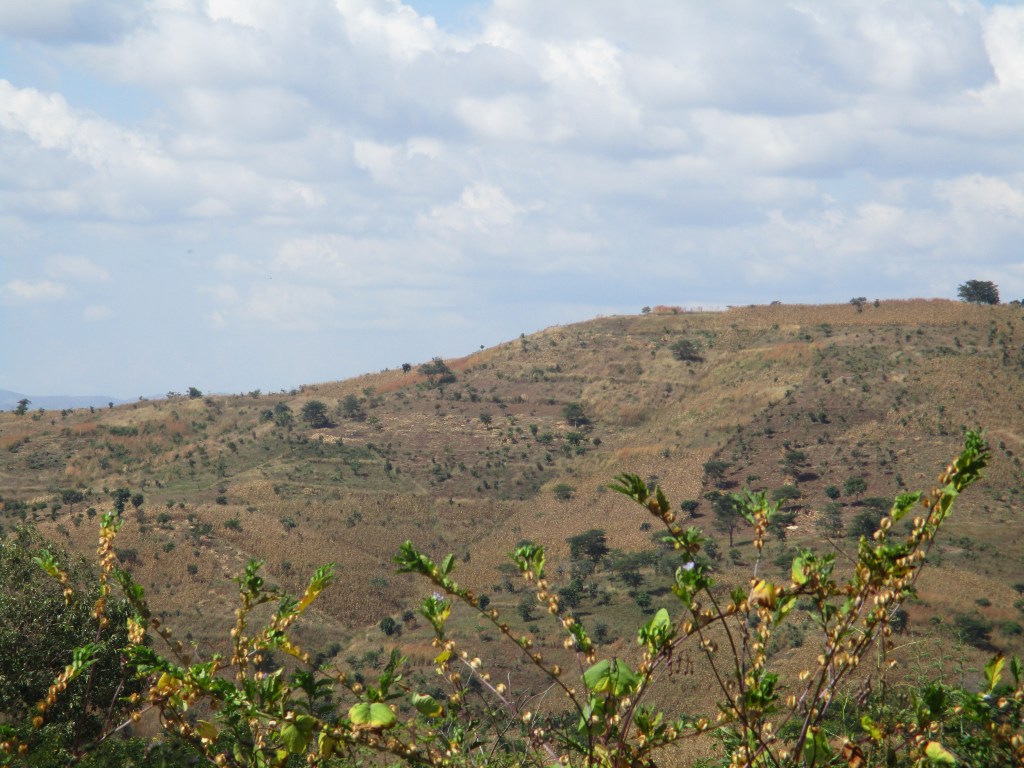
Project Overview Wildlife Action Group is pleased to report the successful completion of a new 10-kilometre extension of the solar-powered elephant deterrent fence, extending from Gravel area TA Kalbalambe to the end of the Kamzati Group Village Head (GVH) area. TA Kachindimoto in the south eastern areas of the Dedza Salima Escarpment Forest Reserve. This extension was undertaken following repeated requests from local communities and traditional leaders who had been experiencing persistent crop damage caused by elephants moving between the forest and surrounding farmland. The project represents another important milestone in reducing human-elephant conflict while strengthening the long-term protection of both local livelihoods and wildlife.
Community-Led Planning The project began with a series of meetings involving Traditional Authorities(TA), Group Village Heads(GVH), village heads (VH) and community representatives. During these discussions: Communities explained the increasing impact of elephant crop raiding. The proposed fence alignment was presented and discussed. Traditional leaders formally agreed to the project. Community members committed their support throughout construction. Following these meetings, Wildlife Action Group staff walked the entire proposed fence alignment together with community representatives and Officers from the Department of Forestry. This participatory approach ensured that all boundary lines were agreed upon before construction commenced and prevented future land ownership disputes. The level of cooperation received from local leaders and residents exceeded expectations. The project was warmly welcomed by every community visited, creating a strong sense of shared ownership from the outset.
Procurement of Materials Once the alignment had been agreed, specialised fence materials were ordered and imported from South Africa. This included: High-tensile fencing wire Solar energiser equipment ie panels, energizers Insulators and tensioners Electrical components required for a long-distance wildlife fence Equipment such as fence testers, cutters, lightening divertors Careful planning ensured all materials arrived before major construction activities commenced.
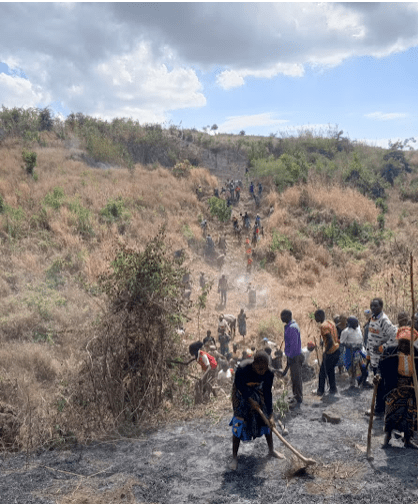
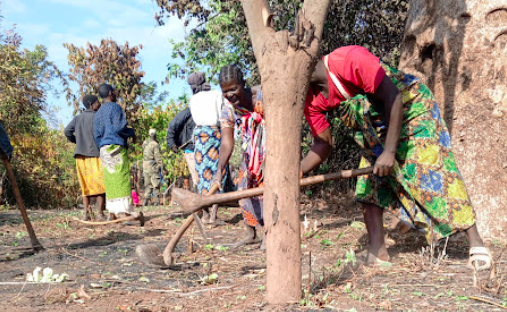
Community Employment One of the major achievements of this project was the level of local employment created. More than 480 community members were employed to clear the fence line before construction began. The employment programme deliberately maintained equal opportunities for both women and men, ensuring the economic benefits of the project were shared fairly throughout the surrounding villages. The work provided valuable short-term income while simultaneously creating local ownership of the project.
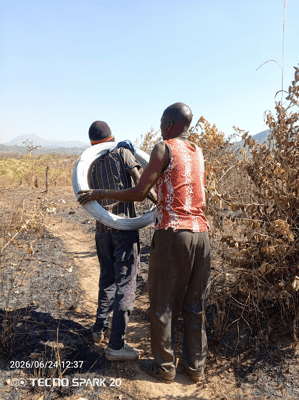
Fence Construction Following completion of line clearing, Wildlife Action Group construction teams began installing the fence. Community members continued to work alongside our technical staff throughout construction, assisting with installation, wire placement and general site works. The result is a continuous 10-kilometre solar-powered elephant deterrent fence designed specifically to prevent elephants from entering agricultural land while allowing wildlife to continue using the protected forest.
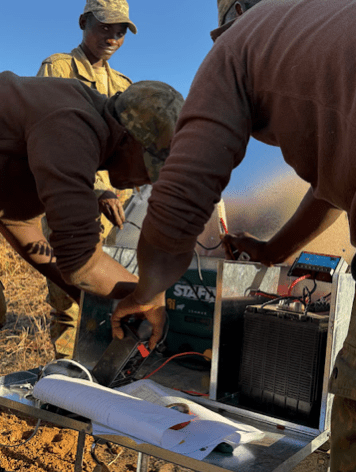
Solar Power System A secure solar energiser system has been installed approximately at the midpoint of the fence. Positioning the energiser centrally enables electrical current to travel efficiently in both directions, maintaining consistent fence voltage across the entire length. The fence has undergone comprehensive testing and inspection. All faults identified during commissioning were corrected immediately, ensuring the system is now fully operational.
Security Camp To support long-term fence management, a temporary field camp has been established. This facility provides accommodation and operational support while bricks are being produced for the construction of a permanent secure camp that will become the long-term operational base for fence maintenance staff. The permanent camp will significantly improve security for the fence infrastructure while allowing rapid response to any faults or wildlife incidents.
Local Employment and Capacity Building Three full-time staff members have now been employed specifically for this fence. They are currently undergoing practical training in: Fence maintenance Electrical fault detection Vegetation management Solar energiser operation Daily monitoring and inspection and reporting Rapid repair procedures Building local technical capacity ensures the fence can be maintained effectively for many years.
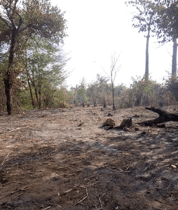
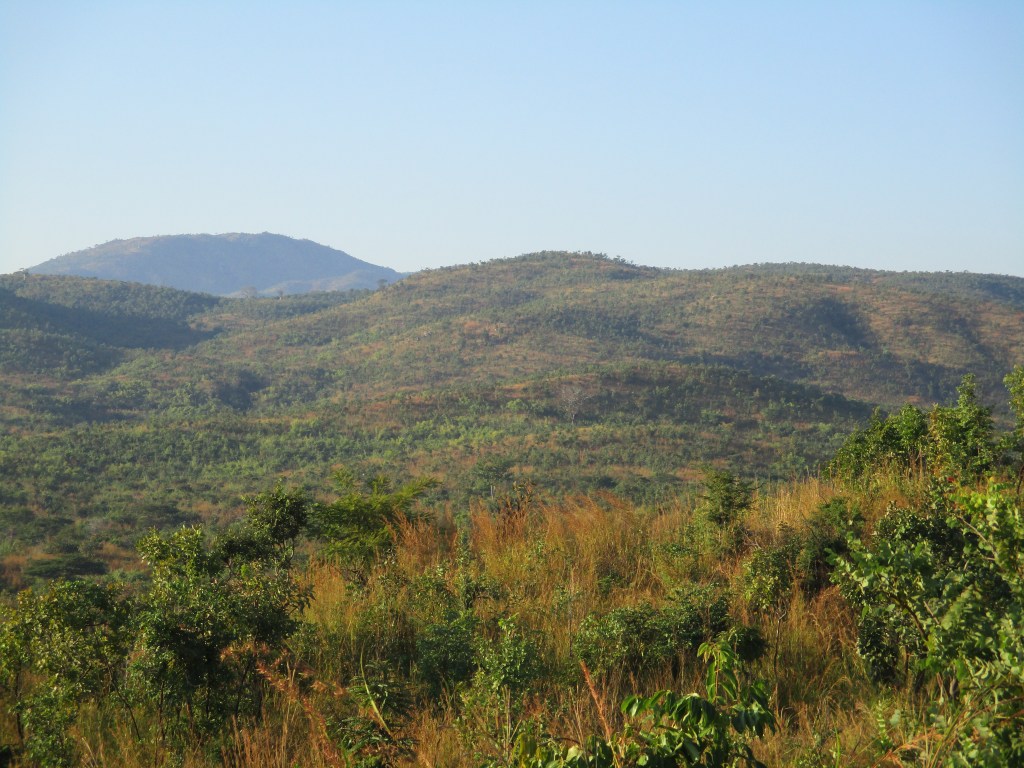
Conservation Impact Beyond reducing human-elephant conflict, the project has already generated significant conservation benefits. During construction and boundary inspections it became clear that sections of protected forest land adjacent to the new fence had been illegally occupied. As a result of establishing this clearly defined boundary, a substantial area of protected forest has now been reclaimed from illegal encroachment. Unfortunately, extensive evidence of environmental degradation was recorded along parts of the boundary, including: Significant forest clearance. Illegal agricultural cultivation within the protected forest. Habitat destruction close to the forest edge. The fence now provides a clearly identifiable protected area boundary that will greatly assist future management and enforcement efforts and there is a good chance the forest will regenerate naturally with good protection.
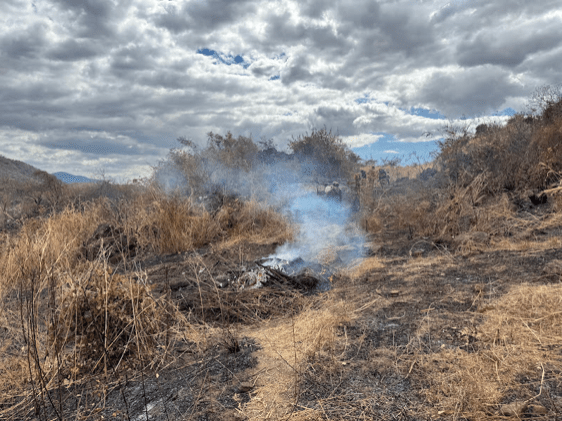
Above: The last charcoal oven found in the area and destroyed.
Strengthening Law Enforcement The completion of this fence extension allows Wildlife Action Group to expand its law enforcement presence further south than previously possible. With a secure physical boundary now in place, ranger patrols can focus greater effort on preventing: Illegal agricultural expansion. Illegal logging. Charcoal production. Poaching. Other forest crimes. Elephant protection The fence therefore serves both as a human-elephant conflict mitigation measure and as an important conservation management tool.
Wildlife Protection This section of forest supports a resident breeding herd of elephants throughout the year, together with a bachelor group of four young bulls. By reducing conflict with neighbouring communities, the fence significantly improves the long-term security of these elephants. Communities are less likely to experience crop losses, while elephants are able to remain within protected habitat, reducing the risk of retaliatory actions and dangerous encounters. This represents an important step towards long-term coexistence between people and wildlife.
Community Response Perhaps the greatest success of this project has been the extraordinary level of community support. Throughout planning and construction, local leaders and residents demonstrated enthusiasm, cooperation and commitment. The atmosphere remained positive from beginning to end, with communities actively participating in decision-making, construction and ongoing management discussions. This strong partnership provides an excellent foundation for the long-term success and sustainability of the fence.
Looking Ahead The next phase of work will focus on: Constructing the permanent ranger camp. Completing staff training. Establishing routine maintenance schedules. Continued community engagement and creation of income generating projects Monitoring elephant movements and crop-raiding incidents. Strengthening protection of reclaimed forest areas. The project demonstrates how community partnership, practical conservation and sustainable infrastructure can work together to reduce conflict, improve livelihoods and protect wildlife. It is important to note that the area south of this fence still has no fence which means elephants can still walk along this fenceline and out into community lands, so there is a need to continue to secure funding to continue to extend the solar fence.
Thank You This achievement would not have been possible without the generous support of Elephant Protection Initiative Foundation and Elefence International who has been key to the ongoing building of fences around both Thuma and Dedza Salima Escarpment Forests. Your investment has delivered tangible benefits for both people and wildlife by reducing human-elephant conflict, creating employment, strengthening forest protection, expanding ranger operations and securing vital habitat for one of Malawi’s most important elephant populations. On behalf of Wildlife Action Group, the traditional leaders and the surrounding communities, we extend our sincere gratitude for making this project possible.
The Ancient Giants of the Escarpment by Wildlife Action Group, Malawi.
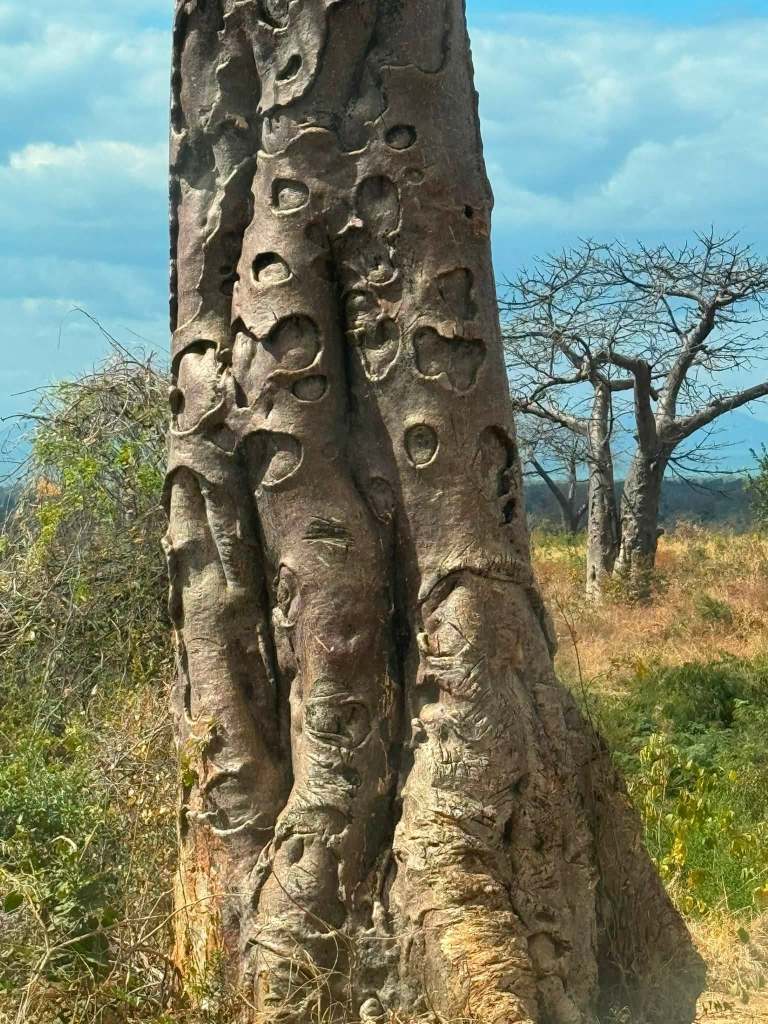
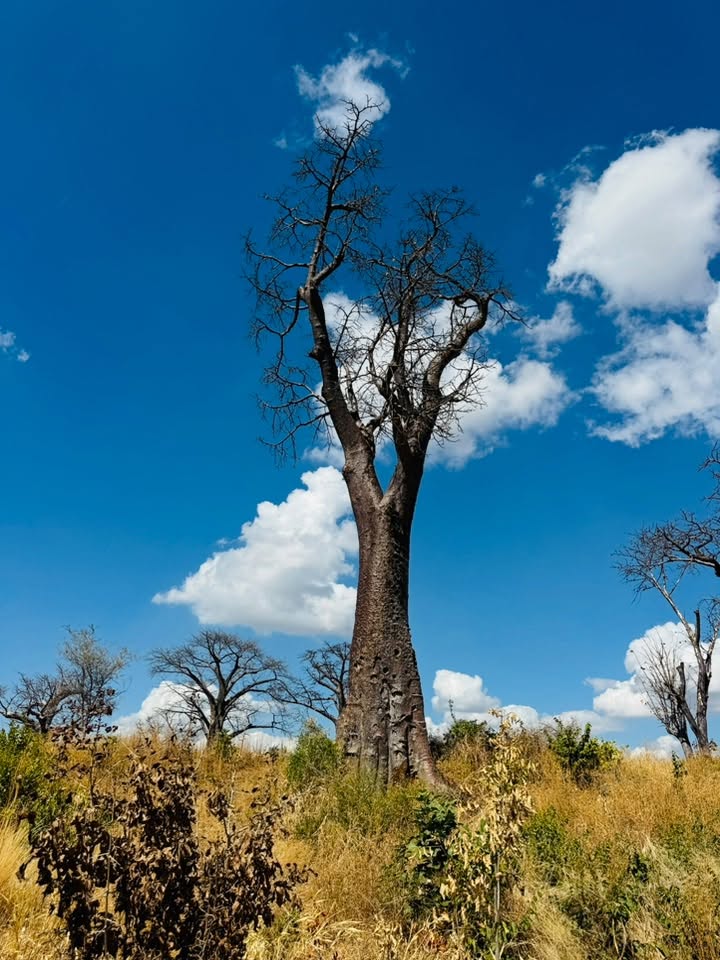
There is something truly magical about the magnificent baobab trees scattered across the Dedza–Salima Escarpment. No two are ever the same. Like people, each has its own shape, character, and personality. Some stand tall and proud, others are twisted by time, while some grow together like families that have shared centuries side by side. Whenever I stand beneath one, I can’t help but wonder… if only they could talk. These silent giants have watched generations come and go. They have witnessed changing seasons, wildlife, villages growing, old traditions, celebrations, hardships, and history unfolding around them. Long before roads, vehicles, or even many of today’s communities existed, these remarkable trees were already standing here. Baobabs are among Africa’s most extraordinary trees:
🌿 They can live for well over 1,000 years, with some believed to be more than 2,000 years old. 🌿 Their massive trunks store thousands of litres of water, helping them survive long droughts. 🌿 Their fruit, often called the “superfruit,” is rich in vitamin C, fibre, and antioxidants. 🌿 Their flowers bloom for just a single night and are pollinated mainly by fruit bats. 🌿 Almost every part of the tree has been used by people for food, medicine, fibre, and shelter.
The baobab is often called “The Tree of Life”—and when you stand among these ancient giants on the escarpment, it’s easy to understand why. We are incredibly fortunate that the Dedza–Salima Escarpment still holds these living monuments. They remind us that conservation isn’t just about protecting wildlife—it’s also about preserving the ancient landscapes and natural heritage that connect us to the past and inspire future generations. May these remarkable trees continue to stand watch for centuries to come.
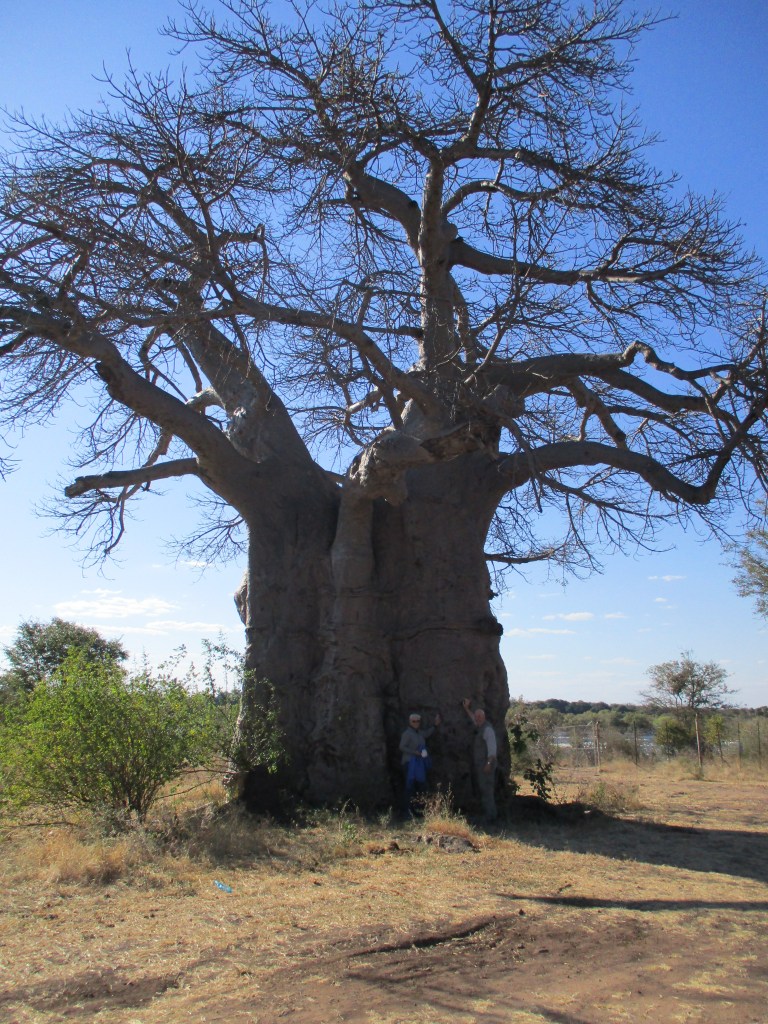
The Baobab is often called ‘The upside down tree’ and it is easy to see why as that is how it looks when its leaves fall off. There are several tales about why the tree is this way but the most common is that the tree was very proud and boastful about its beauty. The gods became angry at its arrogance so they uprooted it and planted it upside down.
Just to give you an idea about how massive these trees can grow this is Paula and I standing beside one.
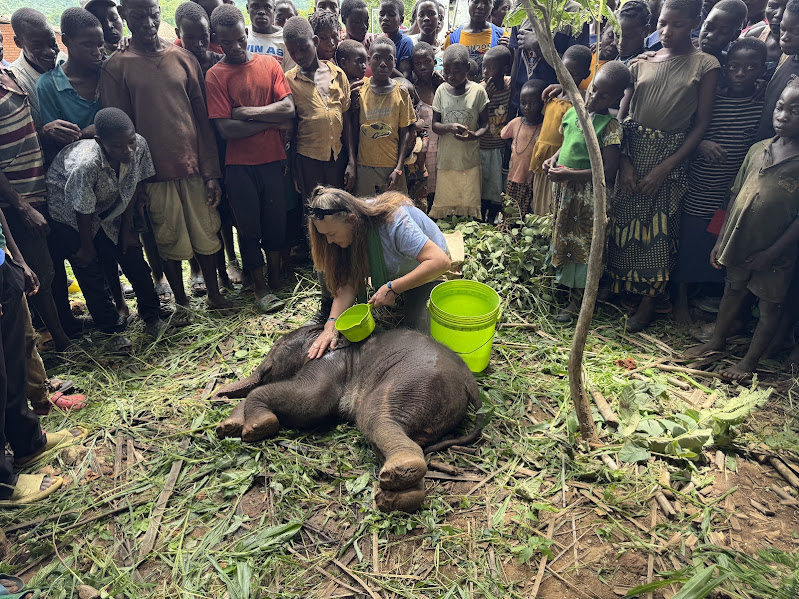
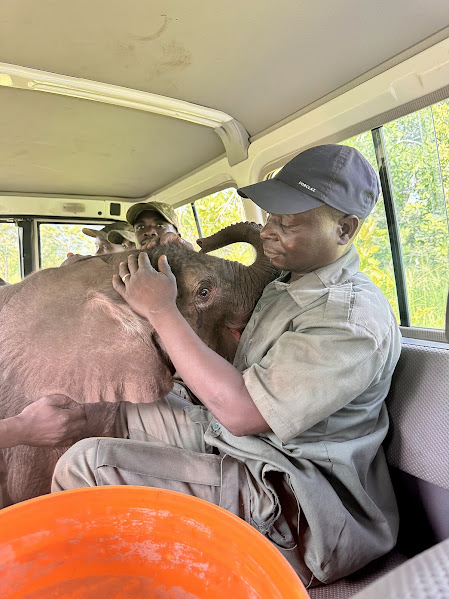
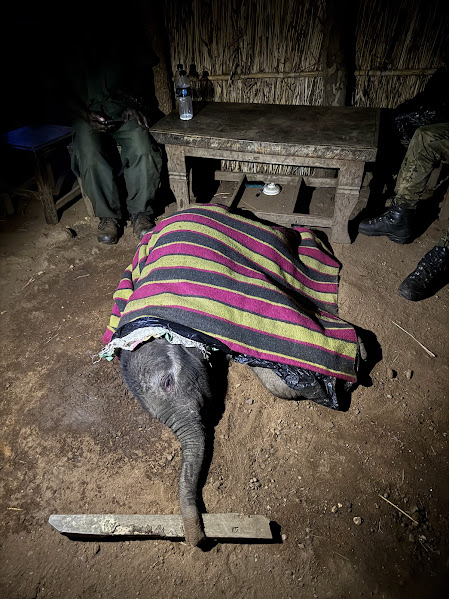
In mid January a baby elephant was swept into a river which was swollen from the recent rains. It was quickly washed away from its mother who could not get to it. Fortunately a group of the local villagers were able to pull it from the river but it was exhausted and in bad shape. They immediately contacted Wildlife Action Group who came quickly to take care of the baby. Baby ellies are very hard to raise and Lynn knew they had very limited time to bring it back to health. The first thought was to get it back to the mother as soon as possible but locating the correct herd and mother was not successful. Lynn went into action and immediately contacted several people who had the specific knowledge on what needed to be done. The baby is currently still in poor condition and recovery is far from guaranteed. Following is Lynn’s recent update to us.
HI Dick Sorry this is a generic update for you as we have so many people wanting to know At present, the calf remains in a fragile and critical early-stage condition. She is experiencing ongoing difficulty with feeding and has been suffering from episodes of diarrhoea, which have made stabilization challenging. Her condition fluctuates on a daily basis, with periods of improvement followed by setbacks, which is not uncommon in neonate orphan elephants of her estimated age and size. The previously identified umbilical infection is currently being actively managed and appears to be under control at this time, though continued monitoring remains essential. The calf is notably small and weak and very young, which further complicates her recovery and requires intensive, adaptive care. To ensure the highest possible standards of welfare and technical guidance, we have secured 24-hour access to expert support from expert and experienced wildlife rescue and elephant rehabilitation specialist Ms. Liz O’Brien, , who is providing continuous remote oversight and guidance. In addition, Game Rangers International(GRI) is available as backup support, including expert input from Dr Amanda Le Salb, should further intervention or consultation be required. On the ground, Baby Ellie is receiving round-the-clock care from a dedicated team of eight Malawian staff members, operating on a 24-hour rotation. These staff members are undergoing continuous hands-on training and mentorship and have demonstrated exceptional commitment, empathy, and responsiveness to the calf’s needs under difficult and emotionally demanding conditions. It is important to note that Baby Ellie remains in the very early days of care, and despite all reasonable and appropriate interventions being applied, her prognosis remains guarded. As with all neonatal orphan wildlife cases, particularly elephants, outcomes can be unpredictable, and changes—both positive and negative—can occur rapidly.
All actions taken to date have been guided by animal welfare priorities, professional advice, and the best available knowledge under the circumstances Lynn
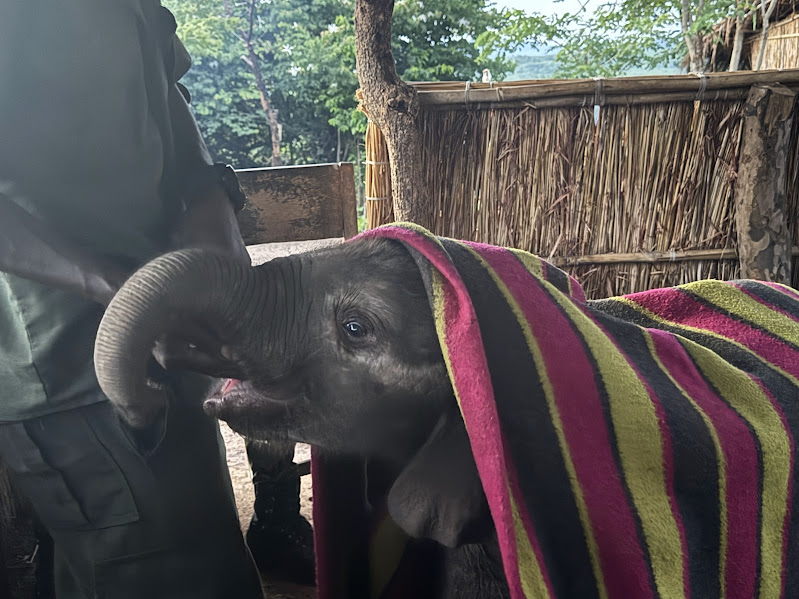
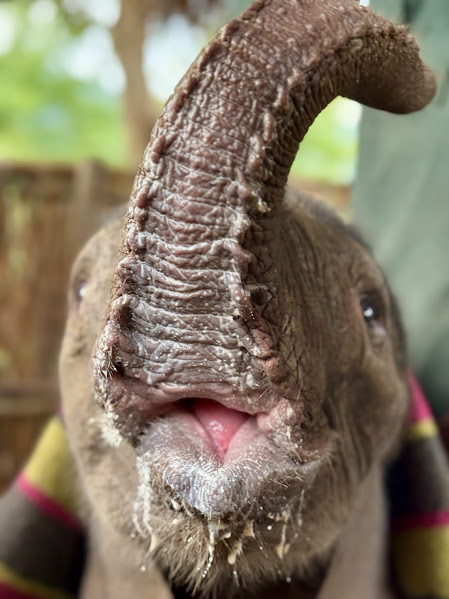
Following are photos of Baby Mwayi, which means ‘Luck” and she certainly needs it. Stay tuned for updates on her condition. If you have not done so scroll down to see our post about our newest fence project.
Elefence is sending Wildlife Action Group (WAG) $24,000 for fence construction thanks to a generous donor. The fence will extend the partially erected fence around the Dedza-Salima forest reserve. The fence around the Thuma reserve is complete now due to a previous Elefence contribution.
Constructing a fence is not an easy thing. First it must be approved by the Malawi government departments of forestry and wildlife. The fence line must then be surveyed to determine the exact route. Sometimes the route crosses village boundaries and must then be adjusted to insure that villages are cut off from areas they have used for generations even though they may have no clear title to the property. Negotiations with the village chiefs which border the route are critical to insure their cooperation. After all of these steps construction can begin once the rainy season ends.
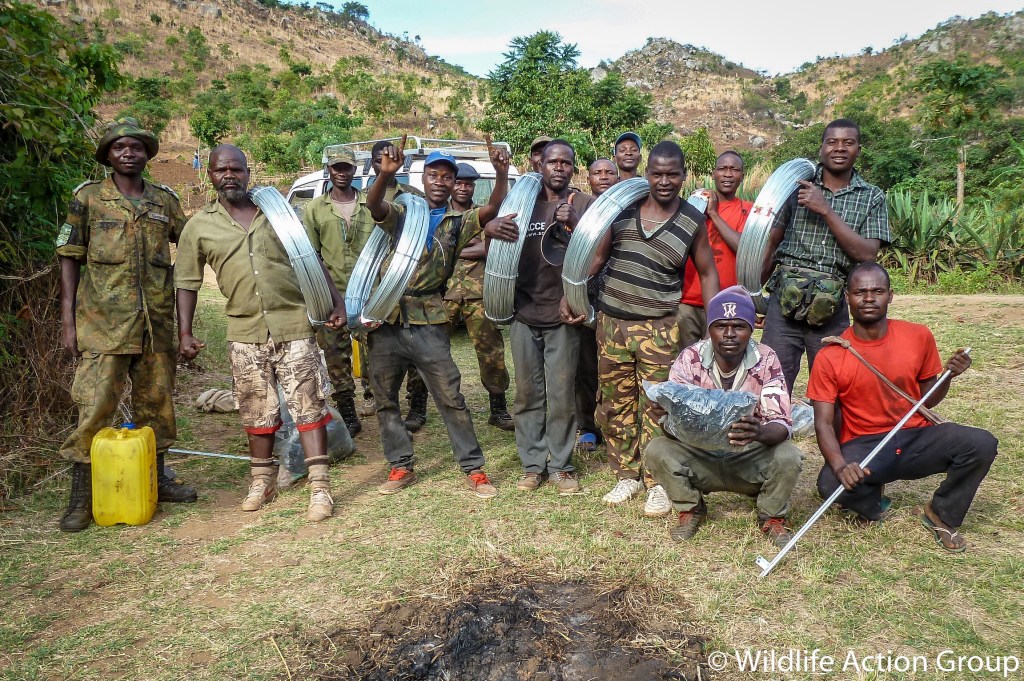
WAG had secured funding for purchasing the fence materials but had no money for labor, survey services and the hiring of a qualified construction manager. The local villagers are hired as workers and their wages are a significant source of income in an an area where there is almost no work available. Funds were also required for purchasing food for the workers and paid village women to prepare and serve food to the workers. The fence is solar powered but must be patrolled regularly and maintained. The WAG rangers have other duties so again the villagers are hired for this.
A fence protects both the villages from marauding wildlife as well as defining the border of the forest reserves. A couple of elephants can destroy a farmers entire harvest in one night which often calls for the killing of the elephants. Elephants and cape buffalos are dangerous when the locals attempt to drive them away. In the last three years 5 persons have been killed by elephants in the area of the reserves.
A fence also provides a clear boundary of the reserves. Persons inside the fence without a permit to gather dead wood for cooking and heating or cutting bamboo for construction are usually doing something illegal such as poaching wildlife or cutting trees for making charcoal.
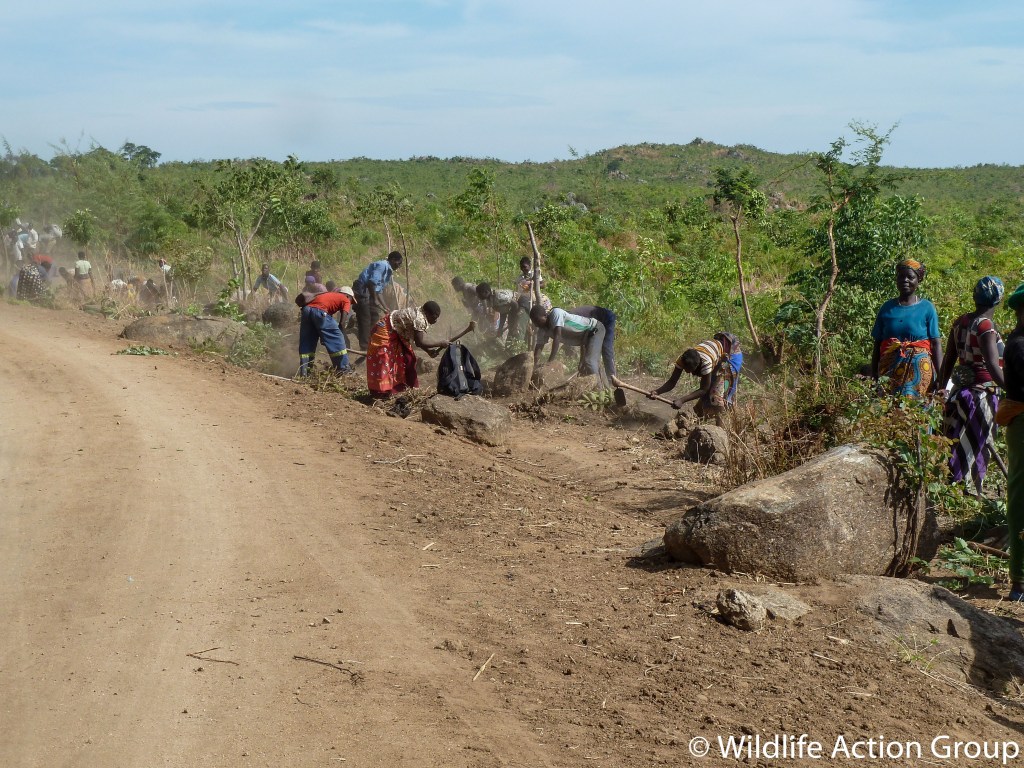
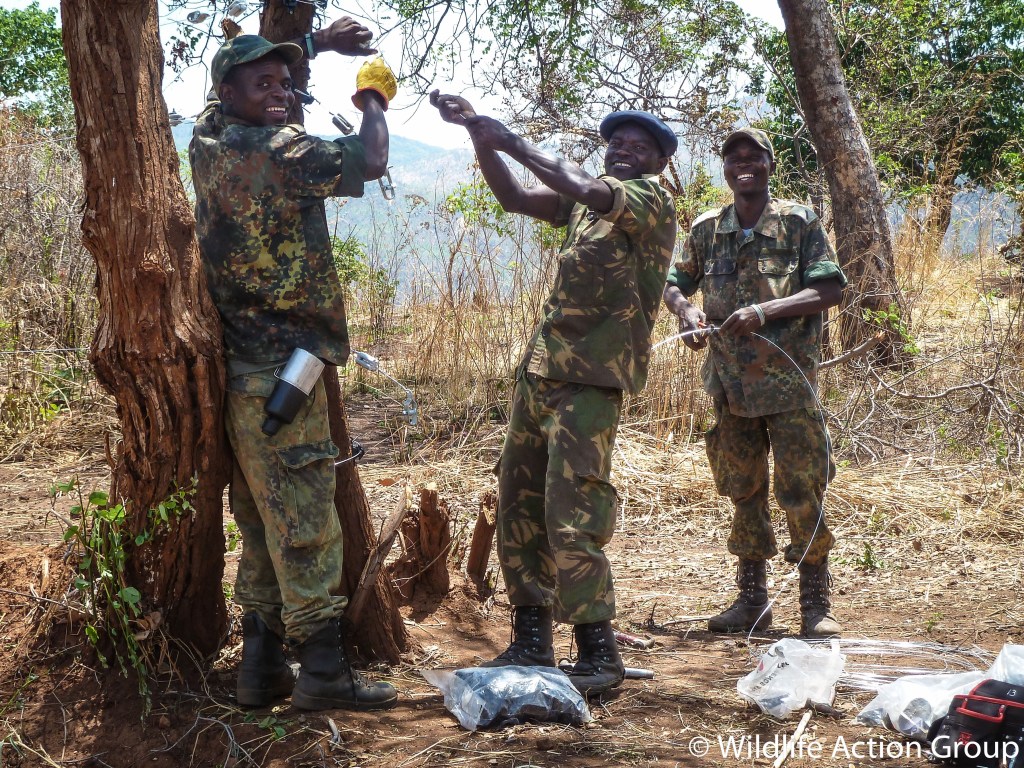
Following are photos from a previous fence construction project.
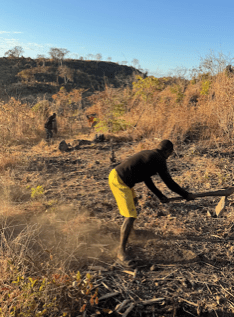
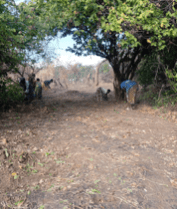
Clearing the fence line
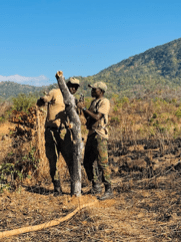
WAG rangers working on the fence
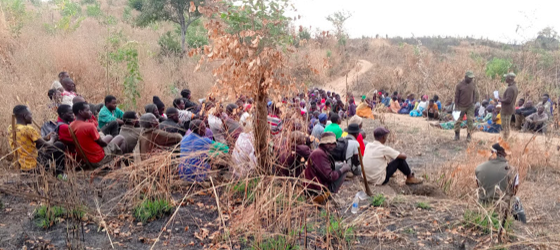
Villagers preparing for the installation of a new fence
Malawi was formally called Nyasaland and became independent from British rule in 1964.
Malawi is a unitary presidential republic with three branches of government consisting of the executive, legislative, and judicial branches. The president is both the Head of State and the Head of Government. So on a national level it operates very much as most constitutional democracies do. Out in the rural areas which covers most of the country things are a bit different.
The local villages are still very much tribal in nature with a village being controlled by a chief. A chief has significant power over how a village is operated as well as how it interacts with those outside. A chief receives the title from a lineage which passes down through the mother. Interestingly a woman can be a chief if no male heir exists.
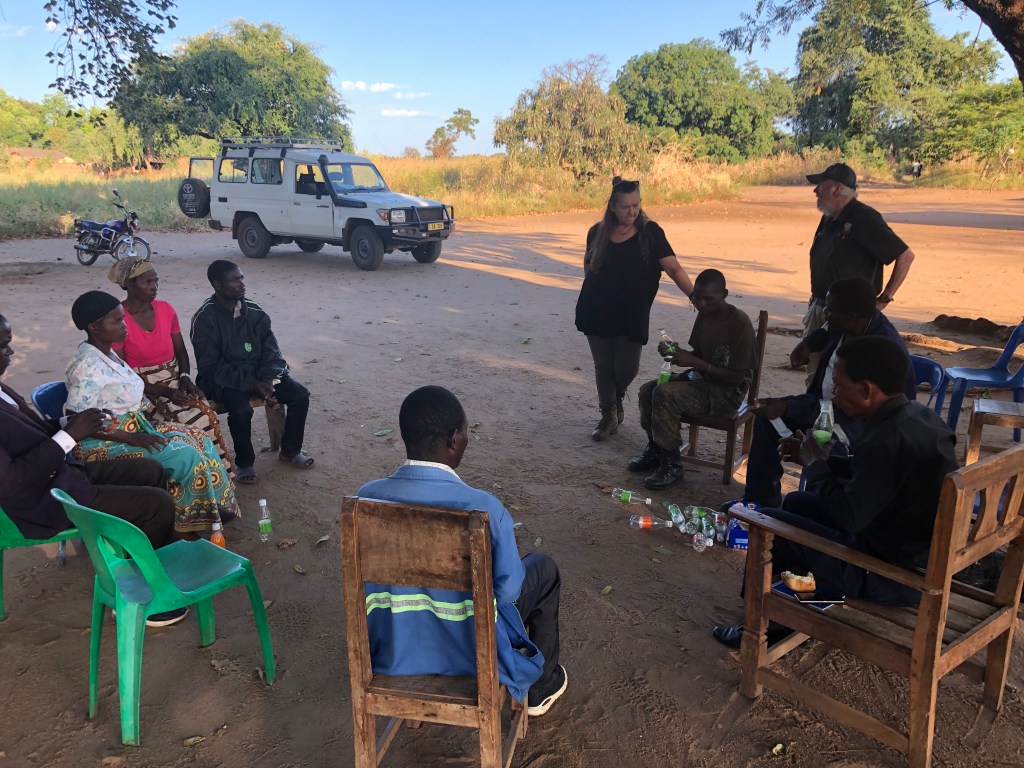
In 2022 Dick and I were privileged to attend a council of chiefs organized by Lynn Clifford the Field Operations Manager of the Wildlife Action Group (WAG). The meeting was called to discuss problems which existed in the villages and how they affected the two forest reserves. While we could not understand most of what was said each chief had the opportunity to speak about their situation. It was truly an opportunity to see how things work on a local level.
In late 2025 there was a coordinated attack on the forest reserves resulting in the slaughter of wildlife, the cutting of trees and destruction of part of the fence. It was most likely organized by criminal gangs supported by some of the local population. The WAG rangers are not equipped to handle a large-scale assault like this and the local police were called in to put down the incursion and restore order.
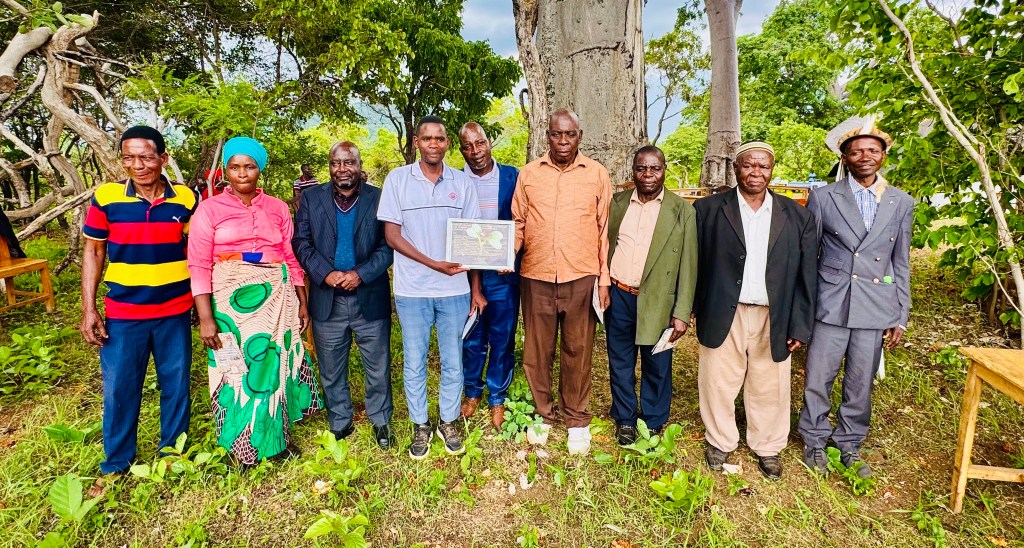
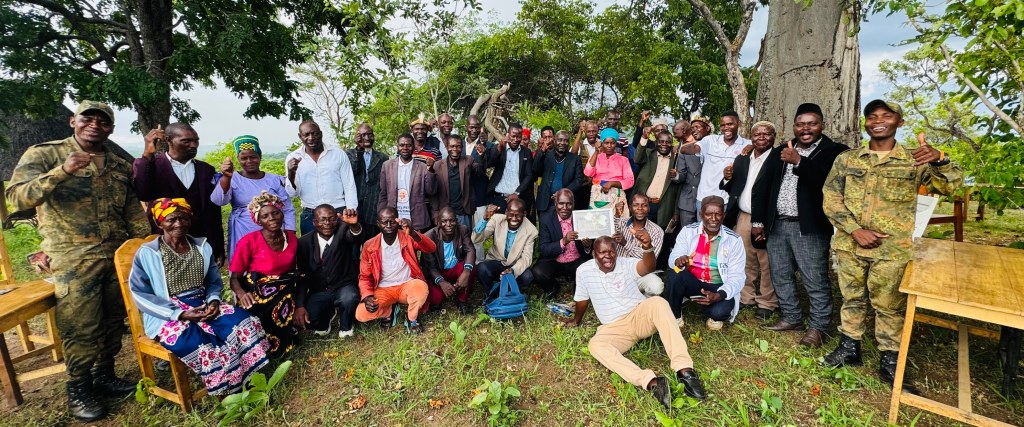
In order to prevent this again Lynn called a chiefs meeting from the affected areas. Most of the local population supports the WAG efforts to protect the forests and appreciates the help that WAG provides with agricultural advice, livestock support, water wells and education of students. At the meeting individual chiefs were asked to sign a pledge to support WAG’s efforts and assist with the reporting of criminal activity and participating in conservation efforts.
The pledges were physically signed by individual chiefs and were not some empty promises. A signed pledge by a chief had strong cultural significance and violation of the oath was regarded as shameful and rarely breached. The hope is that these pledges will prevent any occurrence of intrusion into the reserves.
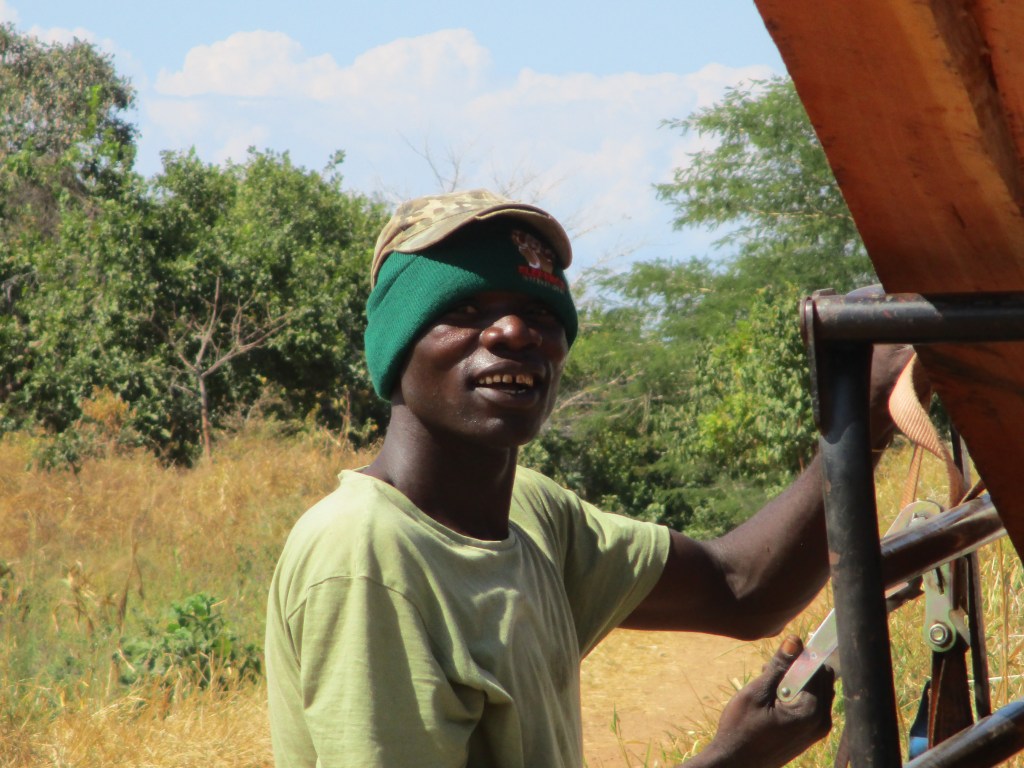
For our trip we wanted to take something for the WAG rangers. In communicating with Lynn she suggested we bring some ‘beanies’ or what we call stocking caps. Winter in Malawi can get cold, especially at night when the rangers are on patrol or stationed at one of the satellite camps throughout the forests. We contacted a local company to produce these with the Elefence logo on them. A couple of our loyal supporters stepped up to fund the purchase. We passed them out to as many of the rangers we encountered and left the balance from the original 50 with WAG. The rangers seemed to appreciate them and some even wore the on a couple of warm days.
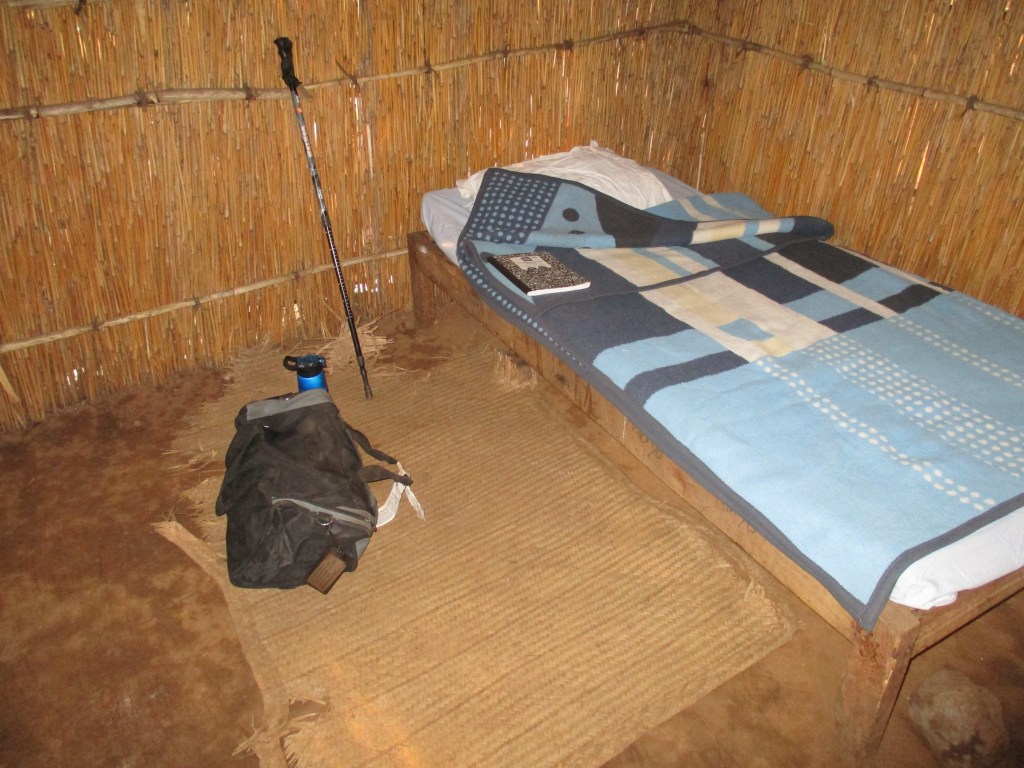
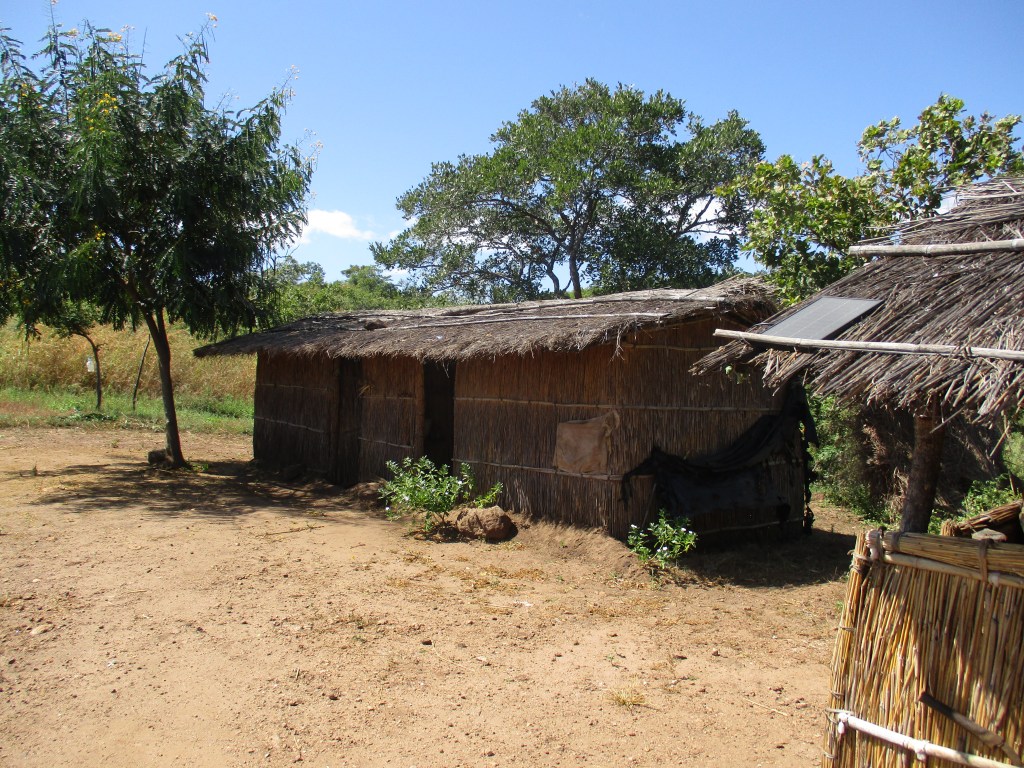
On our second day in camp we went on a pangolin feeding bush walk with the rangers. A description of our walk is in an earlier post in the blog. While we were on the walk a radio call came in telling us to come back to camp because MR. M was coming. We did not know who he was but figured he must be someone of importance. We jumped into the Land Cruiser and bumped our way back to camp where we discovered MR. M was an elephant, so named because he had what looked like a M on one ear. I could not see it. The video below was shot from my hut. I remembered that I had heard something big outside my hut in the middle of the night but I elected not to go out and check. Of course my grass hut would not offer much protection as an elephant could walk through it without any trouble.
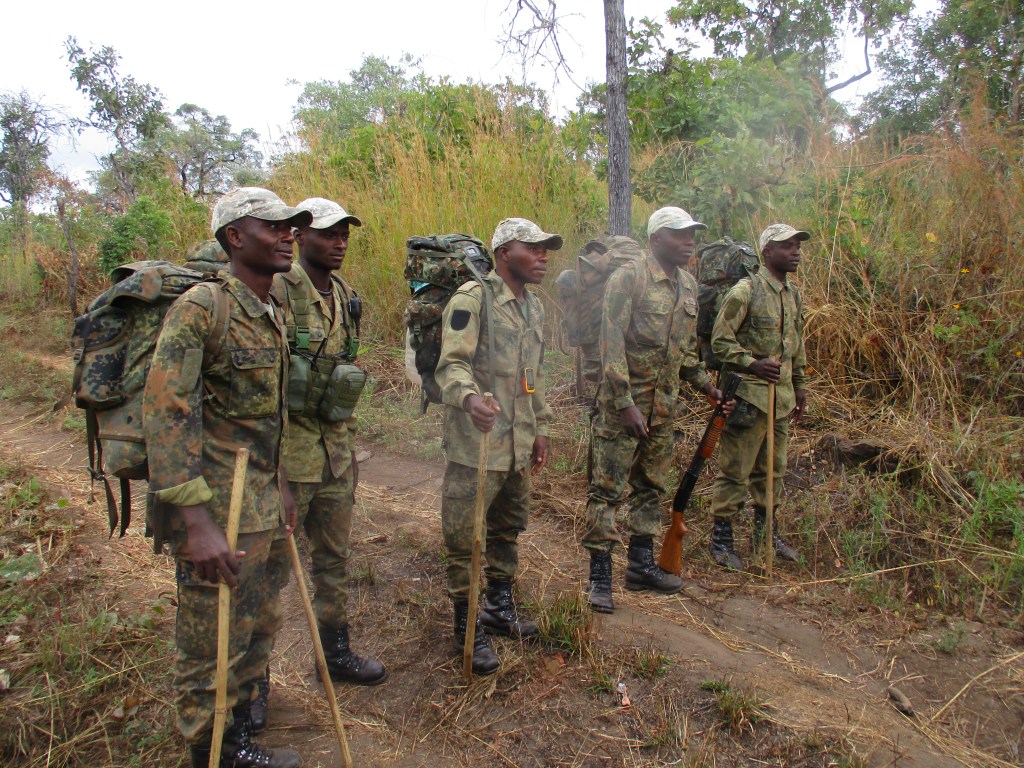
One afternoon while we were in camp a tip came in that a poacher was operating in Thuma forest. A team of rangers were called up to investigate. They suited up and we ferried them out into the area where he was reported to be operating. The rangers carried large packs and they were to spend three days in the forest patrolling and watching for the poacher. They caught him on the second night and he was brought in for trial. Unfortunately he had already killed a warthog but he will be going to prison for a long time as Malawi courts hand down some severe penalties for poaching.
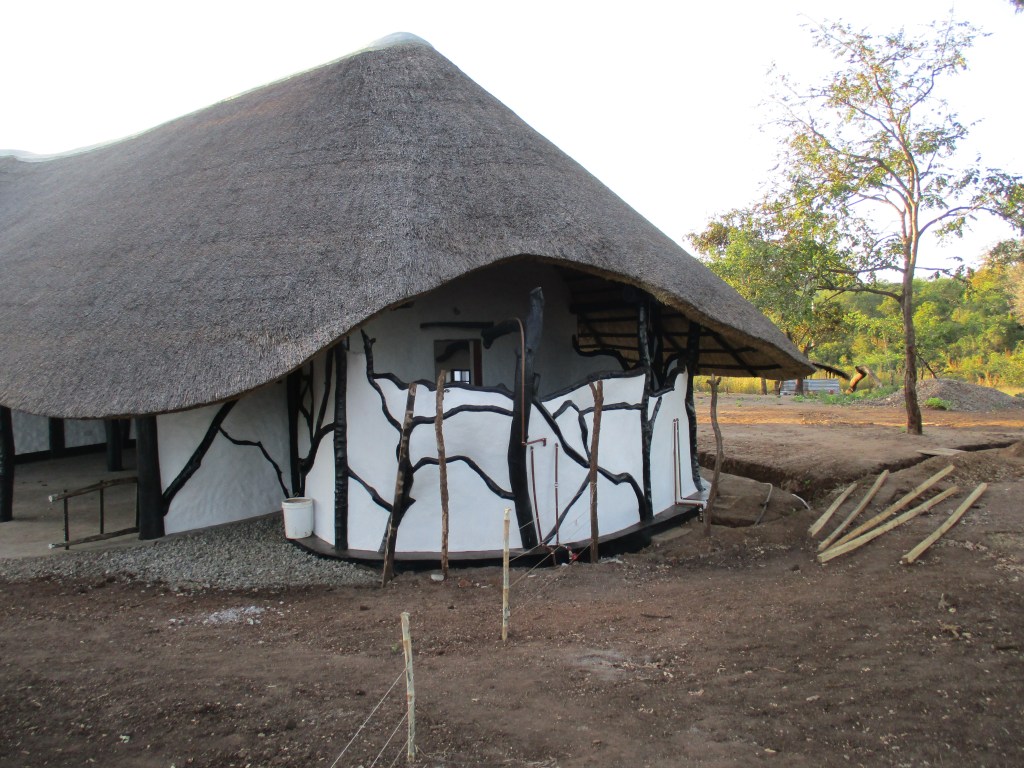
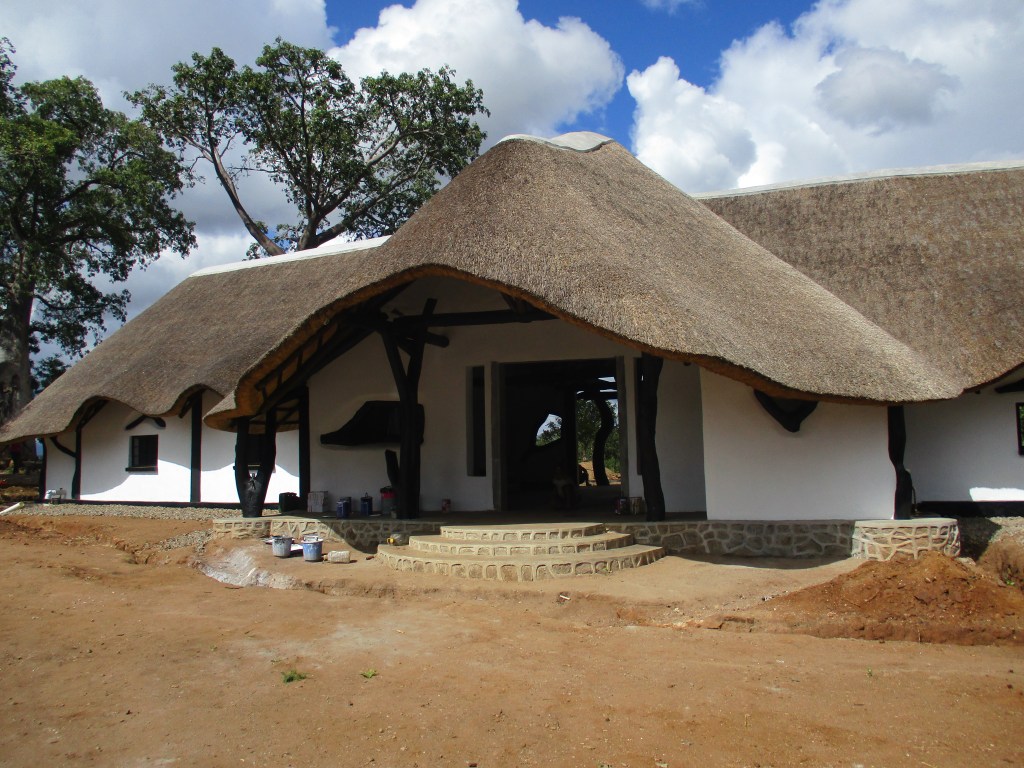
We made several trips to the lodge being built to attract tourists to Malawi. Lynn is directly supervising the design construction and it will be beautiful when complete.
We went to one of the ranger satellite camps in the forest and spent a night. These camps are even more spartan than the base camp but it gave us more appreciation for the dedication of the rangers.
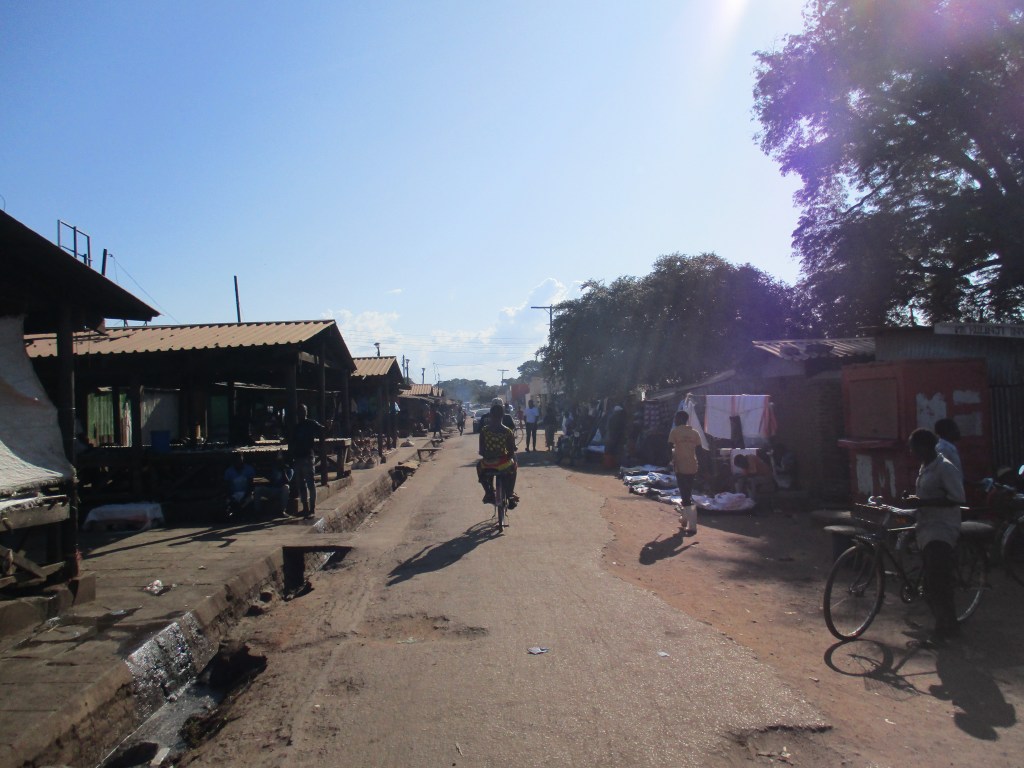
We went to the local market in Salima. It looked like there was a great deal of produce available but Lynn reminded us that this was right after harvest so things looks pretty good. Unfortunately there is little in the way of preservation so what is not consumed quickly will go to waste.
We left Malawi with a much better appreciation for the work being done by WAG. The crushing poverty we saw was depressing but it was offset by the spirit of the Malawi people. For much of the time Dick, Lynn and myself were the only white people we saw but I never felt any animosity from the locals. As we rode along through the villages the people would wave and the children would run out to the road and jump and clap. Malawi is called the “Warm Heart of Africa” and I can see why.
Our trip to Malawi had several goals. First was to meet Lynn Clifford, Field Operations Manager of Wildlife Action Group (WAG) for the Thuma and Dedza-Salima Forest reserves. We had corresponded with Lynn over two years but not able to travel due to the Covid restrictions.
Lynn Clifford
Second was to review the fence we funded, thanks to a generous donor, which was the last section to encircle the Thuma forest. It is always our policy to make sure the money we send is actually being used as intended. Since the completion of the fence there has been zero human elephant conflict around Thuma much to the delight of the villages in the area. Their crops are now safe from marauding wildlife. It only takes one or two elephants to wipe out and entire harvest and leave a family fighting for survival. Raids by wildlife usually calls for killing the animals.
Solar power supply for the Elefence fence.
A fence also defines a clear boundary around the forest. Persons inside the fence without a permit to harvest bamboo for construction or to gather dead wood were usually doing something illegal such as poaching wildlife or cutting trees for charcoal production. The pictures below were taken of the same hillside inside the fence over three years. The first one shows the land almost completely denuded of vegetation. The second shows how the forest can recover if given the opportunity to regenerate.
Thirdly we wanted to review all the various community and ecological programs established by WAG to see where else we could help. Our primary mission is building solar powered electric fences but it is not possible to build a fence without the cooperation of the local villages surrounding the forest. The villages have had access to the forest for generations and you cannot take that way without providing them with alternatives. We toured the area with Austin Chimbalanga, the WAG Community Outreach Officer.
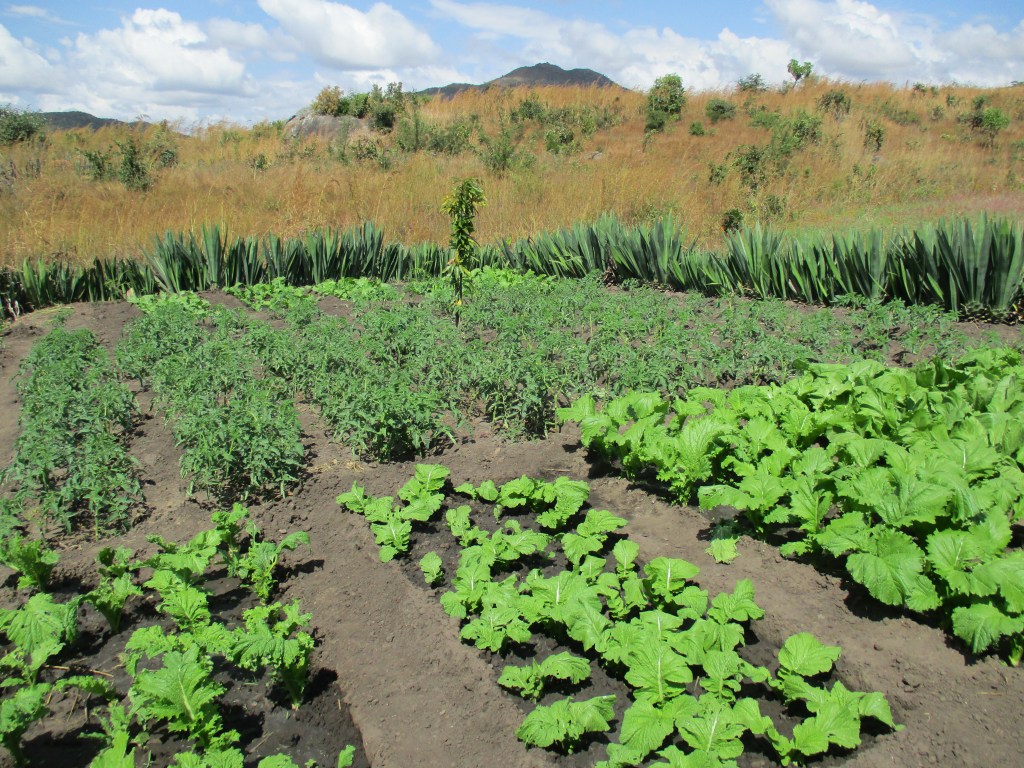
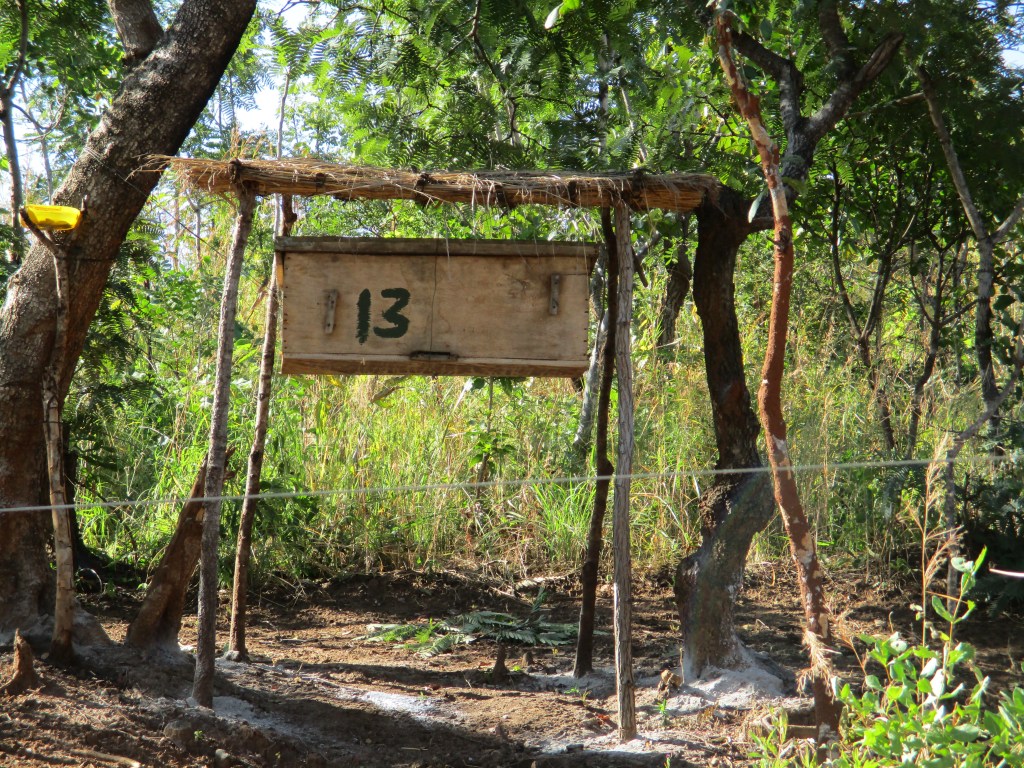
We visited several villages to see what programs WAG was supporting. WAG employs an agronomist to teach the local people how to grow and improve the yields in their gardens. They also supply poultry and goats which the villages can raise for protein, milk and to sell to provide income. They are taught beekeeping which is another generator of income.
Community garden
Bee hive. Raised to keep Honey Badgers and other animals out.
One thing three villages requested was a water well or borehole as it is called in Africa. We raised funds which were matched by other donors and the results were reported in a previous post.
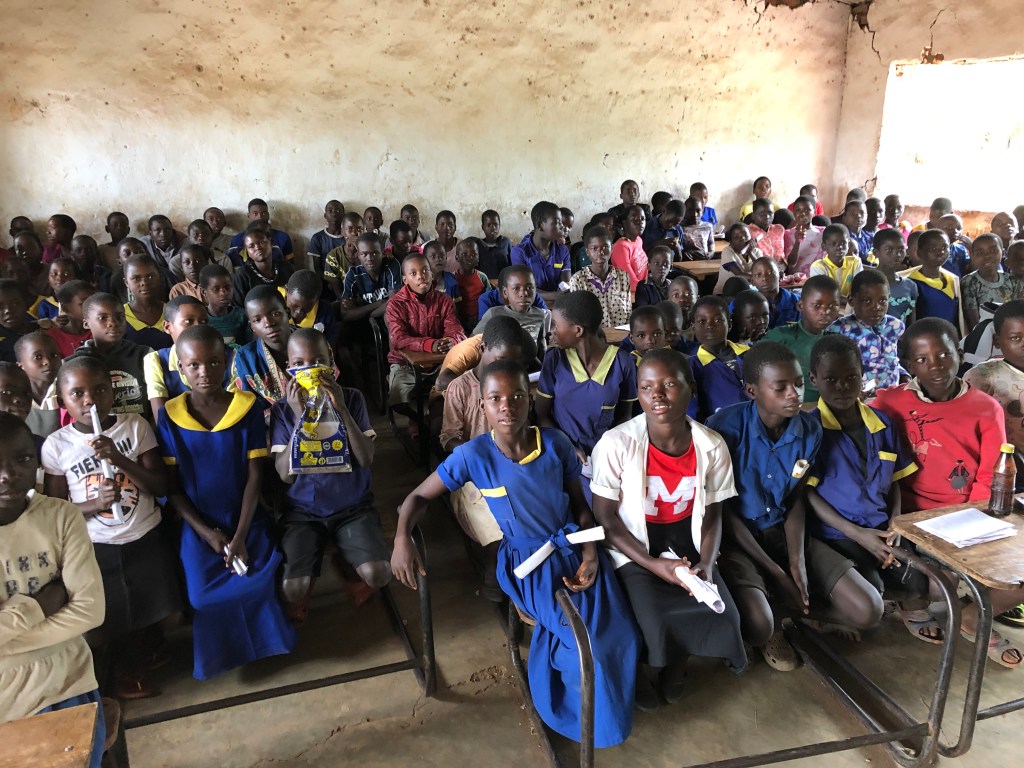
We visited an elementary and secondary school, meeting with the staff and visiting the classrooms. Elementary school is mandatory and free for grades 1-8 however it is horribly crowded. The one we visited had 832 students and only 13 teachers. A 64 to 1 ration is not very conducive to learning. The teachers however were dedicated and did their best for the students. High school is optional if the parents can pay for it, about $150/year. Unfortunately even this meager amount is well beyond the means of the average family. About 1 out of 25 children get an education beyond the 8th grade. After learning all this we started a scholarship program and pay for 10 students to attend high school each year.
Elementary classroom
High School class
We were honored to attend a council of village chiefs with Lynn. The group discussed the problems they were facing and various solutions. We could not understand the discussions but Lynn told us one of the main concerns was the threat from local gangs who poached wildlife and cut trees for charcoal production. These are not individuals feeding their family but rather organized gangs who routinely were a danger to the locals as well as the rangers who patrol the forest. Rangers have been injured and even killed by these gangs. Lynn emphasized that the villages had to work together to support each other and report illegal activity to WAG or the local authorities. Elefence supports the rangers by awarding a small cash bonus of $3 for every successful apprehension and conviction of a criminal. Note that two of the chiefs were women. Transfer of power to a new chief passes through the mother and sometimes there is no male heir so it will go to the next female in line.
Council of Chiefs
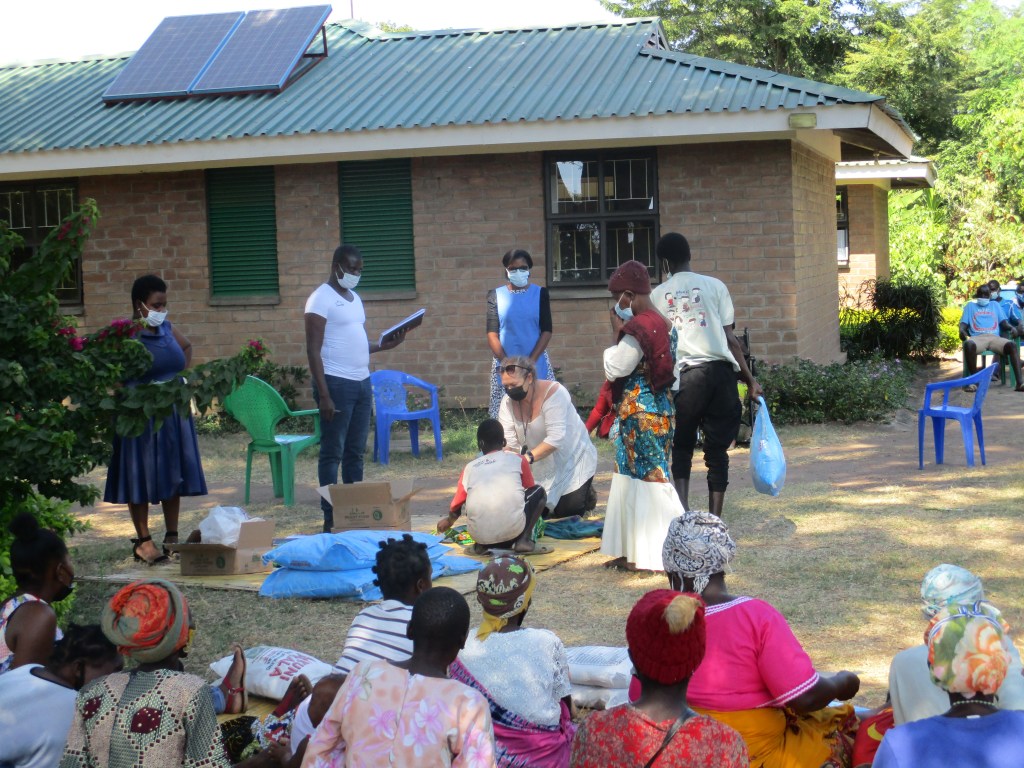
We visited what Lynn called “An end of life clinic” which is what we refer to as a hospice center. The clinic is funded by a charity from Ireland and Lynn sits on their board. They dispense pain and other medication to ease a person’s exit from life on earth. They also provide food for patients and their families since most of the patients cannot work. Most of the people in the photo have some kind of terminal disease and the clinic nurse told us that 90% the women which need the clinic’s services have cervical cancer. Lynn pays a nurse to make monthly visits to the local villages to educate women and urge them to come to the clinic to get tested before it is too late.
Elephants have some unique and interesting physical properties in addition to their immense size. These properties have evolved over millions of years into the amazing creature we know today. Consider the following:
Look at the large pad on the bottom of their front leg. This feature serves to distribute their weight so they do not sink in soft ground and provides a cushion as they walk. It will retract somewhat when they lift their leg so it breaks the suction from walking on muddy ground.
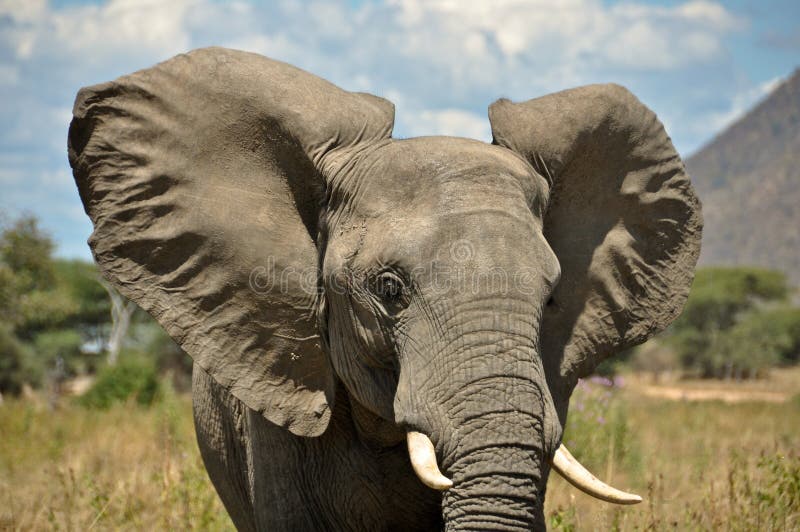
An elephants ears do much more than detect sounds. Their primary function is to radiate heat from their body. The ears are filled with capillaries which carry heat from the body so it is dispelled into the air. The ears also give evidence as to the elephants state of agitation. A nervous elephant will shake its head or rapidly flap their ears if they are apprehensive about something. They will also hold their ears out wide to make themselves look larger.
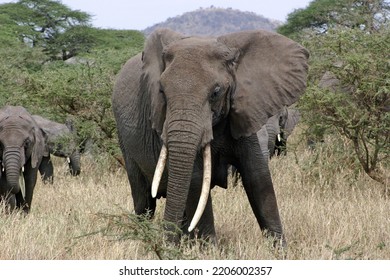
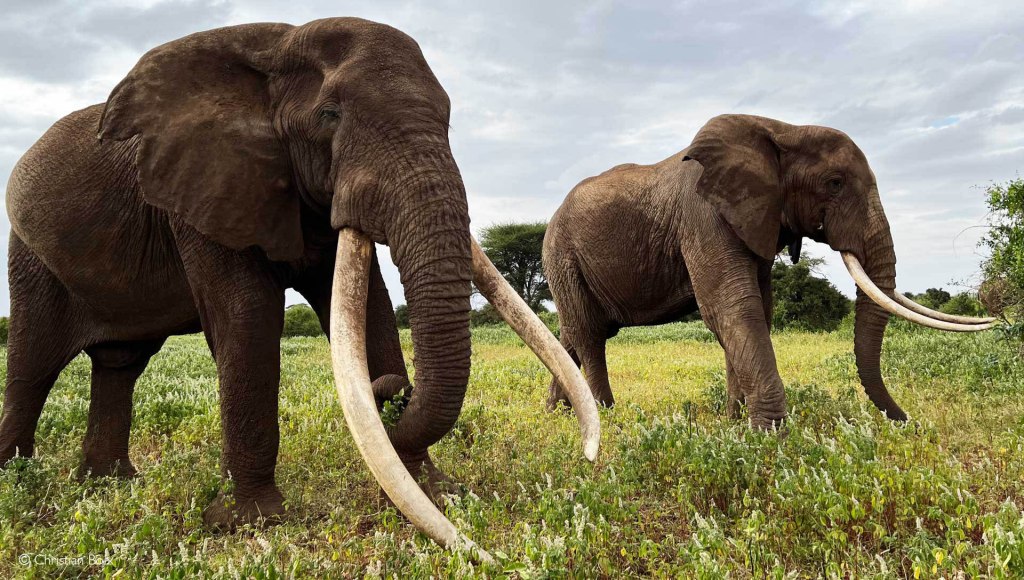
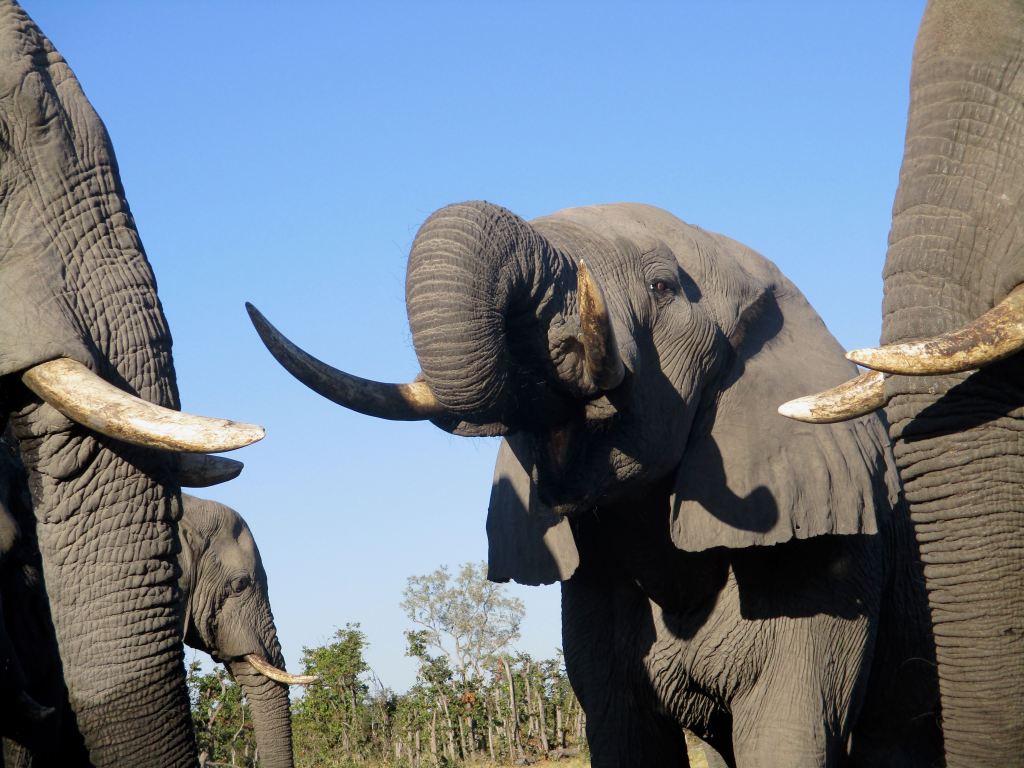
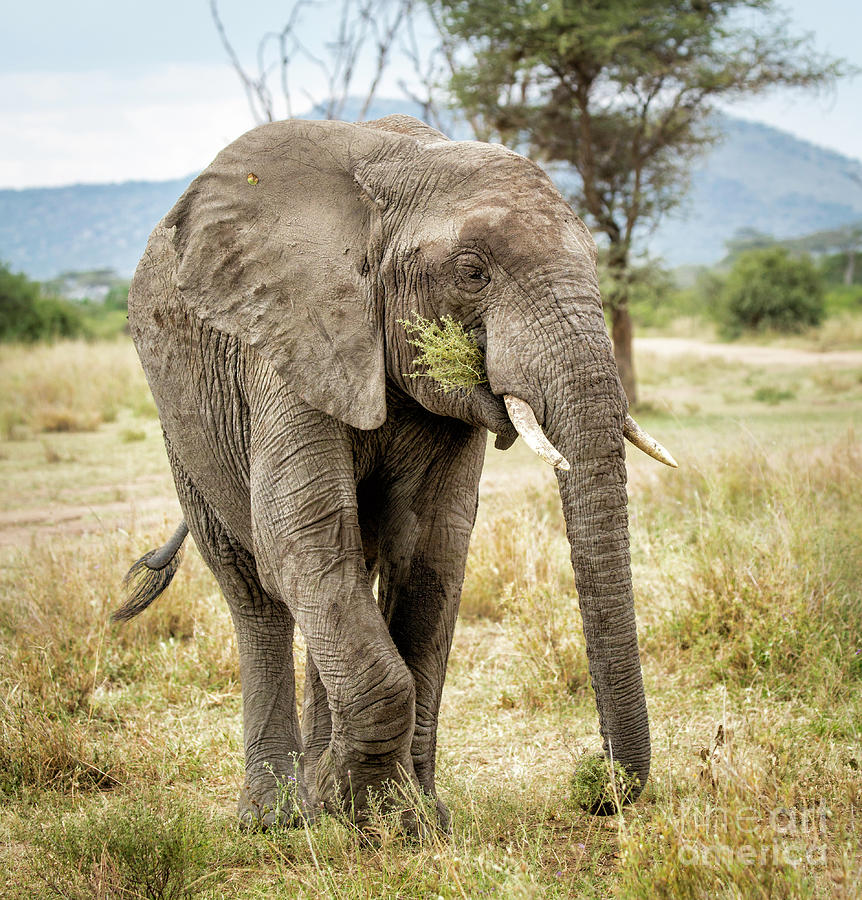
Certainly one of the most striking features are the tusks which protrude from their face. They are both a tool and a weapon. A tusk is a modified incisor tooth and grows throughout their life although it can be worn down from use. Elephants are right or left handed just like humans and the worn tusks tells you which. Unfortunately they are also the cause of hundreds of thousands of elephant being slaughtered for their ivory in order to be sold into the Asian market to make trinkets, jewelry and statues. The poaching of elephants for their ivory is responsible for the fact that there are less than 50 old ‘Tuskers’ left with massive tusks which were once a common sight in Africa.
A right handed elephant
One of the few super tuskers left
The trunk is a most useful appendage for an elephant. They eat with it, drink with it, smell with it, trumpet with it, and greet other elephants with it. Their sense of smell is four times greater than that of a bloodhound. They will use it to siphon up water to spray over their body or to give themselves a dust bath to protect their sensitive skin. It contains over 100,000 individual muscles which makes it both very strong and yet flexible. The prehensile tip can pick up something as small as a peanut and are able to crack the shell without breaking the nut inside.
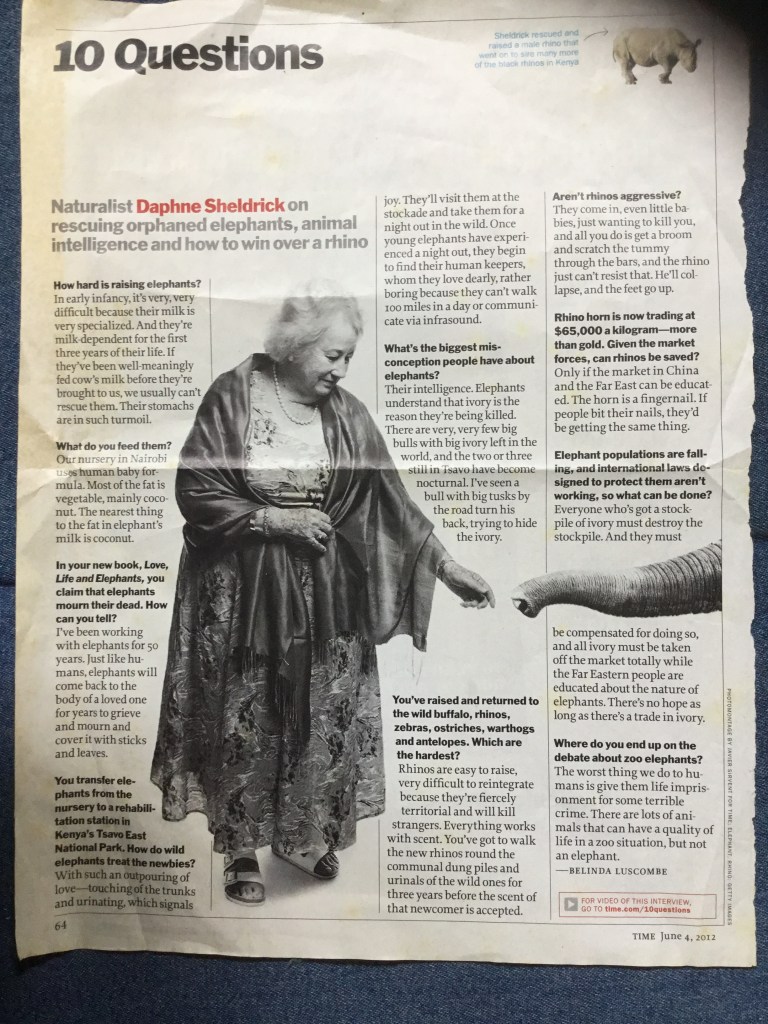
Daphne Sheldrick was a remarkable individual. Born in 1934 in Kenya to British parents she became interested in animals at a young age and maintained that interest throughout her life. She is an author, an expert in animal husbandry and is particularly noted for the raising and reintegrating of orphaned elephants back into the wild. She along with her husband, David Sheldrick, was co-warden of Tsavo National Park for 21 years. She is the founder of the Sheldrick Wildlife Trust, (SWT) one of the oldest and most respected conservation organization. SWT is dedicated to the conservation, preservation and protection of wildlife.
Baby elephants are particularly hard to raise. They are usually orphaned because the mother has been killed by poachers for its ivory. They are often so traumatized they refuse to eat or drink and will die mainly from grief and loneliness. If they can get them to feed they have to be bottle fed a special formula every 3 hours round the clock. For years no one knew what to feed them as they could not process cow’s milk. It was Daphne who discovered that coconut milk is most like that from a female elephant and mixed with baby formula baby elephants could digest it properly. Her discovery is credited with saving thousands of baby elephants who would otherwise starve to death.
Sheldrick was a recognized authority on the rearing and rehabilitation of many wild creatures, including not only elephants but black rhinos, buffalos, zebras, elands, kudus, warthogs to name a few. For her work as a conservationist she was awarded an MBE, Most Excellent Order of the British Empire, by Queen Elizabeth and separately elevated to UNEP’s Global 500 Roll of Honor. She was awarded an Honorary Doctorate of Veterinary Medicine by Glasgow University along with several other prestigious recognitions from Kenyon, British and conservation organizations.
The page below is from an interview down by Time magazine in 2012. Daphne died in 2018 after a battle with breast cancer but her legacy will be felt for generations to come. Elefence recommends reading her book, “Love, Life, and Elephants: An African Love Story”.