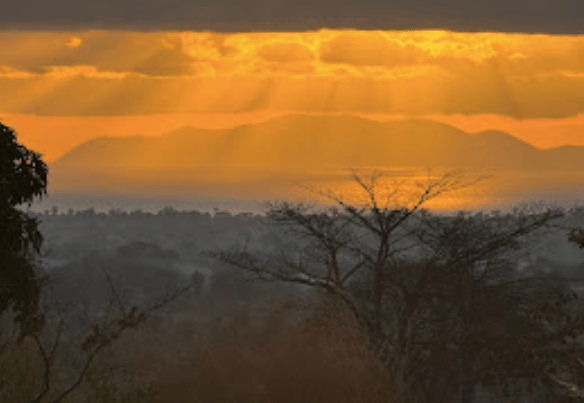
After several months of delays due to weather, logistics, and bureaucracy our fence project has been completed. This was made possible through the dedication of Wildlife Action Group and funds provided by the Elephant Protection Initiative Fund and Elefence International Inc. EPIF purchased the materials and Elefence paid for the labor, freight and site survey. WAG did all the groundwork and all the coordination with the local villages involved. As you will see in the detailed report the installation of a fence provides mutual benefits for the people, wildlife and the forest. Our thanks go out to all the parties involved and especially our generous Elefence donors.
The Following is the report from Wildlife Action Group
Project Overview
Wildlife Action Group is pleased to report the successful completion of a new 10-kilometre extension of the solar-powered elephant deterrent fence, extending from Gravel area TA Kalbalambe to the end of the Kamzati Group Village Head (GVH) area. TA Kachindimoto in the south eastern areas of the Dedza Salima Escarpment Forest Reserve.
This extension was undertaken following repeated requests from local communities and traditional leaders who had been experiencing persistent crop damage caused by elephants moving between the forest and surrounding farmland. The project represents another important milestone in reducing human-elephant conflict while strengthening the long-term protection of both local livelihoods and wildlife.
Community-Led Planning
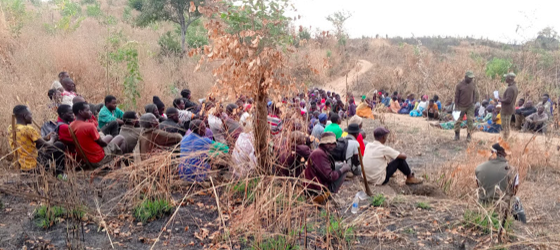
The project began with a series of meetings involving Traditional Authorities(TA), Group Village Heads(GVH), village heads (VH) and community representatives.
During these discussions:
Communities explained the increasing impact of elephant crop raiding.
The proposed fence alignment was presented and discussed.
Traditional leaders formally agreed to the project.
Community members committed their support throughout construction.
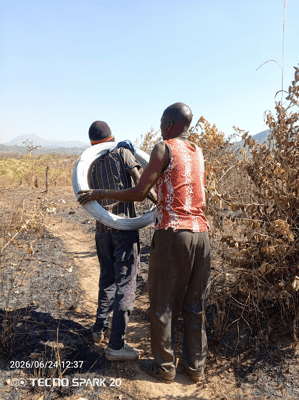
Following these meetings, Wildlife Action Group staff walked the entire proposed fence alignment together with community representatives and Officers from the Department of Forestry. This participatory approach ensured that all boundary lines were agreed upon before construction commenced and prevented future land ownership disputes.
The level of cooperation received from local leaders and residents exceeded expectations. The project was warmly welcomed by every community visited, creating a strong sense of shared ownership from the outset.
Procurement of Materials
Once the alignment had been agreed, specialised fence materials were ordered and imported from South Africa.
This included:
High-tensile fencing wire
Solar energiser equipment ie panels, energizers
Insulators and tensioners
Electrical components required for a long-distance wildlife fence
Equipment such as fence testers, cutters, lightening divertors
Careful planning ensured all materials arrived before major construction activities commenced.
Community Employment
One of the major achievements of this project was the level of local employment created.
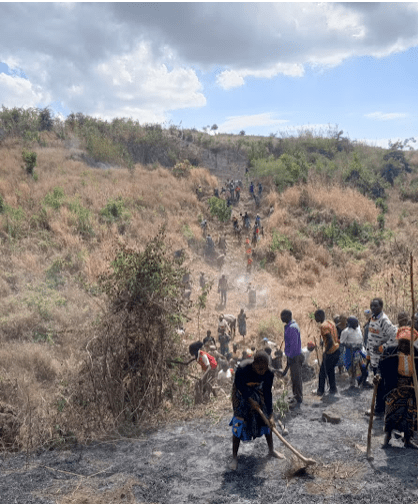
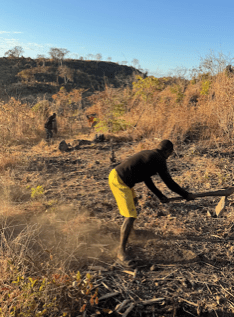
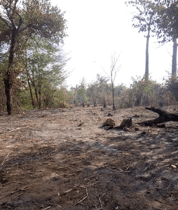
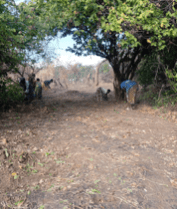
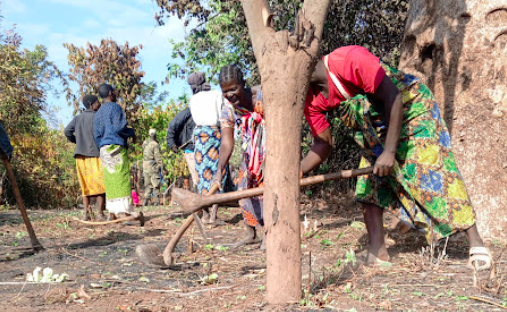
More than 480 community members were employed to clear the fence line before construction began.
The employment programme deliberately maintained equal opportunities for both women and men, ensuring the economic benefits of the project were shared fairly throughout the surrounding villages.
The work provided valuable short-term income while simultaneously creating local ownership of the project.
Fence Construction
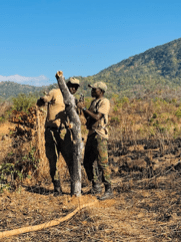
Following completion of line clearing, Wildlife Action Group construction teams began installing the fence.
Community members continued to work alongside our technical staff throughout construction, assisting with installation, wire placement and general site works.
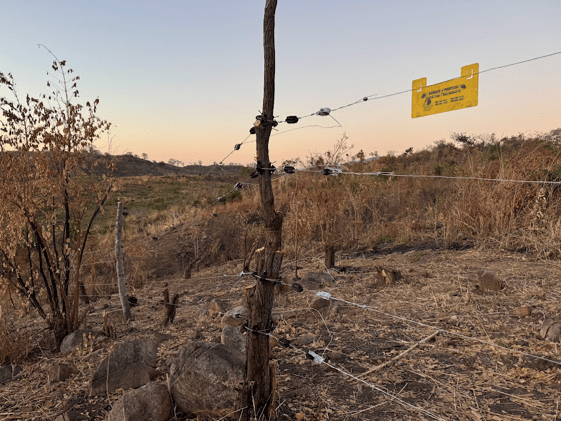
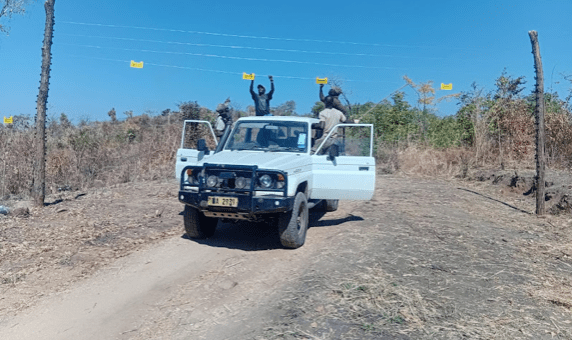
The result is a continuous 10-kilometre solar-powered elephant deterrent fence designed specifically to prevent elephants from entering agricultural land while allowing wildlife to continue using the protected forest.
Solar Power System
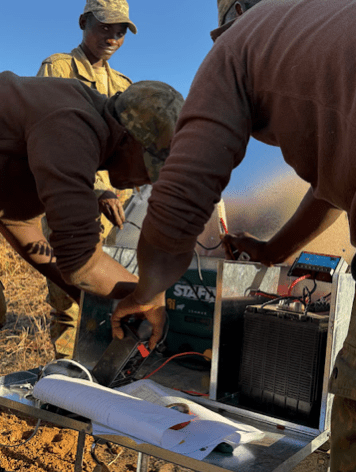
A secure solar energiser system has been installed approximately at the midpoint of the fence.
Positioning the energiser centrally enables electrical current to travel efficiently in both directions, maintaining consistent fence voltage across the entire length.
The fence has undergone comprehensive testing and inspection. All faults identified during commissioning were corrected immediately, ensuring the system is now fully operational.
Security Camp
To support long-term fence management, a temporary field camp has been established.
This facility provides accommodation and operational support while bricks are being produced for the construction of a permanent secure camp that will become the long-term operational base for fence maintenance staff.
The permanent camp will significantly improve security for the fence infrastructure while allowing rapid response to any faults or wildlife incidents.
Local Employment and Capacity Building
Three full-time staff members have now been employed specifically for this fence.
They are currently undergoing practical training in:
Fence maintenance
Electrical fault detection
Vegetation management
Solar energiser operation
Daily monitoring and inspection and reporting
Rapid repair procedures
Building local technical capacity ensures the fence can be maintained effectively for many years.
Conservation Impact
Beyond reducing human-elephant conflict, the project has already generated significant conservation benefits.
During construction and boundary inspections it became clear that sections of protected forest land adjacent to the new fence had been illegally occupied.
As a result of establishing this clearly defined boundary, a substantial area of protected forest has now been reclaimed from illegal encroachment.
Unfortunately, extensive evidence of environmental degradation was recorded along parts of the boundary, including:
Significant forest clearance.
Illegal agricultural cultivation within the protected forest.
Habitat destruction close to the forest edge.
The fence now provides a clearly identifiable protected area boundary that will greatly assist future management and enforcement efforts and there is a good chance the forest will regenerate naturally with good protection.
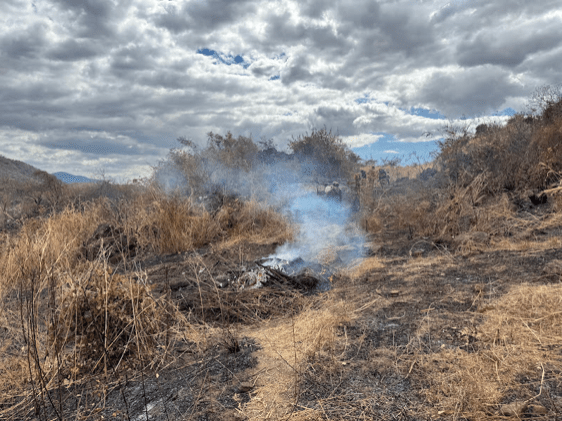
Above: The last charcoal oven found in the area and destroyed.
Strengthening Law Enforcement
The completion of this fence extension allows Wildlife Action Group to expand its law enforcement presence further south than previously possible.
With a secure physical boundary now in place, ranger patrols can focus greater effort on preventing:
Illegal agricultural expansion.
Illegal logging.
Charcoal production.
Poaching.
Other forest crimes.
Elephant protection
The fence therefore serves both as a human-elephant conflict mitigation measure and as an important conservation management tool.
Wildlife Protection
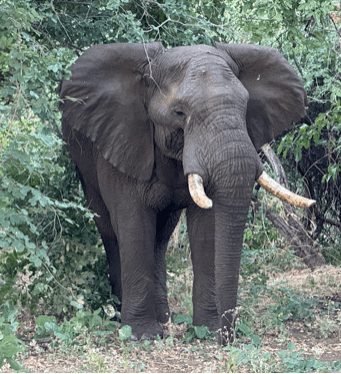
This section of forest supports a resident breeding herd of elephants throughout the year, together with a bachelor group of four young bulls.
By reducing conflict with neighbouring communities, the fence significantly improves the long-term security of these elephants.
Communities are less likely to experience crop losses, while elephants are able to remain within protected habitat, reducing the risk of retaliatory actions and dangerous encounters.
This represents an important step towards long-term coexistence between people and wildlife.
Community Response
Perhaps the greatest success of this project has been the extraordinary level of community support.
Throughout planning and construction, local leaders and residents demonstrated enthusiasm, cooperation and commitment.
The atmosphere remained positive from beginning to end, with communities actively participating in decision-making, construction and ongoing management discussions.
This strong partnership provides an excellent foundation for the long-term success and sustainability of the fence.
Looking Ahead
The next phase of work will focus on:
Constructing the permanent ranger camp.
Completing staff training.
Establishing routine maintenance schedules.
Continued community engagement and creation of income generating projects
Monitoring elephant movements and crop-raiding incidents.
Strengthening protection of reclaimed forest areas.
The project demonstrates how community partnership, practical conservation and sustainable infrastructure can work together to reduce conflict, improve livelihoods and protect wildlife.
It is important to note that the area south of this fence still has no fence which means elephants can still walk along this fenceline and out into community lands, so there is a need to continue to secure funding to continue to extend the solar fence.
Thank You
This achievement would not have been possible without the generous support of Elephant Protection Initiative Foundation and Elefence International who has been key to the ongoing building of fences around both Thuma and Dedza Salima Escarpment Forests.
Your investment has delivered tangible benefits for both people and wildlife by reducing human-elephant conflict, creating employment, strengthening forest protection, expanding ranger operations and securing vital habitat for one of Malawi’s most important elephant populations.
On behalf of Wildlife Action Group, the traditional leaders and the surrounding communities, we extend our sincere gratitude for making this project possible.