By Dick Houston

A wounded ranger is pictured after a recent encounter with a gang of poachers. Fortunately it was only a flesh wound. But a WAG ranger was killed by a poacher a few years ago and another ranger was recently killed by an elephant while a third was gored by a cape buffalo. A forest ranger’s job is one of the most dangerous in the world. About 150 rangers worldwide die each year protecting wildlife according to the Thin Green Line (TGL) Foundation, an international charity.
Conflicts with poachers are responsible for 50 to 70% of ranger deaths on the job, according to data from TGL. The rest are attributed to daily challenges such as hazardous environments and dangerous animals – especially elephants and Cape buffalos.
Africa is know for its vast nature reserves, ecotourism and educational approach to conservation. Unfortunately, armed poachers and militant gangs are targeting African rangers. In Africa, an astounding 82% of rangers said they have faced a life-threatening situation in the line of duty.
WOULD YOU TAKE ON THIS JOB FOR $3 A DAY? This is why Elefence, in partnership with Malawi’s Wildlife Action Group (WAG), works to find financial support for the 51-man strong team of rangers. Elefence and WAG initiated a Ranger Cash Reward Program for various rangers who’ve shown meritorious work in the field protecting elephants and other highly endangered wild animals.
Keep in mind, these men struggle to feed their families while they are on patrol in the forest 25 days a month living in primitive conditions with no access to emergency medical care. If badly wounded in the field their chances of survival are slim. There are no medics on the patrol teams. ( Our pioneer Elefence trustee, Max Seymour, was a battlefield medic in Viet Nam, and knows well how crucial immediate emergency care is in the field.) {see Elefence team bios on our website, http://www.elefence.org.}
Elefence has just given the 51 rangers Christmas bonuses of $10 each. It is humbling and emotionally gripping to see these men so thrilled to receive such a modest amount. We wish it could be more , but we can only give what is contributed since Elefence and WAG are small organizations, continually and frustratingly, challenged to find funding. Sad that in a world run by billionaires these brave rangers who work to save fragile ecosystems and wildlife for the world’s future, scramble for crumbs.
Without funding, the rangers of Thuma and Dedza-Salima forest reserves will not be able to continue their work. If you are interested in helping these brave men, please contact us directly or make a contribution directly on the Elefence website. If you have donated recently we thank you -and be assured that donations go directly to our efforts in Malawi. Elefence International Inc. is a USA registered 501(c)3 charity and all contributions are tax-exempt.
Please remember to frequently check our blog for more stories about the rangers and their ongoing work to protect the forest and its wildlife
Merry Christmas everyone from ELEFENCE and WAG. Thank you for reading.
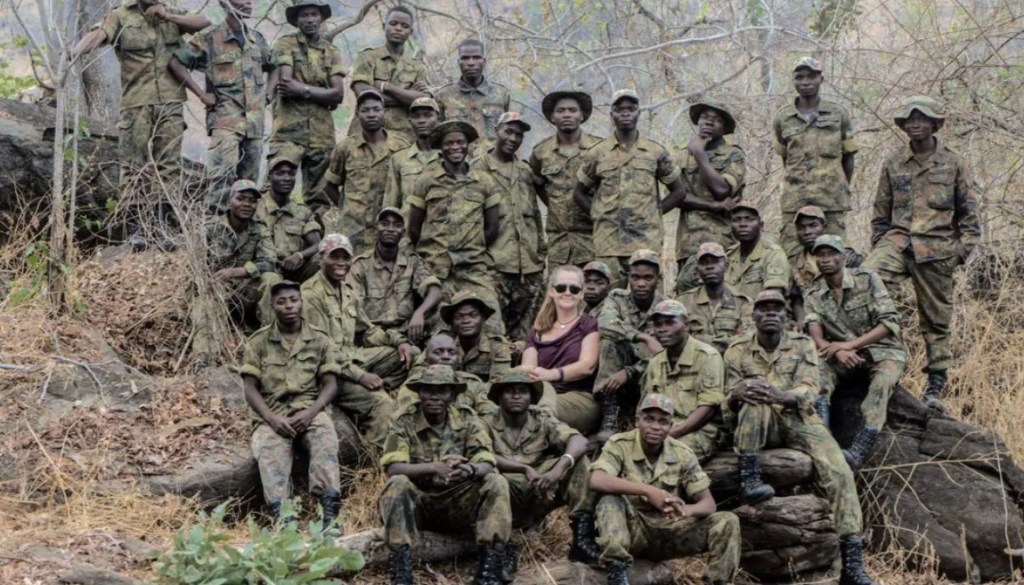
Lynn Clifford, WAG Field Officer Of Thuma and Dezdza-Salima Forest Reserves, is seen surrounded by her brave anti-poaching rangers who have recently expanded to 51 members. Thanks to Lynn and her team the Thuma Forest Reserve is now the most protected forest in Malawi. Work continues in the Dedza-Salima Reserve.