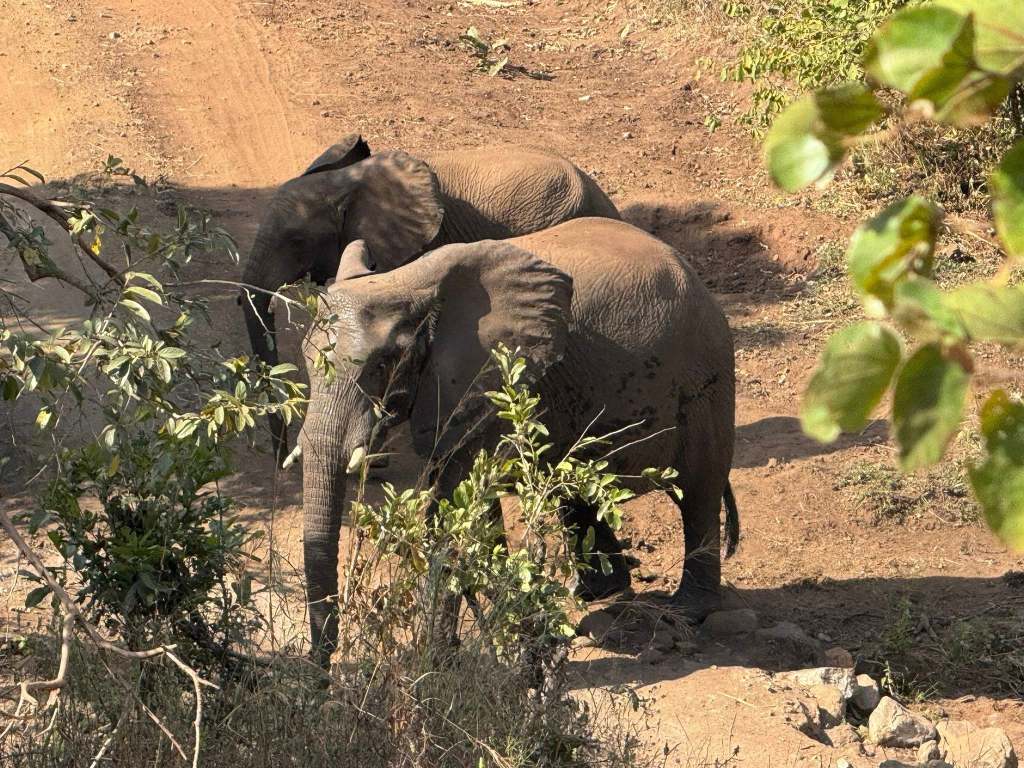
Elephant moms are the ultimate caregivers. Historical the elephants in Thuma have been very secretive and very rarely show themselves to people or cars due to terrible poaching over the years. But this is changing and we are thrilled to have regular sightings of bulls and breeding herds who are choosing to either come close to camps or/and allow cars to be somewhat near them I was honoured yesterday to be allowed to watch from a small distance while this threesome drank from a stream. Watching this mom with her two off spring reminds us how they raise their young with love and wisdom by moms who fiercely protect them. These gentle giants are true queens of motherhood and I am humbled that they allowed us to be so close to them.
Our trip to Malawi had several goals. First was to meet Lynn Clifford, Field Operations Manager of Wildlife Action Group (WAG) for the Thuma and Dedza-Salima Forest reserves. We had corresponded with Lynn over two years but not able to travel due to the Covid restrictions.
Lynn Clifford
Second was to review the fence we funded, thanks to a generous donor, which was the last section to encircle the Thuma forest. It is always our policy to make sure the money we send is actually being used as intended. Since the completion of the fence there has been zero human elephant conflict around Thuma much to the delight of the villages in the area. Their crops are now safe from marauding wildlife. It only takes one or two elephants to wipe out and entire harvest and leave a family fighting for survival. Raids by wildlife usually calls for killing the animals.
Solar power supply for the Elefence fence.
A fence also defines a clear boundary around the forest. Persons inside the fence without a permit to harvest bamboo for construction or to gather dead wood were usually doing something illegal such as poaching wildlife or cutting trees for charcoal production. The pictures below were taken of the same hillside inside the fence over three years. The first one shows the land almost completely denuded of vegetation. The second shows how the forest can recover if given the opportunity to regenerate.
Thirdly we wanted to review all the various community and ecological programs established by WAG to see where else we could help. Our primary mission is building solar powered electric fences but it is not possible to build a fence without the cooperation of the local villages surrounding the forest. The villages have had access to the forest for generations and you cannot take that way without providing them with alternatives. We toured the area with Austin Chimbalanga, the WAG Community Outreach Officer.
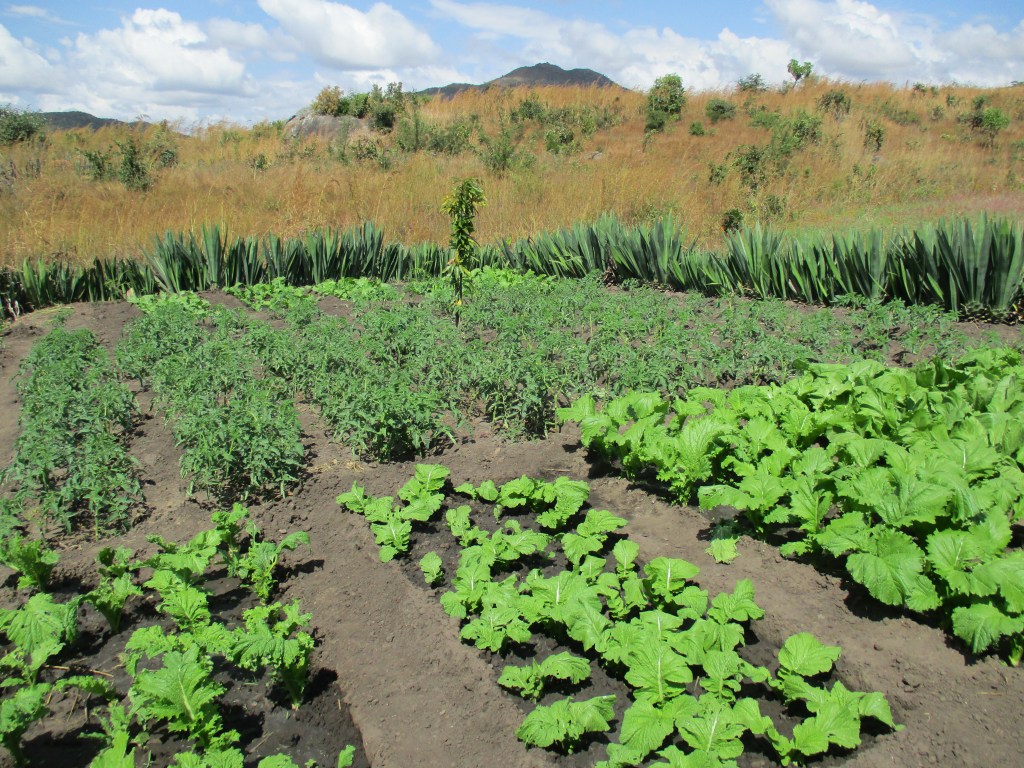
We visited several villages to see what programs WAG was supporting. WAG employs an agronomist to teach the local people how to grow and improve the yields in their gardens. They also supply poultry and goats which the villages can raise for protein, milk and to sell to provide income. They are taught beekeeping which is another generator of income.
Community garden
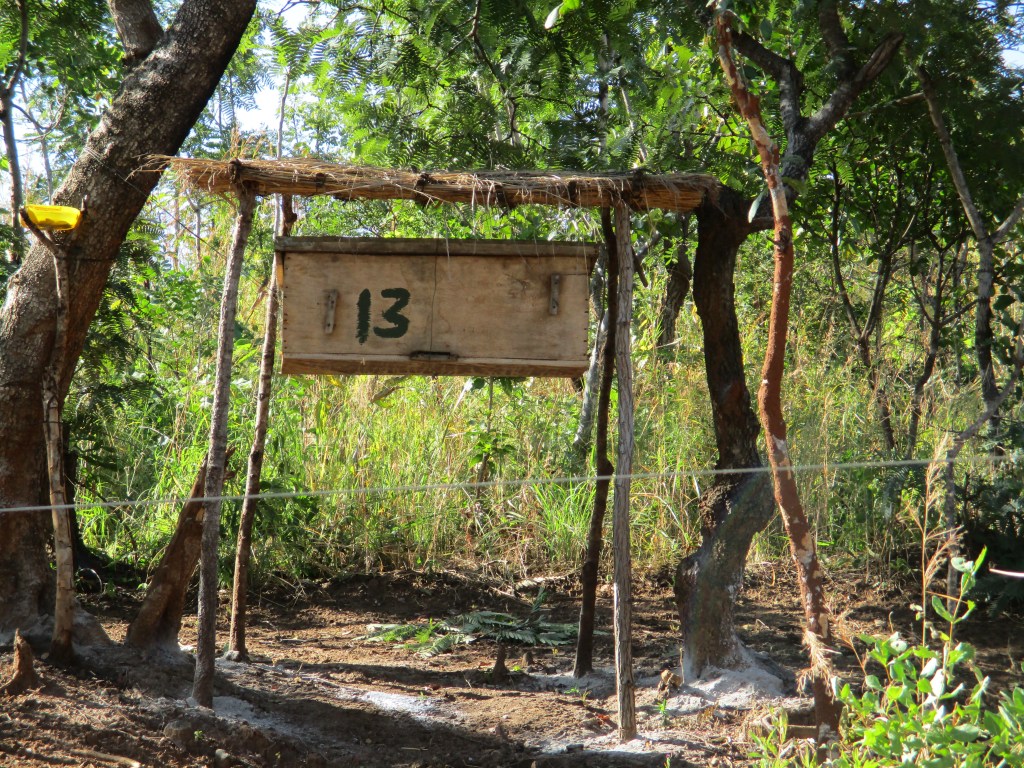
Bee hive. Raised to keep Honey Badgers and other animals out.
One thing three villages requested was a water well or borehole as it is called in Africa. We raised funds which were matched by other donors and the results were reported in a previous post.
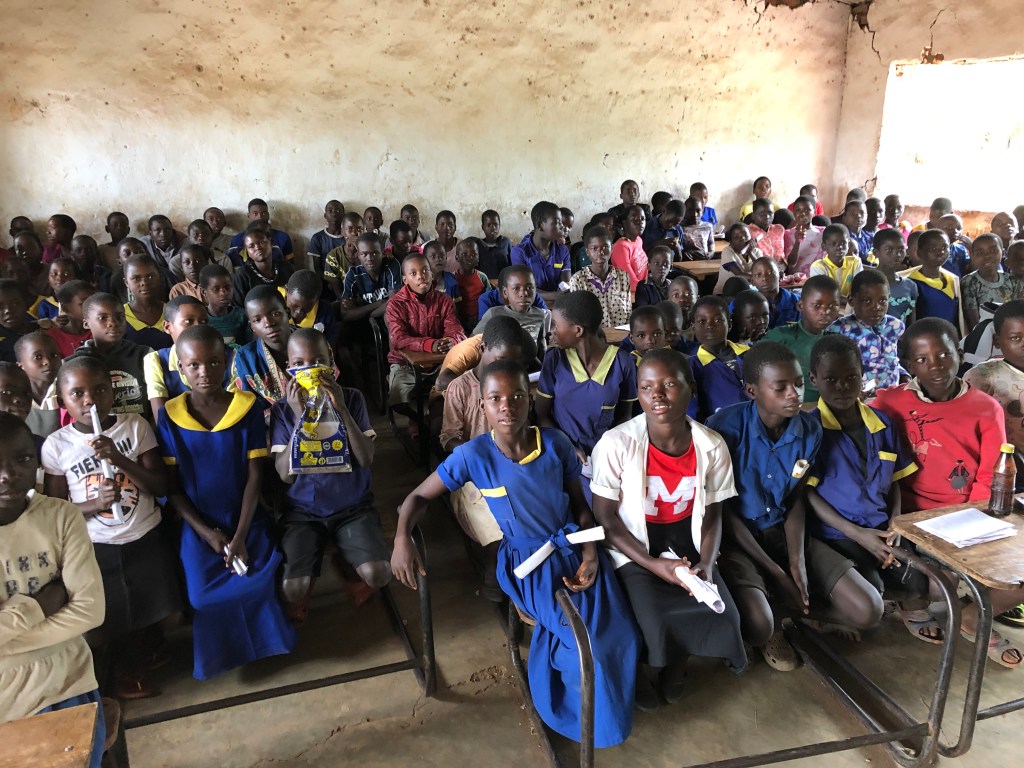
We visited an elementary and secondary school, meeting with the staff and visiting the classrooms. Elementary school is mandatory and free for grades 1-8 however it is horribly crowded. The one we visited had 832 students and only 13 teachers. A 64 to 1 ration is not very conducive to learning. The teachers however were dedicated and did their best for the students. High school is optional if the parents can pay for it, about $150/year. Unfortunately even this meager amount is well beyond the means of the average family. About 1 out of 25 children get an education beyond the 8th grade. After learning all this we started a scholarship program and pay for 10 students to attend high school each year.
Elementary classroom
High School class
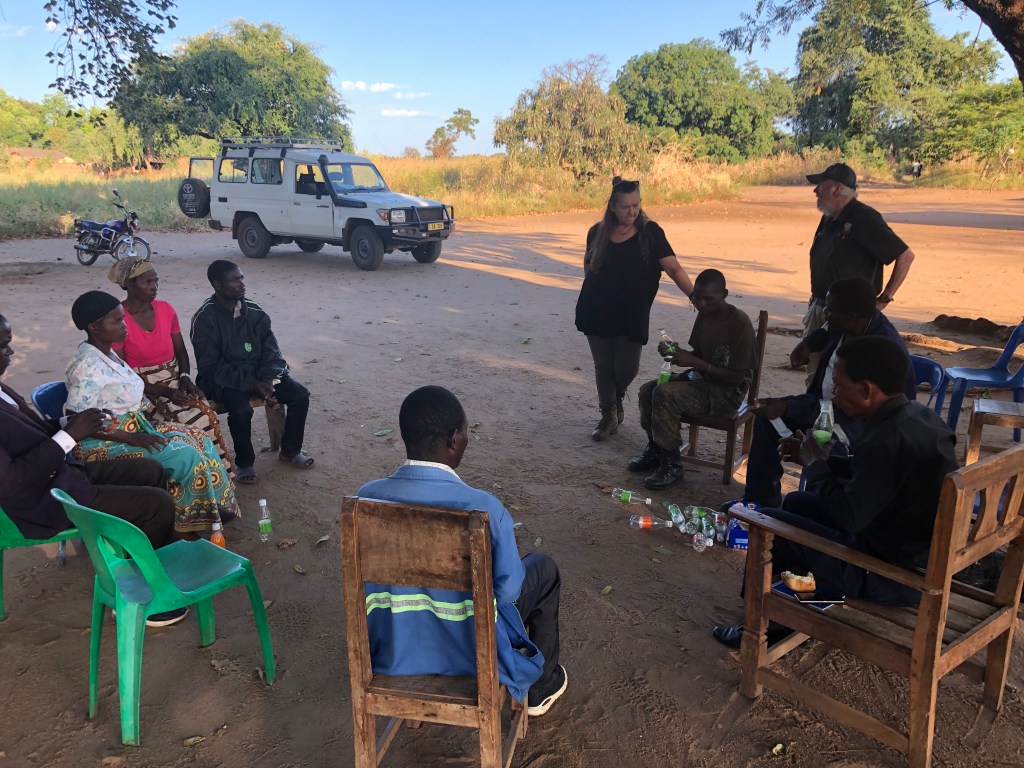
We were honored to attend a council of village chiefs with Lynn. The group discussed the problems they were facing and various solutions. We could not understand the discussions but Lynn told us one of the main concerns was the threat from local gangs who poached wildlife and cut trees for charcoal production. These are not individuals feeding their family but rather organized gangs who routinely were a danger to the locals as well as the rangers who patrol the forest. Rangers have been injured and even killed by these gangs. Lynn emphasized that the villages had to work together to support each other and report illegal activity to WAG or the local authorities. Elefence supports the rangers by awarding a small cash bonus of $3 for every successful apprehension and conviction of a criminal. Note that two of the chiefs were women. Transfer of power to a new chief passes through the mother and sometimes there is no male heir so it will go to the next female in line.
Council of Chiefs
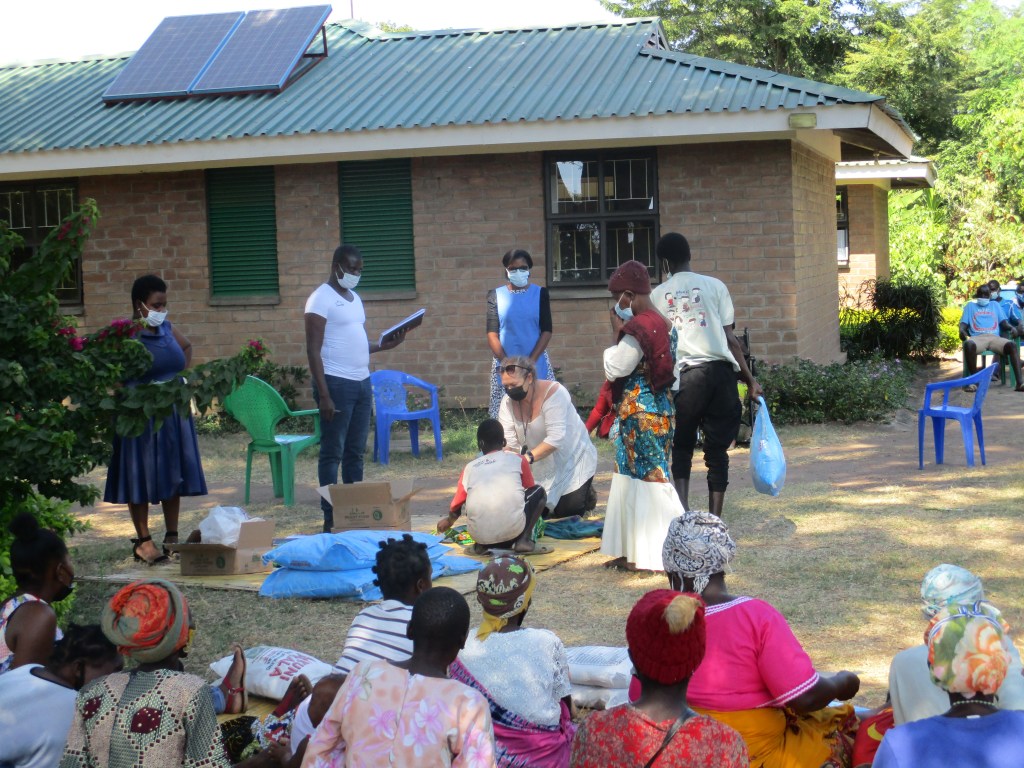
We visited what Lynn called “An end of life clinic” which is what we refer to as a hospice center. The clinic is funded by a charity from Ireland and Lynn sits on their board. They dispense pain and other medication to ease a person’s exit from life on earth. They also provide food for patients and their families since most of the patients cannot work. Most of the people in the photo have some kind of terminal disease and the clinic nurse told us that 90% the women which need the clinic’s services have cervical cancer. Lynn pays a nurse to make monthly visits to the local villages to educate women and urge them to come to the clinic to get tested before it is too late.
Elephants have some unique and interesting physical properties in addition to their immense size. These properties have evolved over millions of years into the amazing creature we know today. Consider the following:
Look at the large pad on the bottom of their front leg. This feature serves to distribute their weight so they do not sink in soft ground and provides a cushion as they walk. It will retract somewhat when they lift their leg so it breaks the suction from walking on muddy ground.
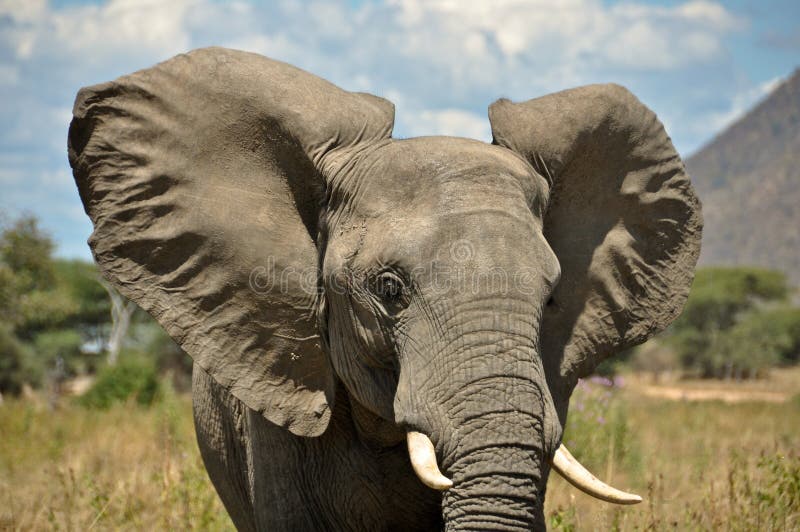
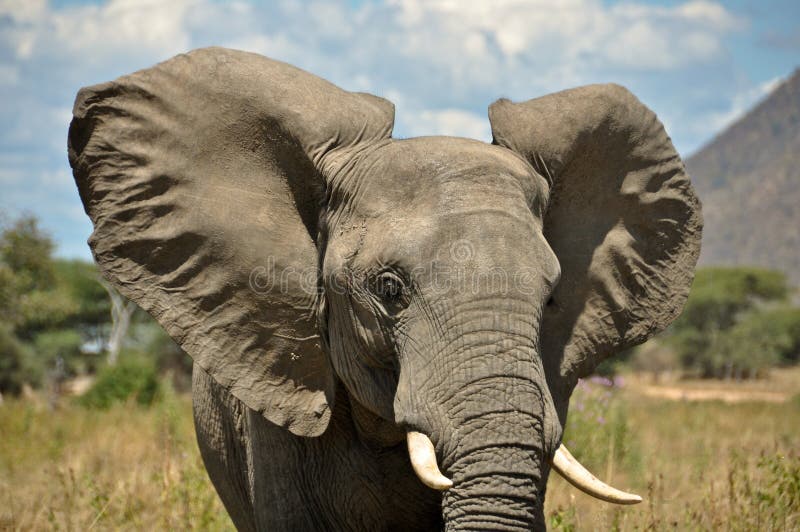
An elephants ears do much more than detect sounds. Their primary function is to radiate heat from their body. The ears are filled with capillaries which carry heat from the body so it is dispelled into the air. The ears also give evidence as to the elephants state of agitation. A nervous elephant will shake its head or rapidly flap their ears if they are apprehensive about something. They will also hold their ears out wide to make themselves look larger.
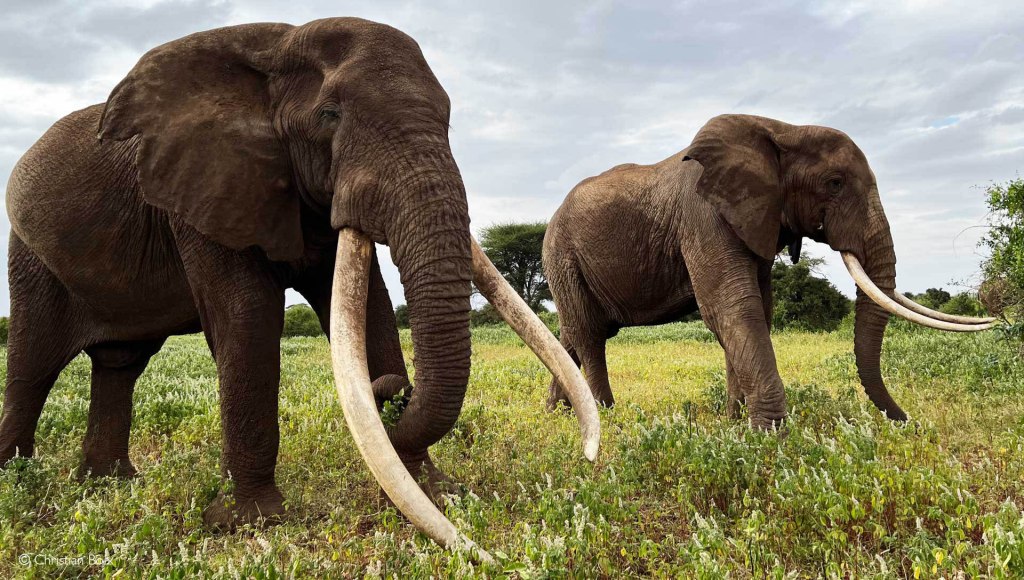
Certainly one of the most striking features are the tusks which protrude from their face. They are both a tool and a weapon. A tusk is a modified incisor tooth and grows throughout their life although it can be worn down from use. Elephants are right or left handed just like humans and the worn tusks tells you which. Unfortunately they are also the cause of hundreds of thousands of elephant being slaughtered for their ivory in order to be sold into the Asian market to make trinkets, jewelry and statues. The poaching of elephants for their ivory is responsible for the fact that there are less than 50 old ‘Tuskers’ left with massive tusks which were once a common sight in Africa.
A right handed elephant
One of the few super tuskers left
The trunk is a most useful appendage for an elephant. They eat with it, drink with it, smell with it, trumpet with it, and greet other elephants with it. Their sense of smell is four times greater than that of a bloodhound. They will use it to siphon up water to spray over their body or to give themselves a dust bath to protect their sensitive skin. It contains over 100,000 individual muscles which makes it both very strong and yet flexible. The prehensile tip can pick up something as small as a peanut and are able to crack the shell without breaking the nut inside.
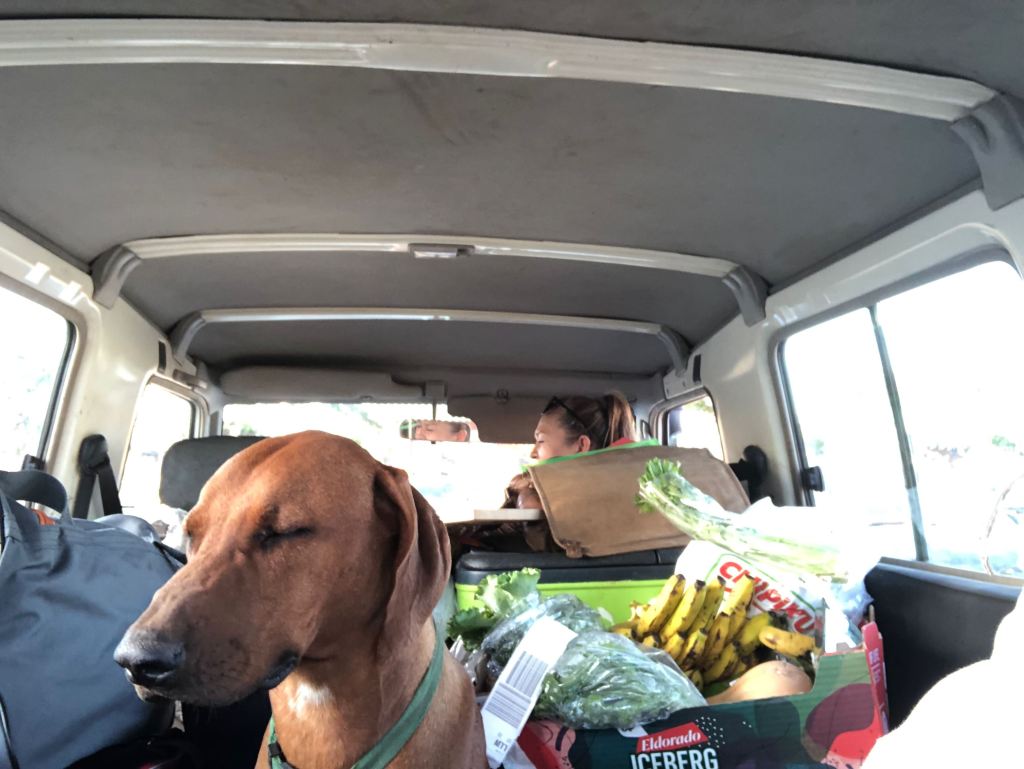
In the spring of 2022 Dick and I made the long and arduous trip to Malawi to visit our partner there, Wildlife Action Group (WAG). We started in Cleveland, OH and flew from there to Newark Liberty airport where we boarded a United Airlines 787 Dreamliner for the 15 hour flight to Johannesburg, South Africa. We cleared customs and stayed overnight in a small guesthouse near the airport. The next day we went back to the airport and took an Ethiopian Air 3 hour flight up to Lilongwe, Malawi. Lynn Clifford, the WAG field operations manager met us and took us on a 2 hour drive back into the WAG base camp in the Thuma Forest Reserve. Lynn had taken the trip to the city as an opportunity to pick up supplies for the camp. Dick rode up front with Lynn in the Land Cruiser and I rode in the back with the supplies and Lynn’s dog, Tarik.
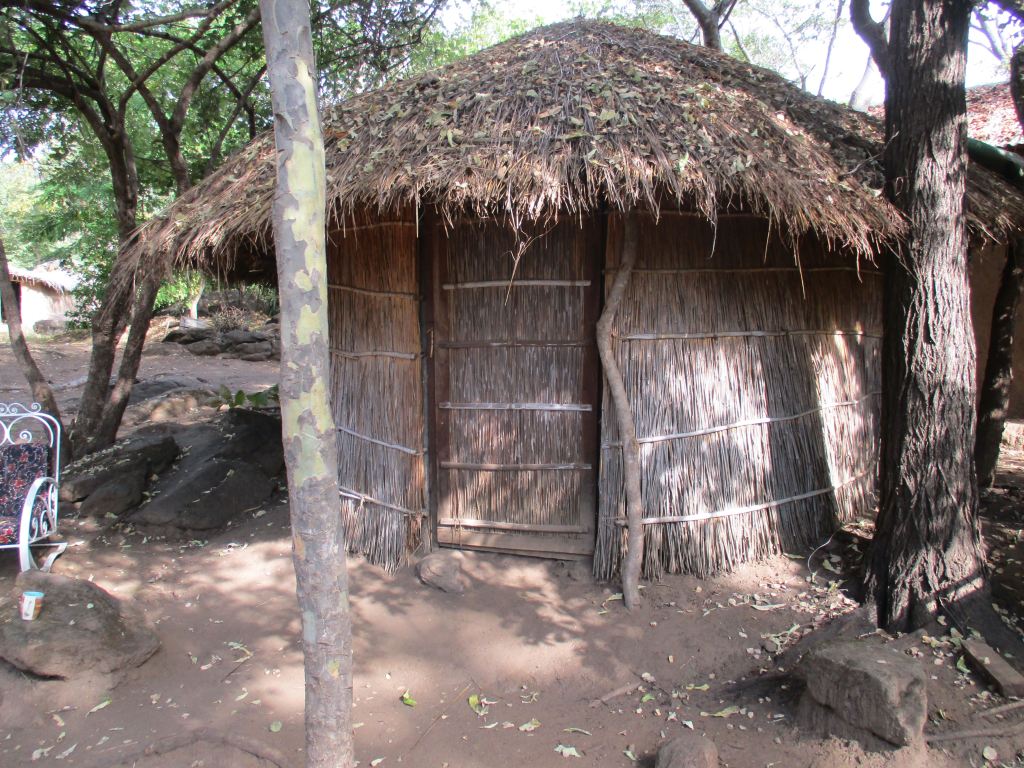
Upon arrival at the base camp Lynn gave us a quick tour and showed us our quarters for the next two weeks. We had two grass huts about 9 ft in diameter. Inside was a bed surrounded by mosquito netting, a chair, a shelf unit on which we could store our gear and a small table with a candle and matches. The floor was dirt covered by a grass mat. There was just enough room to stand up to get dressed. I shared my hut with a small lizard who skittered around chasing bugs, a bat which flew in and out occasionally and a large black spider who climbed up the netting. I dispatched him with my shoe the second night. Dick shared his tent with the camp cat, Kango, which means lion or panther.
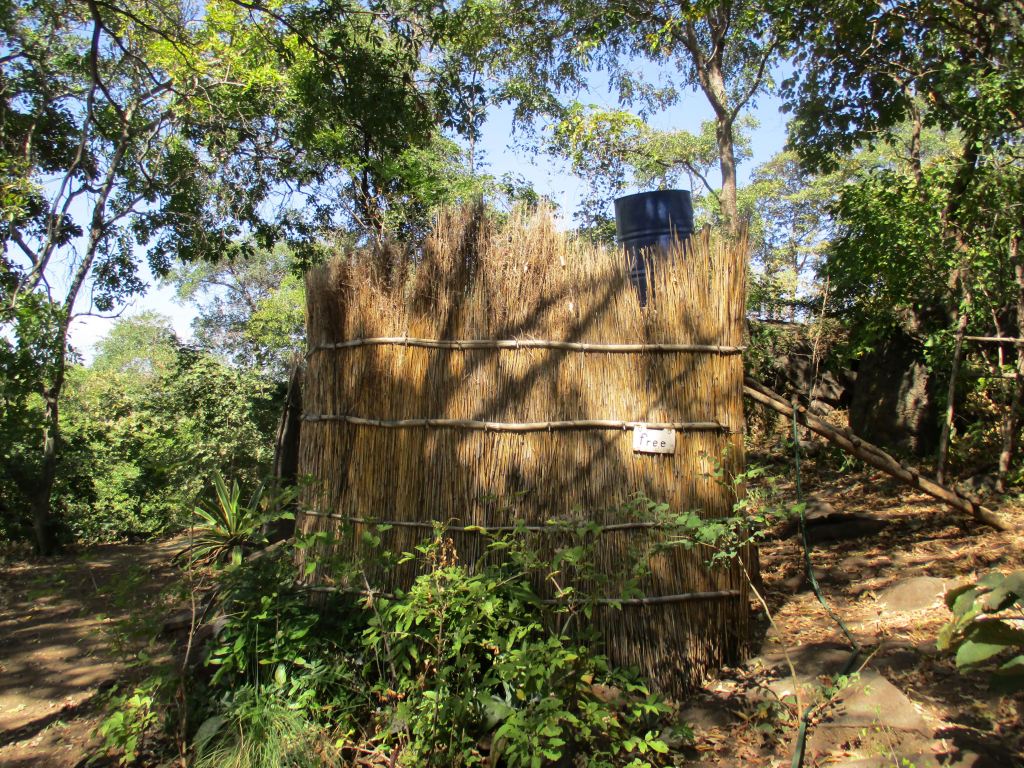
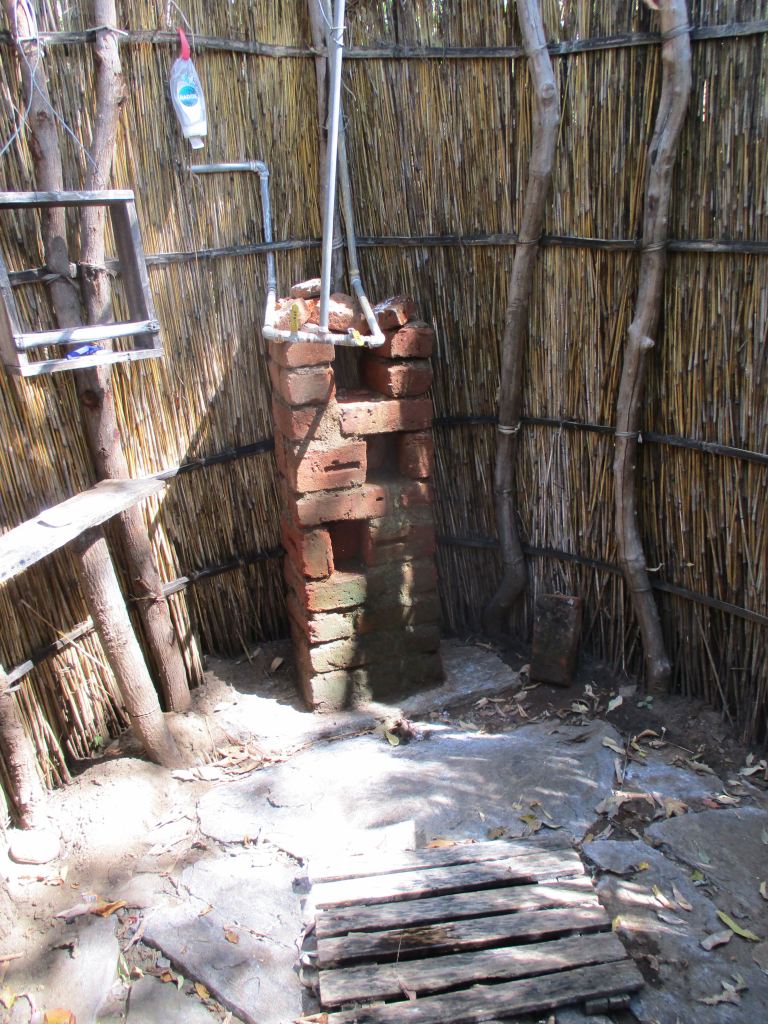
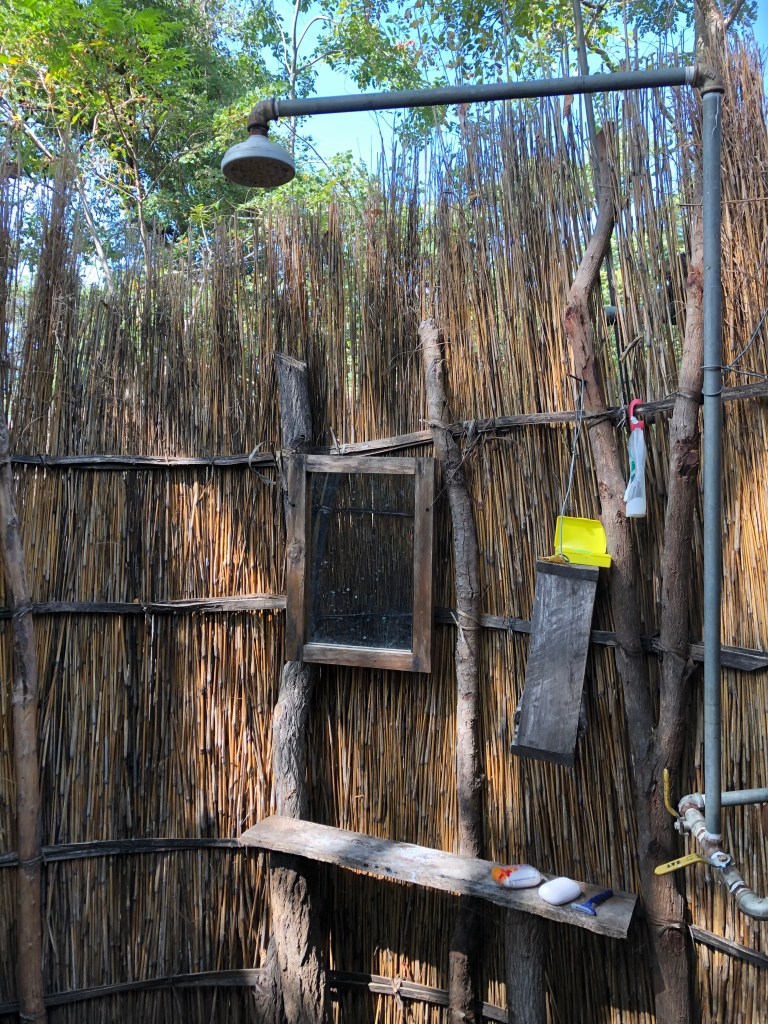
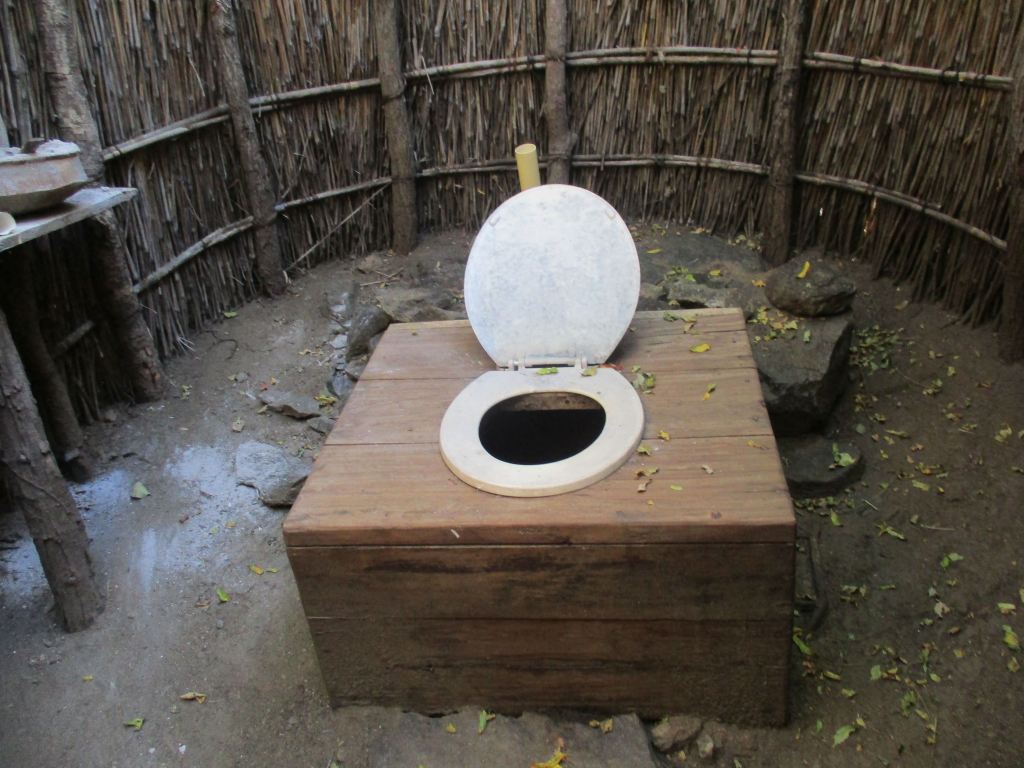
Down the hill from our huts was a shower hut. About every second or third day the camp crew would light a fire under a large drum to heat water for our showers. Further down was the latrine which Dick christened our Martha Stewart toilet.
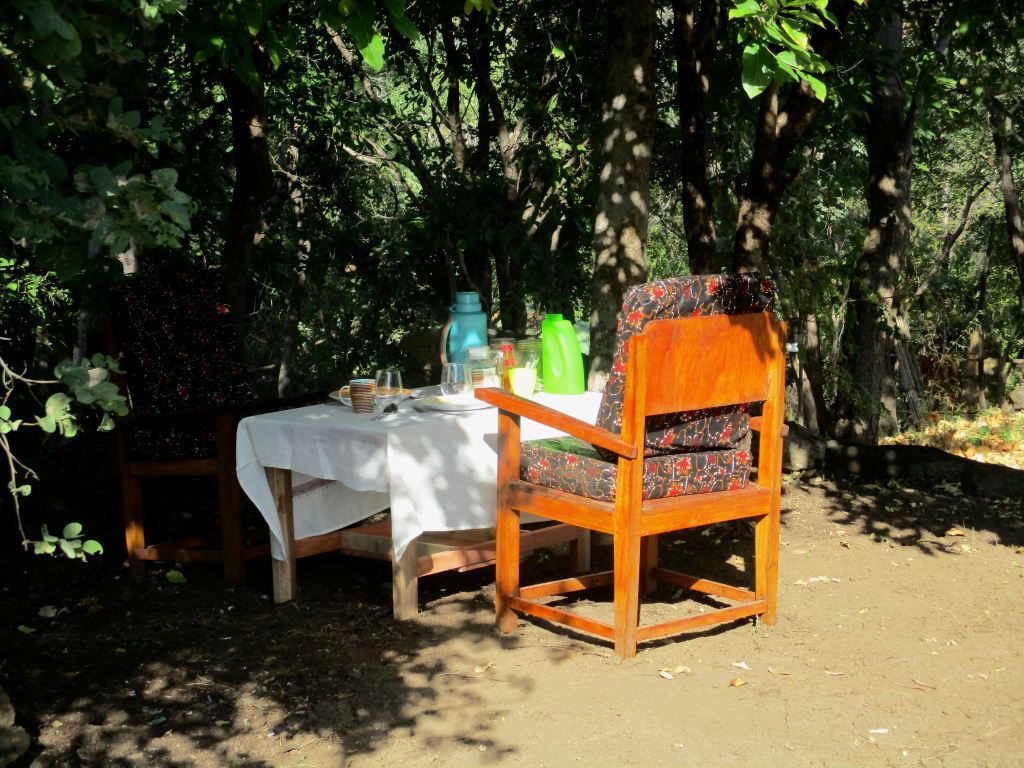
Up the hill was a small flat area with a table at which we had breakfast and lunch if we were not in the field. Further up was the camp office and a small room with a table and chairs where we ate our dinner.
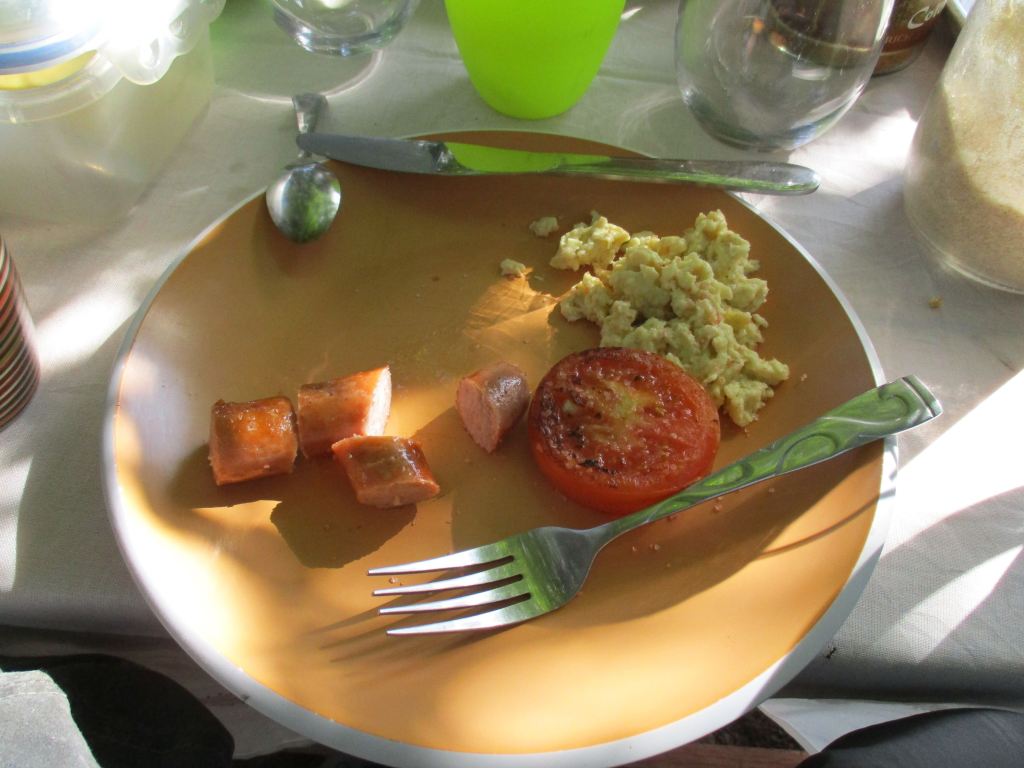
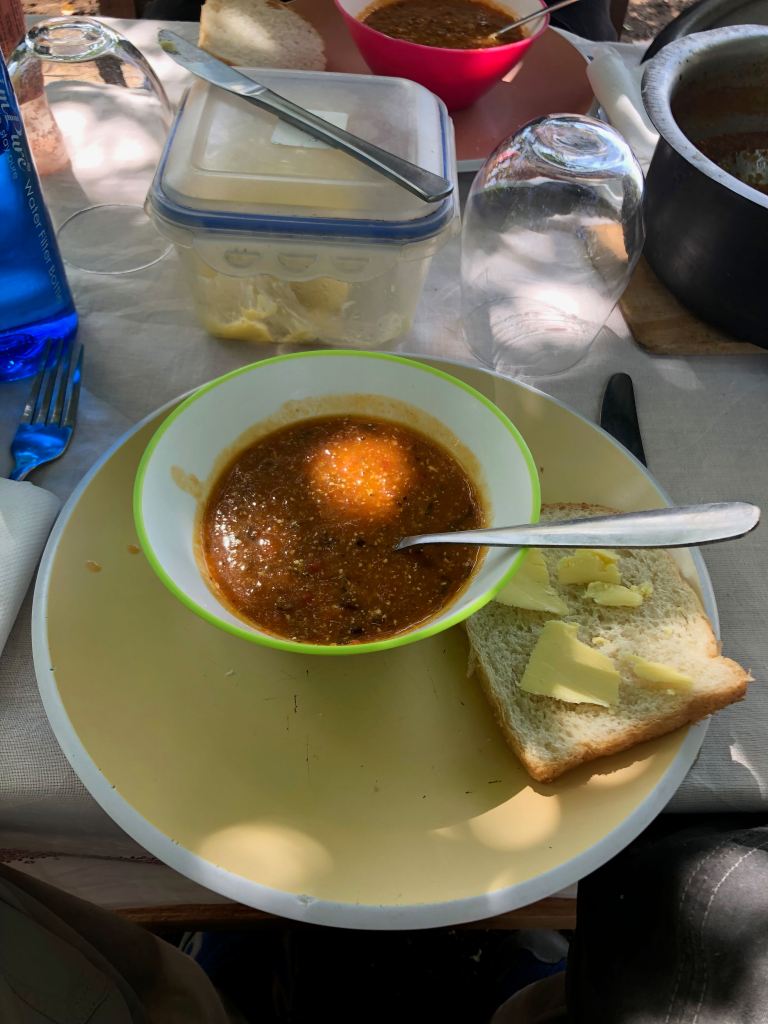
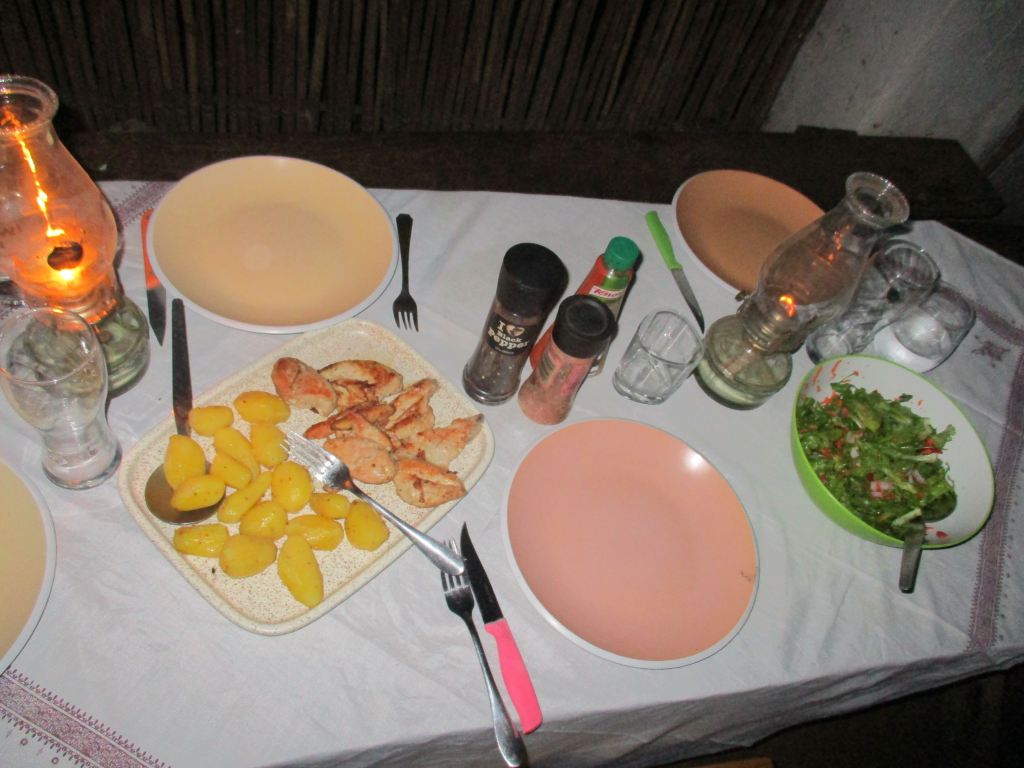
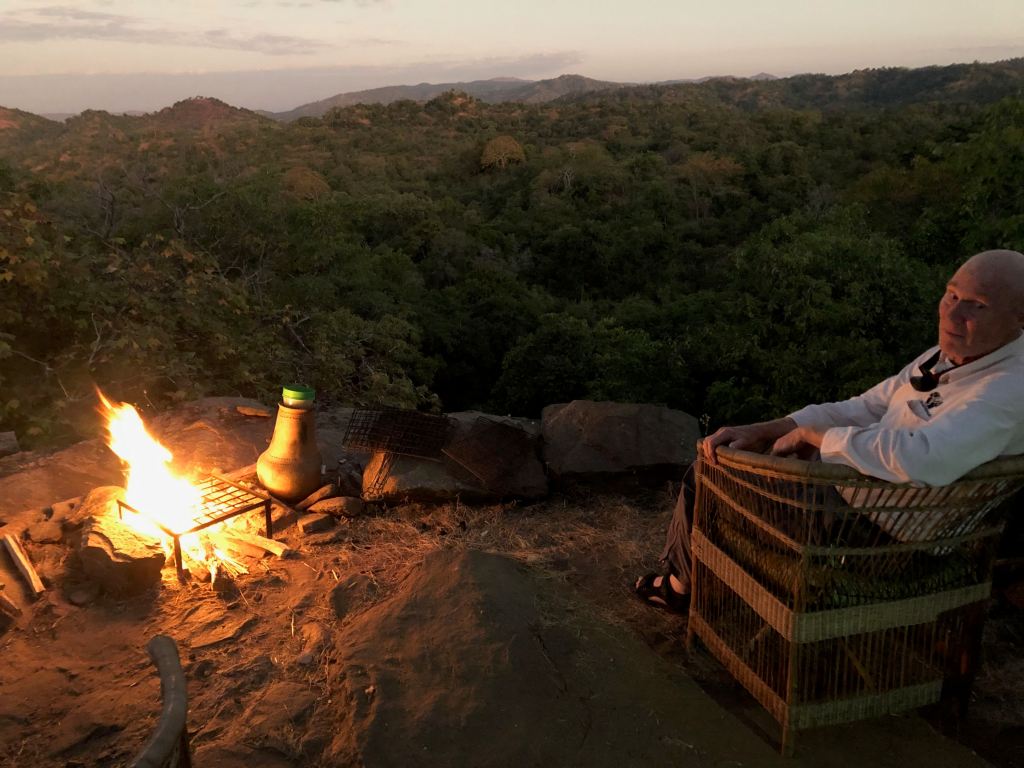
Our meals were prepared by a cook and were simple but surprisingly good. Breakfast was usually scrambled eggs, sausage if you wanted it and toast with butter along with strong black coffee. Lunch, if we were not away in the field, was usually a thick vegetable soup with bread. Dinners were roast chicken, spaghetti, or beef accompanied by potatoes and a salad. What might be left over one night was served again the next. Previous to our meals was usually ‘Sundowner Time’, wine or a G&T and we sat around a fire and listened to Lynn and Dick exchange stories about their time in the bush. It was entertaining to say the least.
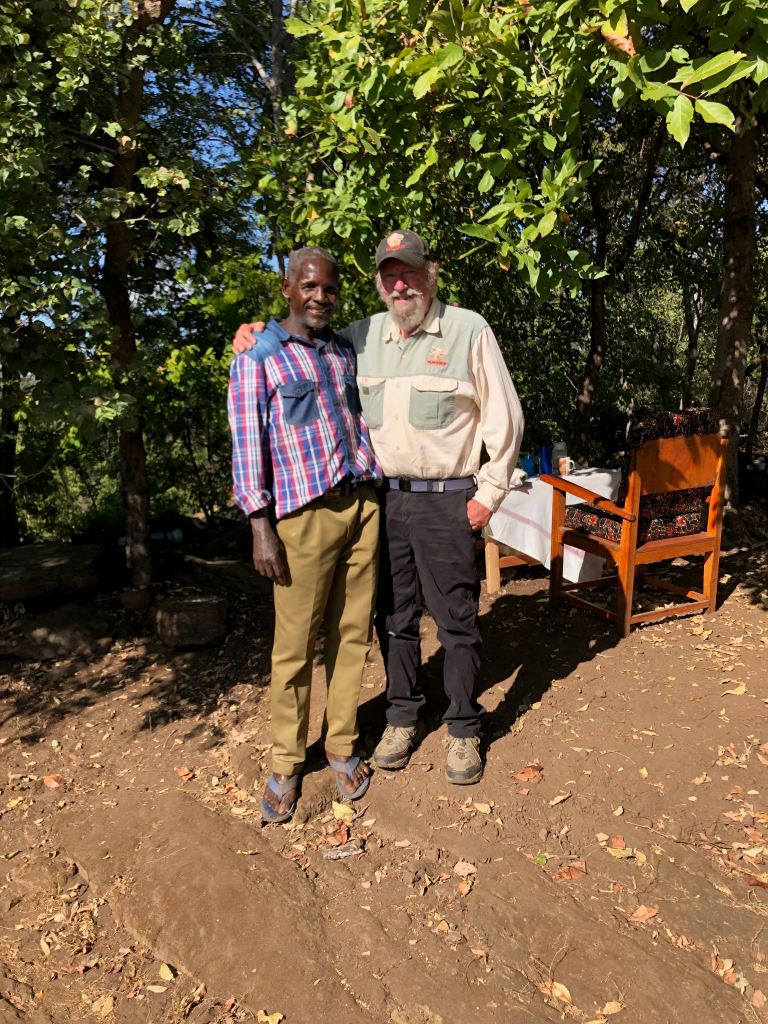
Dick with our cook, Facsome.
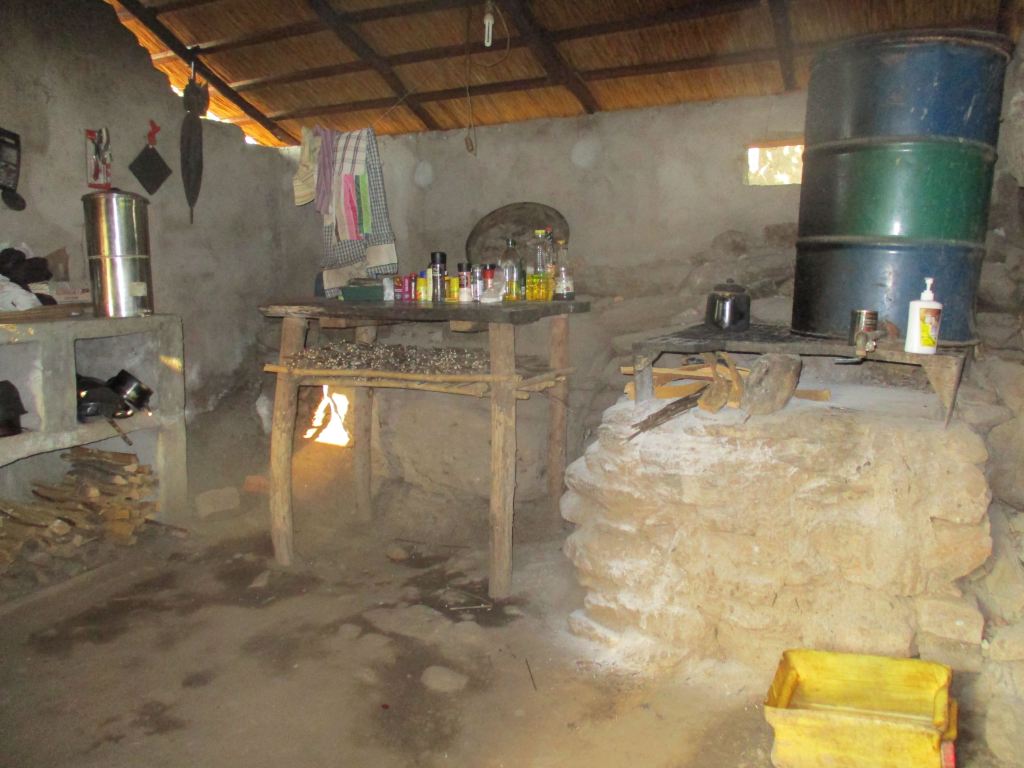
Camp kitchen
Evening sundowner
So ends part 1 of our time in Malawi. Part 2 will describe our experiences during the two weeks we were in Malawi.
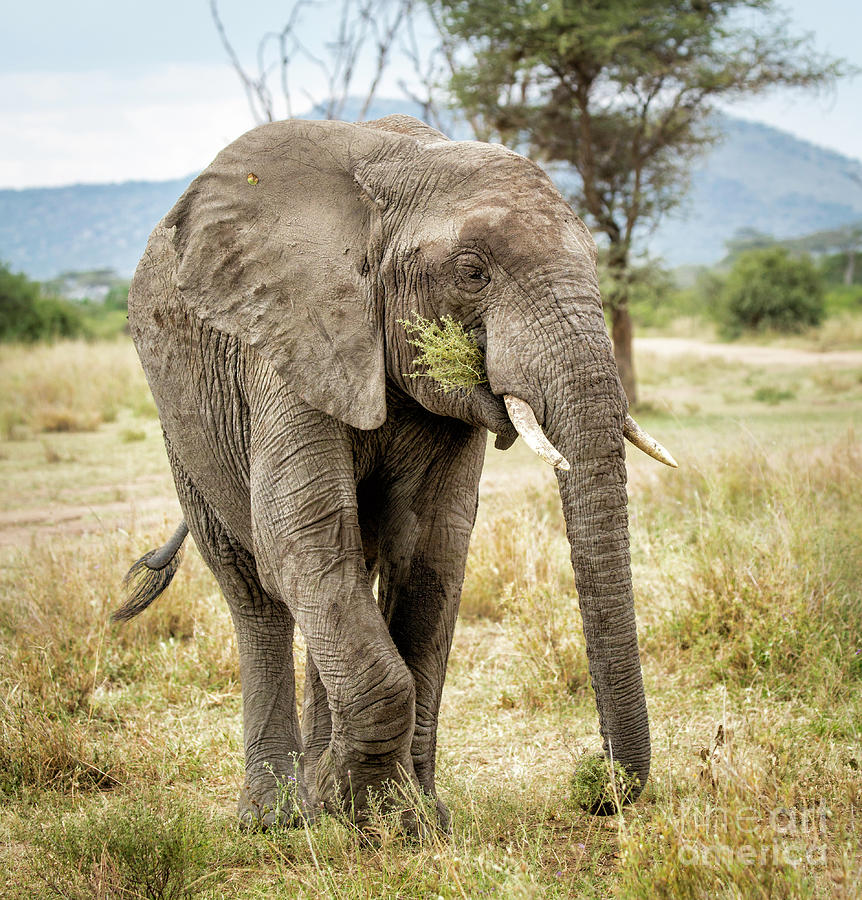
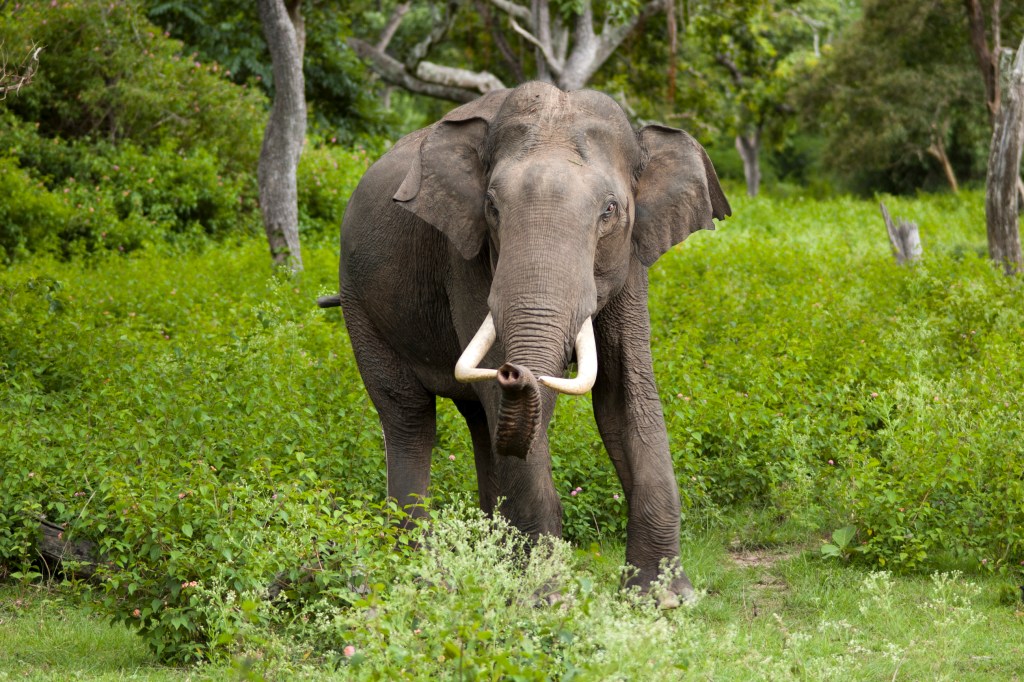
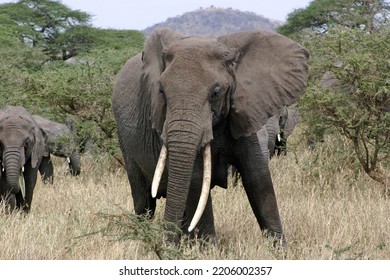
There are two species of elephants on earth today. The African elephant and the Asian elephant. They are genetically different but easy to identify just by looking at their head and ears. For the most part however they share the same traits and abilities so we can consider them as one species. Zoologists break down the African elephant into two sub species, the bush or savannah elephant which lives in more open areas and the forest elephant which lives in jungle or wooded locations. Once again however we can really consider them as one species.
African elephant
Asian elephant
Elephants are the largest land animals alive on earth today. A mature African bull elephant can stand 13 ft tall at the shoulder and weigh upwards of 7 tons. It is difficult to appreciate just how big they are unless you are up close to them or you see them next to a familiar object.
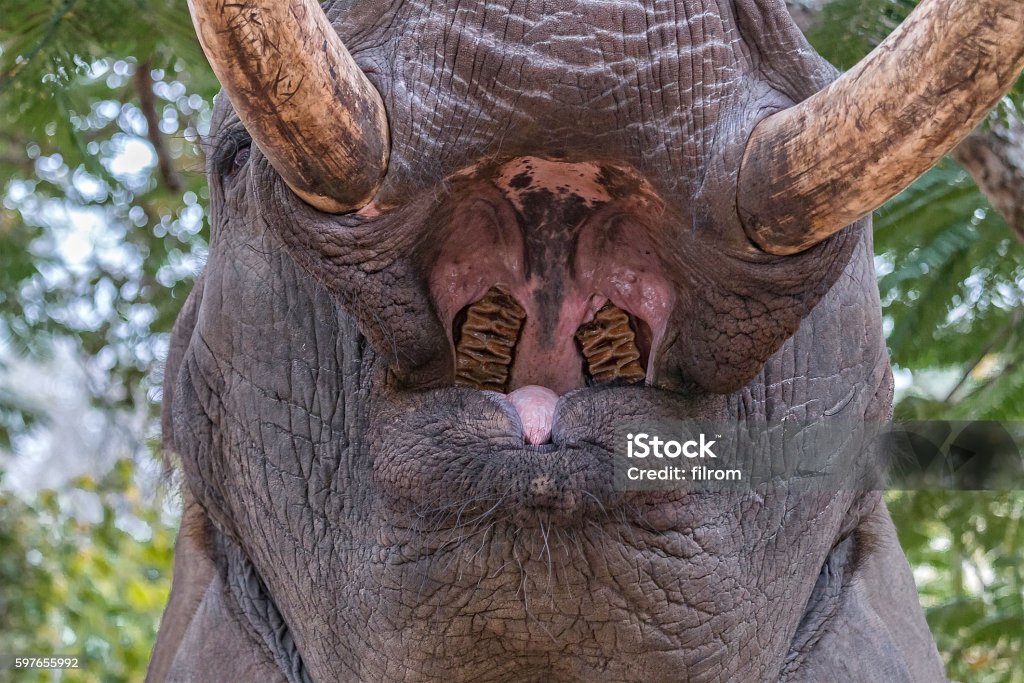
Elephants live on average to between 60 and 70 years of age. They have 5 to 6 sets of molars in their jaws with which they use to grind their food. As the ones in the front wear down and fall out the ones in the rear move forward to replace them. When the last set is gone they can no longer properly feed themselves and basically die of starvation. Sadly elephants kept in zoos die at around 40 years of age. Elephants are hard wired to move about and travel freely and they need the social interaction with other elephants. The stress of captivity significantly shortens their life. Remember this when you see an elephant at a zoo.
Close up of an wide open elephant mouth. It shows anatomic details of the elephant throat like its teeth, tongue and the roof of the mouth
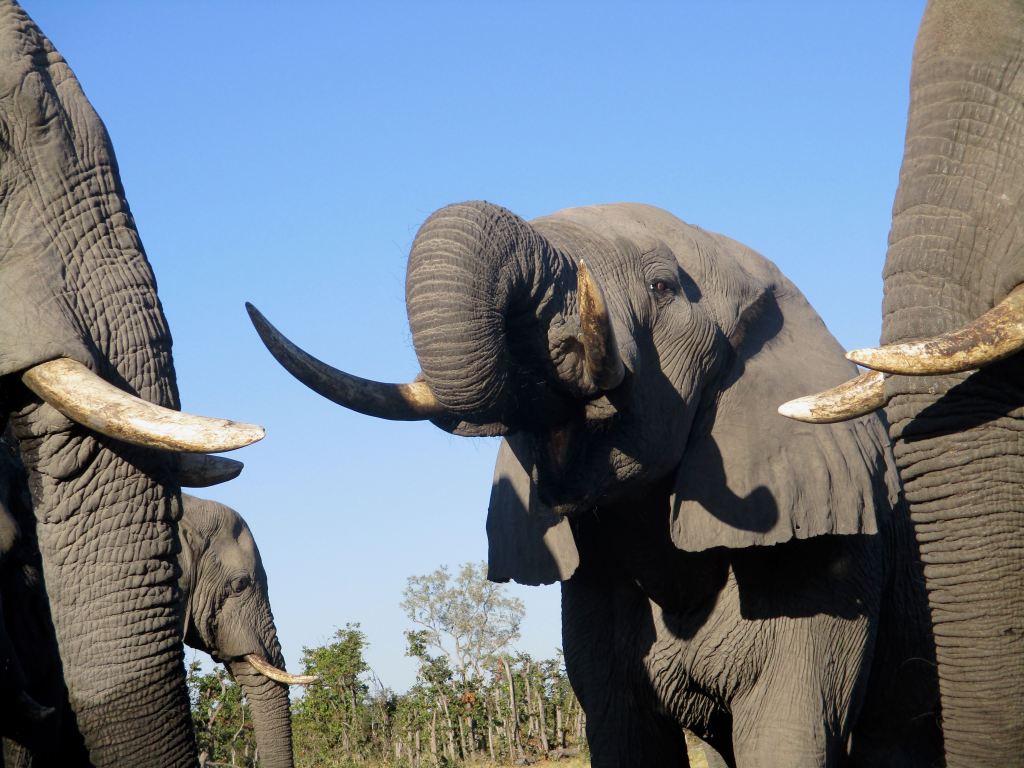
Elephants are right or left handed just like humans. You can tell by observing which tusk is worn down more than the other.
Left handed elephant
Right handed elephant
The saying that ‘An elephant never forgets’ is very true as they have amazing memories. Their brain is 4-5 times larger than a human’s, is very similar in construction and much of it is dedicated to memory. They navigate long distances by remembering the directions and trails they have taken in the past. They remember the location of waterholes and can recognize individual elephants they’ve had a relationship with in the past.
They can remember the location of fruit trees and when the fruit will ripen and fall to the ground. Elephants routinely push over small trees to get at the tops to eat the leaves. They don’t do this with fruit trees however, as they have learned that if they do that the tree will never again bear fruit again. So they butt the tree with their head or grab it with their trunk and shake the fruit loose. They eat what falls to the ground and return later to do it again.
Elephants don’t sweat but need to disperse heat from their large bodies. An elephant’s ears are filled with many blood vessels and act as radiators to keep the elephant cool.
Stay tuned for a post about some of the elephant’s physical properties.
This is a post from our newsletter from February 2024 which we thought was worthwhile to see again.
Elefence International has been in existence for over 25 years. In that time it has done conservation and humanitarian projects in Zambia, Zimbabwe and now in Malawi. The most recent project was funding water wells for villages around the Thuma and Dedza-Salima forest reserves. It started almost two years ago when Dick and I visited Malawi and toured a couple of villages. We asked the Wildlife Action Group field manager, Lynn Clifford who was our host, what the villages needed and she said a water well or bore hole as they call it. Upon our return we put out a request to our supporters for $3000 to fund a well. To our great surprise we surpassed our goal and almost had enough for two wells. Based on our success Lynn was able to secure matching funds to do three wells.
It was a tedious process to get the wells installed as Lynn had to contract and schedule a driller as well as work around the rainy season and the problem of getting equipment into remote areas. The whole process took many months.
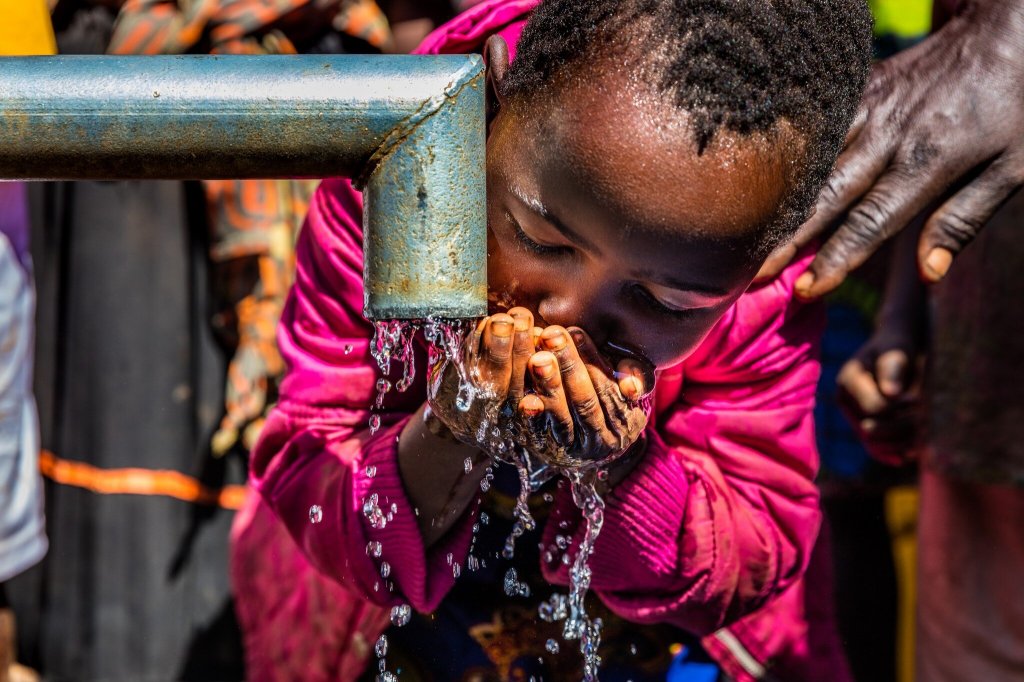
Until I visited the area I had no idea how much a well means to a village. We are used to opening a faucet and immediately clean clear water comes out. The wells looks crude to us but to a village it is life itself. In most villages the people have to carry water long distances from another village or often from a polluted stream. A well or borehole as it is called significantly reduces disease and provides water for their gardens which supply the much needed nutrition.
A quote from one of the village chiefs where a well was installed from Lynn’s email: PS we met the chief from the village where we placed your bore hole…….OMG i almost cried his testimony was “Many years ago WAG was our biggest enemy, as it seemed to us they blocked our access to the forest. Today is a different story, some of our people have employment, we are seeing the forest get bigger, WAG are in our schools helping our children, you have given us fresh clean water, whereas before we drank with the animals, we even have projects were people are growing food all year around. We now know WAG truly are a great partner and our friends” The phrase that struck me the most was “Before we drank with the animals”. Unreal!
Following are some photos from the wells.
In the near future I will post about our efforts to help educate students.
Daphne Sheldrick was a remarkable individual. Born in 1934 in Kenya to British parents she became interested in animals at a young age and maintained that interest throughout her life. She is an author, an expert in animal husbandry and is particularly noted for the raising and reintegrating of orphaned elephants back into the wild. She along with her husband, David Sheldrick, was co-warden of Tsavo National Park for 21 years. She is the founder of the Sheldrick Wildlife Trust, (SWT) one of the oldest and most respected conservation organization. SWT is dedicated to the conservation, preservation and protection of wildlife.
Baby elephants are particularly hard to raise. They are usually orphaned because the mother has been killed by poachers for its ivory. They are often so traumatized they refuse to eat or drink and will die mainly from grief and loneliness. If they can get them to feed they have to be bottle fed a special formula every 3 hours round the clock. For years no one knew what to feed them as they could not process cow’s milk. It was Daphne who discovered that coconut milk is most like that from a female elephant and mixed with baby formula baby elephants could digest it properly. Her discovery is credited with saving thousands of baby elephants who would otherwise starve to death.
Sheldrick was a recognized authority on the rearing and rehabilitation of many wild creatures, including not only elephants but black rhinos, buffalos, zebras, elands, kudus, warthogs to name a few. For her work as a conservationist she was awarded an MBE, Most Excellent Order of the British Empire, by Queen Elizabeth and separately elevated to UNEP’s Global 500 Roll of Honor. She was awarded an Honorary Doctorate of Veterinary Medicine by Glasgow University along with several other prestigious recognitions from Kenyon, British and conservation organizations.
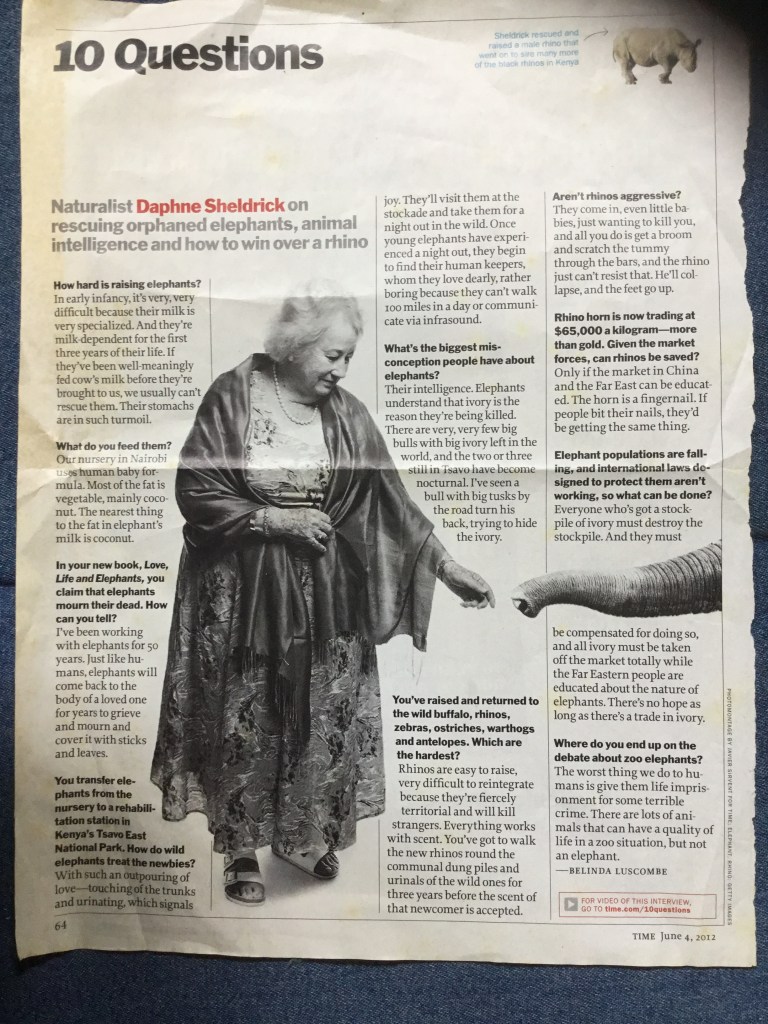
The page below is from an interview down by Time magazine in 2012. Daphne died in 2018 after a battle with breast cancer but her legacy will be felt for generations to come. Elefence recommends reading her book, “Love, Life, and Elephants: An African Love Story”.
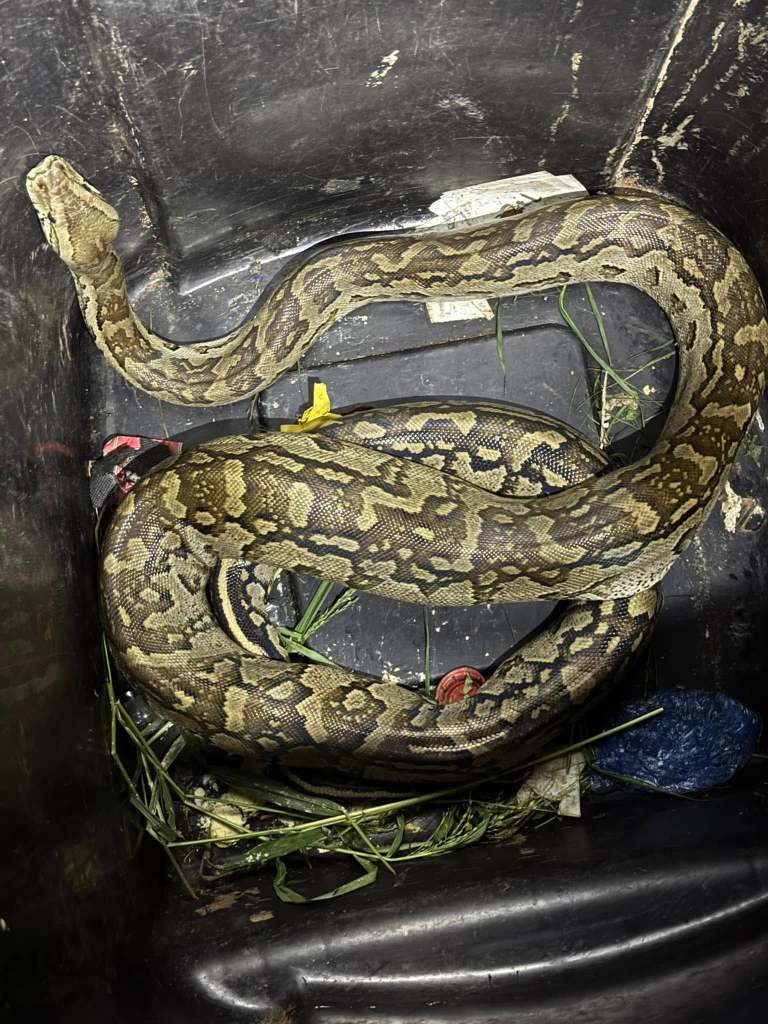
What a great end to the day ! After a long day in the city (which I hate doing ) I got a call about a rescued snake needing a home ! So at about 7pm we met one of our fab partners Hector from #JCM who are responsible for several solar plants in Malawi. JCM as part of their environmental commitment have trained Hector about snake handling and capture. So hector captures any reported snake and contacts us so we can relocate them in a safe area in the wild. To date this partnership has relocated and released over 50 snakes back into the wild where they can live safely. That’s conservation This one was a young African python, approx 2 Meters long
By Lynn Clifford, Wildlife Action Group field manager
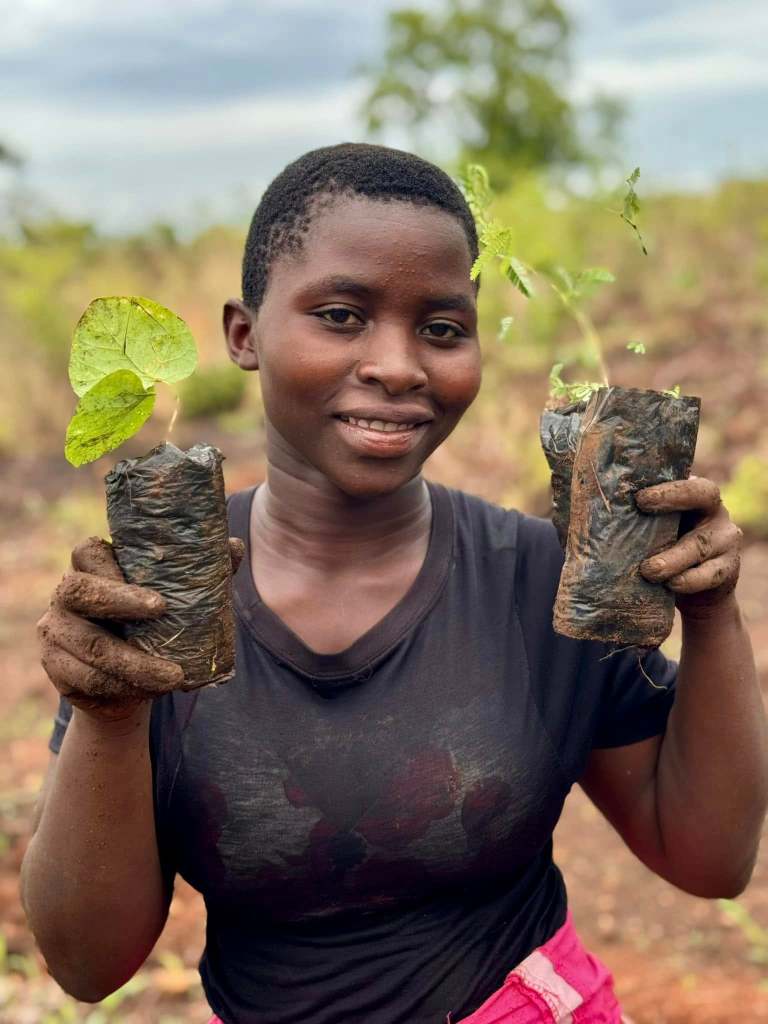
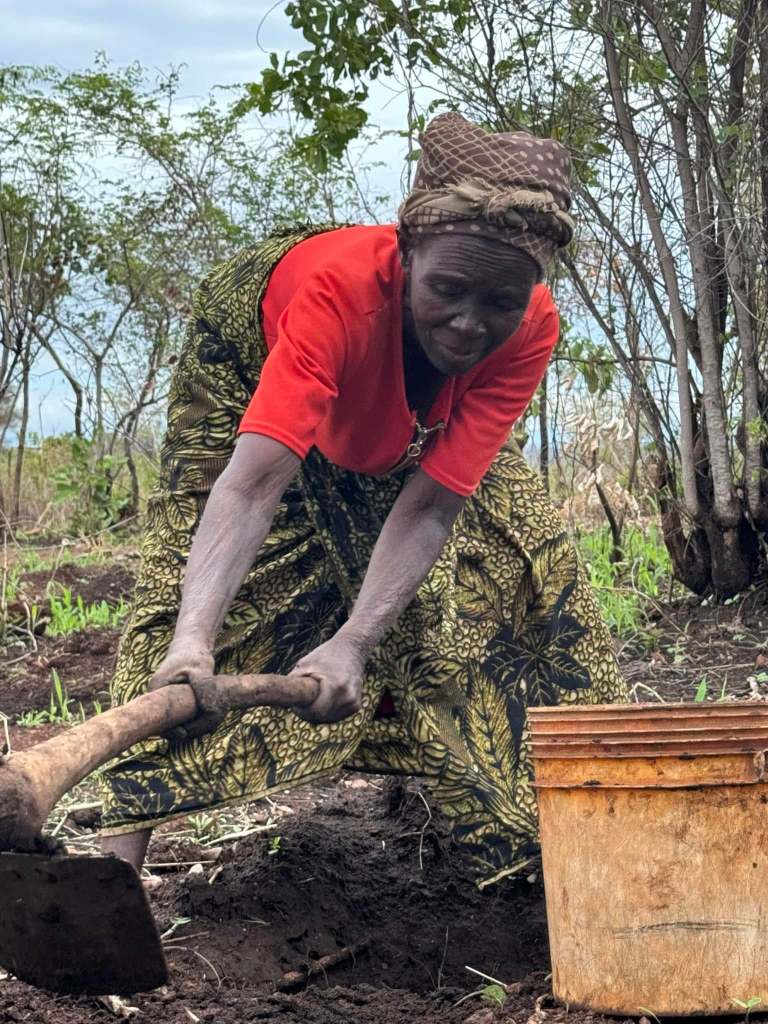
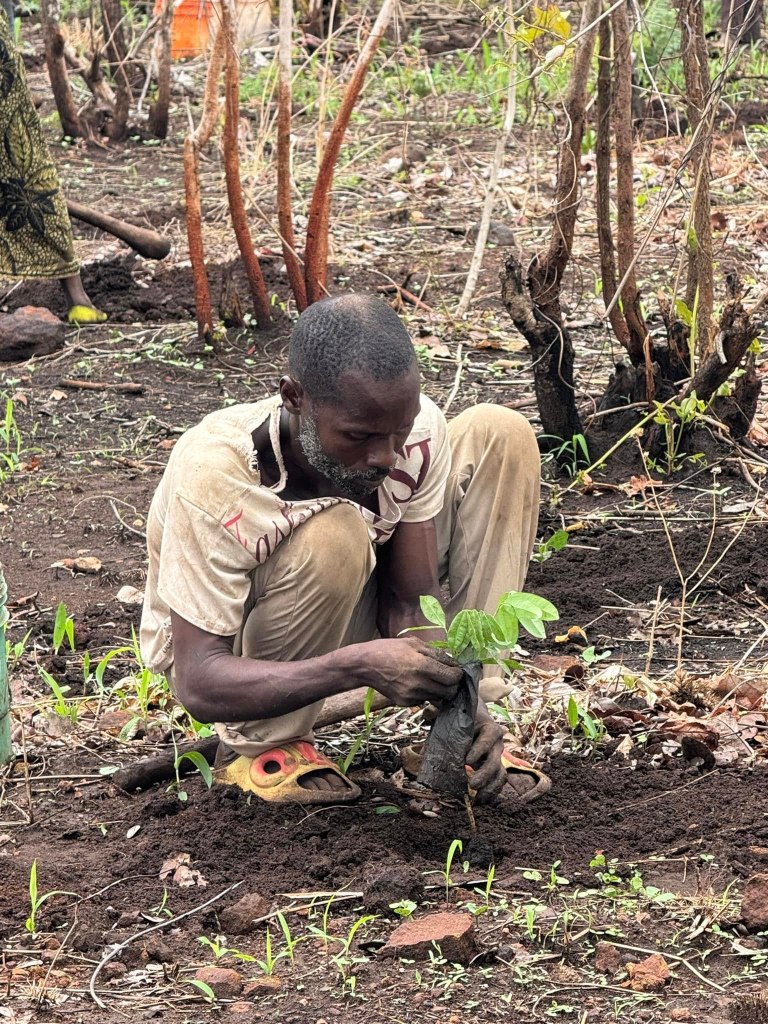
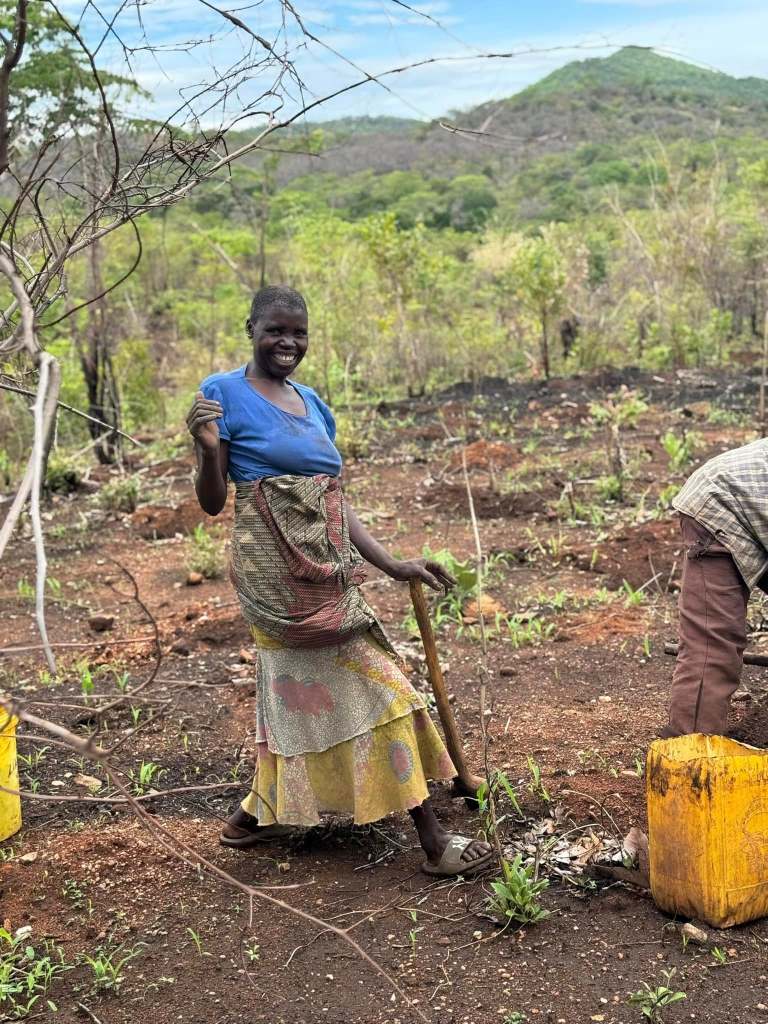
January 2025 Tree Planting We dug the planting pits and waited for the rains to come ! And we waited and waited as the rains came late. Then the first week of January they arrived and the fun began 🙂 Over 53,000 seedling which had been painstakingly sown, and cared for in nurseries for months were at last ready to be planted. 2 sites totally over 80 hectares, in 2 different districts, over 20 different indigenous tree species planted by over 2790 fabulous community members, both men and women This project could not have come at a better time as everyone was experiencing hunger so the cash for work allowed many to buy food! This project is part of #TERRAMATCH, one tree planted.
Contributed by Erin and Marianna B., Elefence supporters
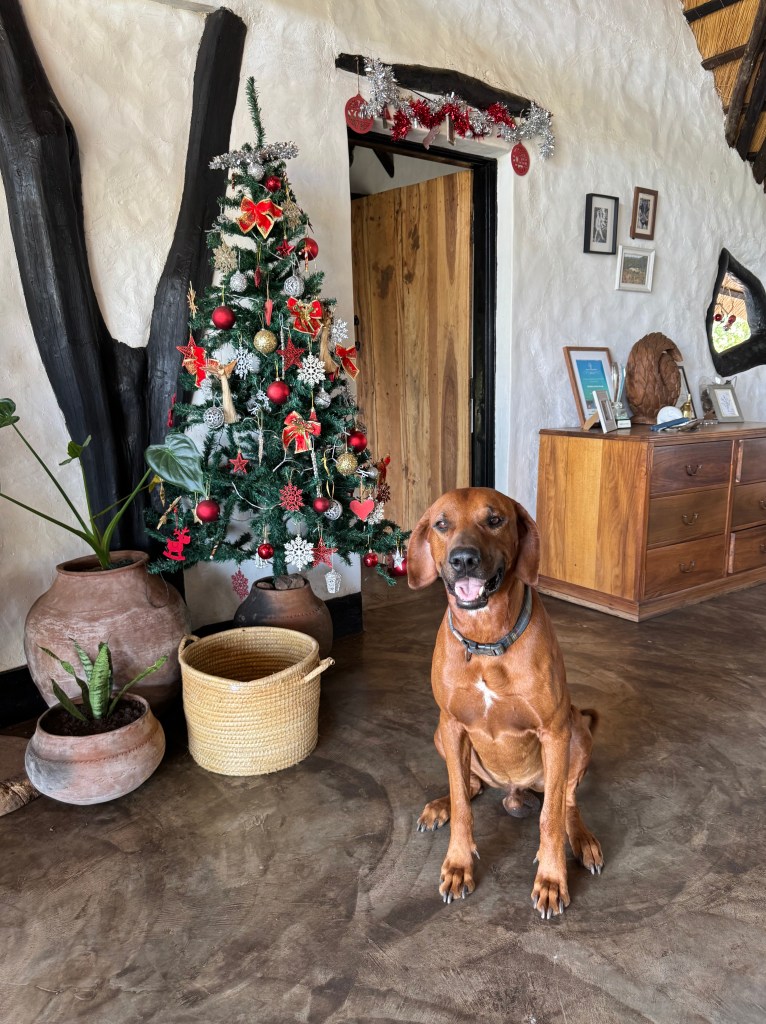
In an exclusive interview, brave canine cadet in the combat on poaching, Tarik, tells us about the dangers of life in the African bush–and why it’s worth the risk. After a concerning announcement was made by Wildlife Action Group and its partner organization, Elefence, on the rise of poaching in Malawi, we caught up with Tarik, one of WAG’s most devoted staff members, to learn more about the crisis. EB&MB: Tarik, thank you for taking the time to speak with the us about your mission in Malawi. After reading our interview with Dick Houston and Jon Stevenson of Elefence International last year, our readers may already be familiar with the work of Elefence and Wildlife Action Group in attempting to heal the poverty and poaching crisis which affects the lives of both people and animals in Africa today. However, we’d like to learn more from you about what life is really like on the ground for a WAG officer. Could you tell us a bit more about yourself? TARIK: “I’m a Rhodesian ridgeback, and my name means ‘Star,’ as I have a white 4 pointed patch on my chest which is somewhat typical of my breed. My sidekick, Lynn Clifford, is Field Manager for Wildlife Action Group, which is a Malawian non-profit conservation NGO. Our mission is to protect and restore Thuma and Dedza-Salima Escarpment Forest Reserves.” So how does your specific breed help you to carry out this mission? TARIK: “Well, my breed was originally developed in Rhodesia, now called Zimbabwe, where we were trained to hunt lions. So we can be really brave on the job. But actually, I myself had a very close call with a warthog. It was the last time Dick and Jon of Elefence were out here, and I can tell you, I learned a lesson the hard way. I took off chasing a warthog–because, you know, I can’t help myself–and unfortunately I came back with a large gash on my hindquarters. And that wasn’t my only close call. Here in Malawi, there are a couple of diseases carried by flies that are usually fatal to dogs. I barely survived one just before Dick and Jon arrived at the WAG base camp. The cure is almost as bad as the disease as they administer what is basically a poison to kill off the infection and many times the medicine kills the dog…but not me! Life is dangerous for a dog in the African bush, so I have to be brave, but my friend Jon says I’m just a big friendly puppy.” And as we’ve recently heard, life isn’t just dangerous for the dogs. Can you tell us about WAG Rangers’ recent encounter with poachers? TARIK: “Sadly, poaching is on the increase in Malawi and that keeps me and my co-worker, Lynn, busy on the job, trying to protect the special animals who live here and the forest they inhabit. It’s important to note that these poachers don’t hunt game for subsistence–no–it’s greed for profit. As Jon has told you before, pangolins, for instance, can be poached and sent as far away as China just to make a profit on the market for animal parts. And like pangolins, many of these animals–elephants, warthogs, kudus, duikers, and more —are threatened species, and on average a team of poachers can kill up to three animals each time they hunt! A huge loss for the Malawian government and the country’s prospects of being a tourism destination! It also touches me personally, because the poachers use dogs. The dogs track, hunt and catch the animal quickly which is then hacked and or speared to death by the poachers. I’m here to show that dogs can play a positive role in conservation. Between September and December 2024, our dedicated WAG rangers caught eleven dog poaching teams. I want to show that dogs can be on the right side of this war on wild animals.” And how do you help to play a positive role in supporting your fellow soldiers, Tarik? TARIK: “Well, I’m Field Manager Lynn’s constant companion. Basically, I’m her First Lieutenant. Together we make sure base camp is supplied and our rangers are supported. Poachers are aggressive and rangers are assaulted in the course of their duty! These rangers only make $3 bucks a day. That is why we rely on generous donors to keep these men in the field. Otherwise poachers would overrun the forest and kill more and more wild animals to oblivion.” WAG Rangers recently made several important arrests. Were any rangers injured in the line of duty? TARIK: “Yes, one of my ranger friends was badly injured, and I’m including a picture of him here just to show how brave he was. I knew how much that must hurt when I thought about my warthog gash. And poachers are scarier than warthogs. They go armed into the forest with dogs, bows, arrows and spears! They don’t understand what we’re trying to protect–but, like Nelson Mandela said, “If we do not do something to prevent it, Africa’s animals and the places in which they live will be lost to our world and her children forever.” So we are here taking these risks. Last week two suspects were arrested and this morning our brave anti-poaching rangers arrested 3 more, one being one of the most notorious poachers from Dedza who has been a very large thorn in our side all of this year! A second offender! All suspects have been handed over to the police for prosecution. Another win for our rangers!!” Tarik, our Head Biologist, who is both a dog lover and passionate conservationist, is concerned about the fate of the dogs involved in the poaching. What happens to them when the poachers get arrested? TARIK: “Many times the dogs escape when the owners are caught and run loose to kill again. Sadly the dogs that are caught must be euthanized. They have been trained to hunt and bring down game and are loyal to only one master. Lynn is a dedicated dog lover, and she and I are heartbroken that this step has to be taken but there is no hope of rehabilitating these dogs. It is our goal to make poaching with dogs so unprofitable and have such strict penalties that the practice will stop. Life is hard in the African bush–but it’s worth it.”
Interview conducted by Erin B. and Marianna B., with the assistance of Lynn Clifford of WAG and Jon Stevenson of Elefence.
















 Elefence International, Inc.