

One of WAG’s missions in managing the forest reserves is bringing back populations of animals which have been lost. Basically they were hunted out of existence. For the most part they were not killed by local villagers to feed their families but rather majority of wildlife loss was due to organized gangs killing animals to supply the bushmeat trade.
Bushmeat is a term used to describe wildlife hunted for human consumption. Managed properly it can be a sustainable resource to provide protein for poor communities. Unfortunately it has grown into a criminal enterprise which endangers humans as well as wildlife. As of 2016 more than 300 species in Africa, Asia and Latin America are endangered due to unregulated hunting. By and large the bushmeat harvested does not go to poor communities but rather wealthier populations who can afford to pay a premium for what is a traditional food. Bushmeat also endangers humans by spreading pathogens and parasites. Diseases like Ebola and HIV both developed in animals and jumped to humans.
In 2022 WAG distributed waterbuck, impala, and sable antelope back into Thuma and Dedza-Salima Forest Reserves. Since then they have been documented as having established a breeding population. More recently zebra were brought in and seem to have adapted well. Returning native wildlife to the forest is critical in maintaining the biodiversity necessary for the health of the ecosystem. At some point it may be necessary to introduce predators to control the populations naturally but that is a much more complicated issue.
Waterbuck, impala and sable antelope being released in Thuma Forest Reserve.
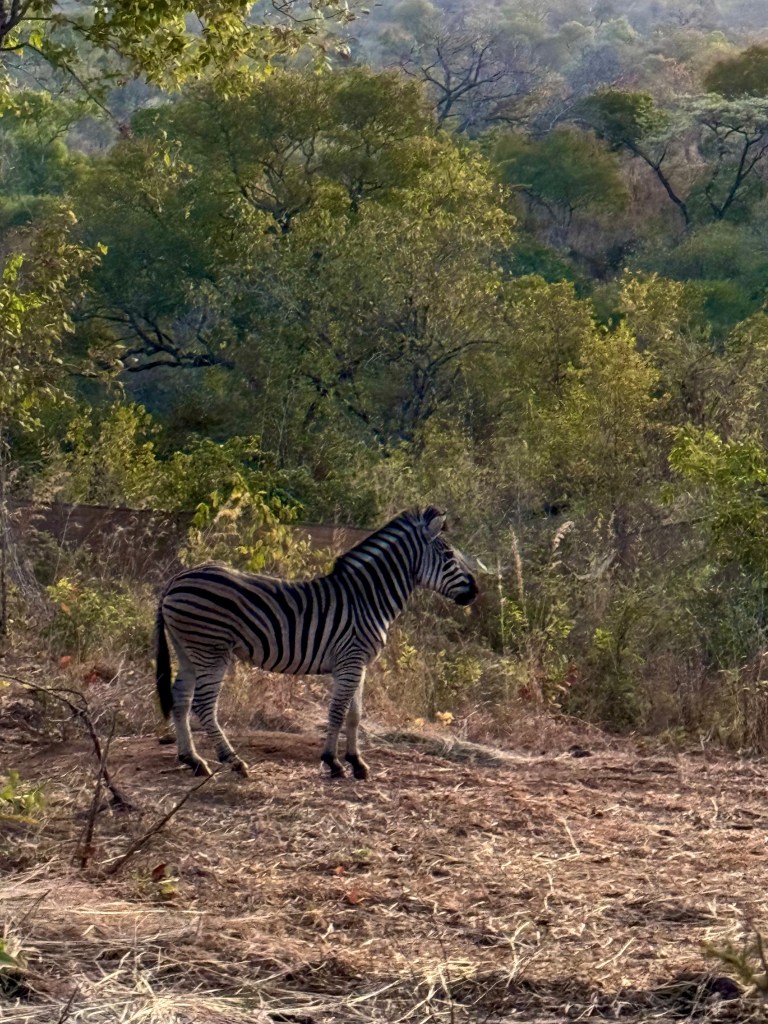
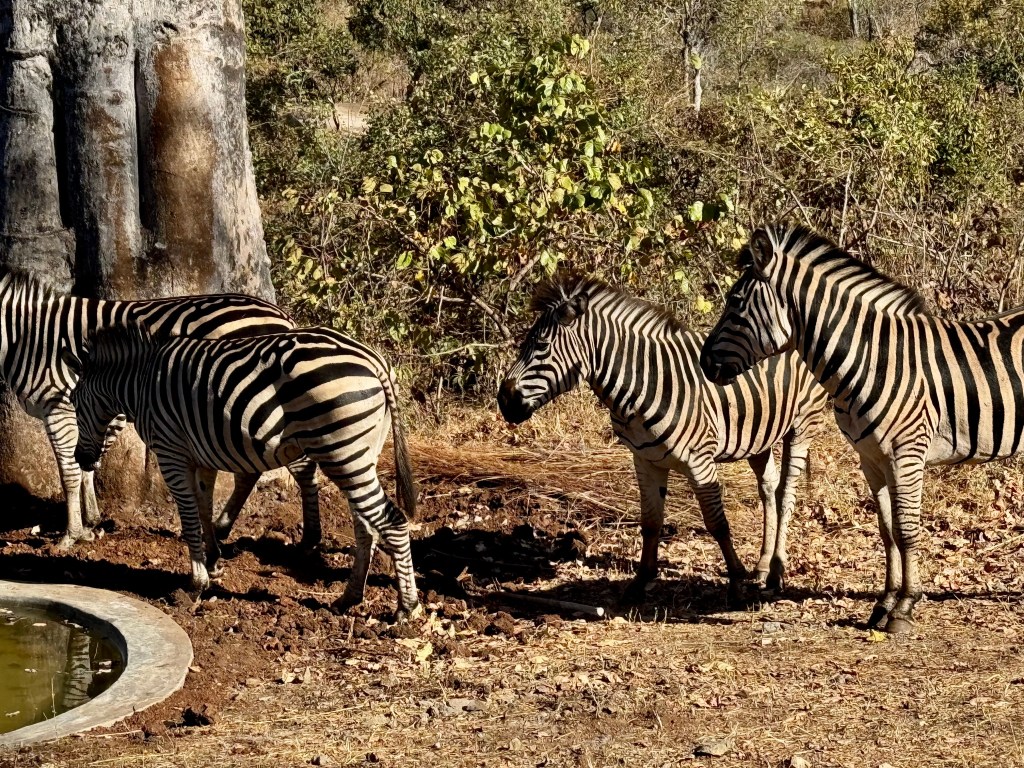
Zebras recently returned to Thuma. Interesting fact: Researchers have learned that the zebras stripped pattern confuses insects vision resulting in half the number of insects landing on their body as compared to other animals. Aint nature amazing!

