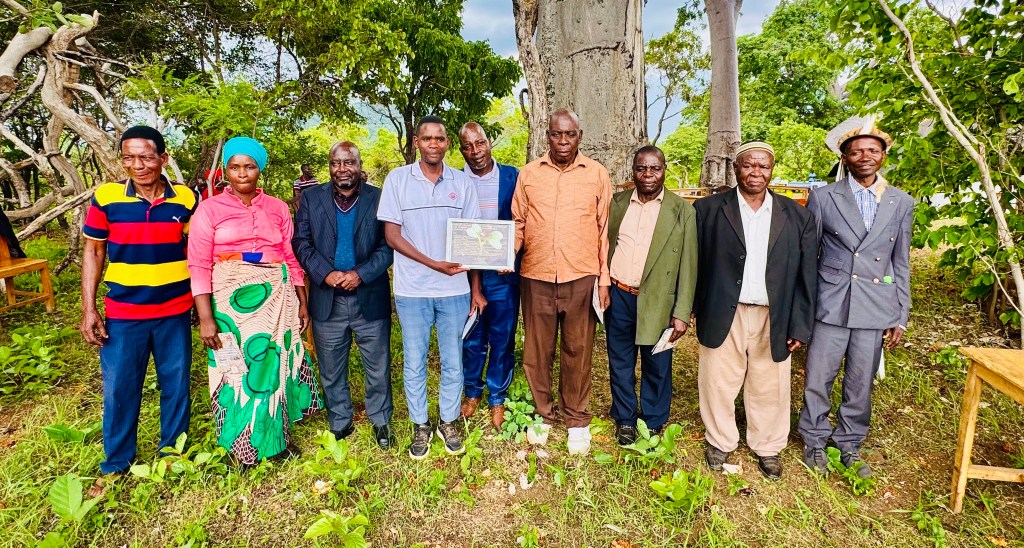
Chief’s Council 2025

Malawi was formally called Nyasaland and became independent from British rule in 1964.

Malawi is a unitary presidential republic with three branches of government consisting of the executive, legislative, and judicial branches. The president is both the Head of State and the Head of Government. So on a national level it operates very much as most constitutional democracies do. Out in the rural areas which covers most of the country things are a bit different.

The local villages are still very much tribal in nature with a village being controlled by a chief. A chief has significant power over how a village is operated as well as how it interacts with those outside. A chief receives the title from a lineage which passes down through the mother. Interestingly a woman can be a chief if no male heir exists.

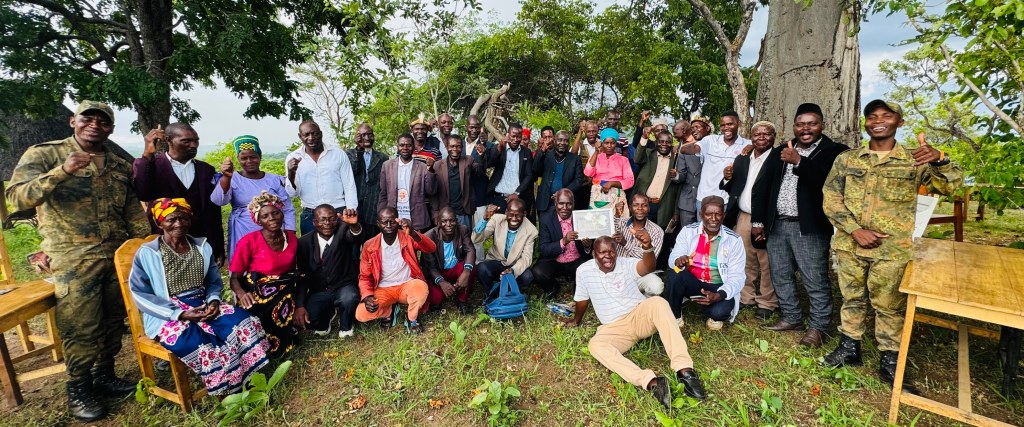
In 2022 Dick and I were privileged to attend a council of chiefs organized by Lynn Clifford the Field Operations Manager of the Wildlife Action Group (WAG). The meeting was called to discuss problems which existed in the villages and how they affected the two forest reserves. While we could not understand most of what was said each chief had the opportunity to speak about their situation. It was truly an opportunity to see how things work on a local level.

In late 2025 there was a coordinated attack on the forest reserves resulting in the slaughter of wildlife, the cutting of trees and destruction of part of the fence. It was most likely organized by criminal gangs supported by some of the local population. The WAG rangers are not equipped to handle a large-scale assault like this and the local police were called in to put down the incursion and restore order.

In order to prevent this again Lynn called a chiefs meeting from the affected areas. Most of the local population supports the WAG efforts to protect the forests and appreciates the help that WAG provides with agricultural advice, livestock support, water wells and education of students. At the meeting individual chiefs were asked to sign a pledge to support WAG’s efforts and assist with the reporting of criminal activity and participating in conservation efforts.

The pledges were physically signed by individual chiefs and were not some empty promises. A signed pledge by a chief had strong cultural significance and violation of the oath was regarded as shameful and rarely breached. The hope is that these pledges will prevent any occurrence of intrusion into the reserves.
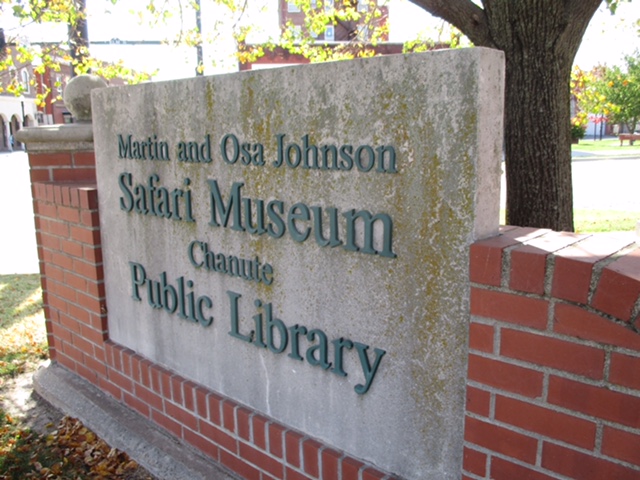
The Martin and Osa Johnson Safari Museum

By Dick Houston and Conrad Froehlich

Martin and Osa Johnson. The FIRST motion picture explorers in history. In this photo, Martin and Osa film the Samburu warriors in northern Kenya, 1920s.

Martin and Osa Johnson were a swashbuckling husband-and-wife filmmaker team who “invented” the first non-hunting wildlife movie documentaries in history — long before Animal Planet.

PART ONE:

In a previous Elefence Blog post, we presented a video about Martin and Osa Johnson called “Wings Over Tanzania.”

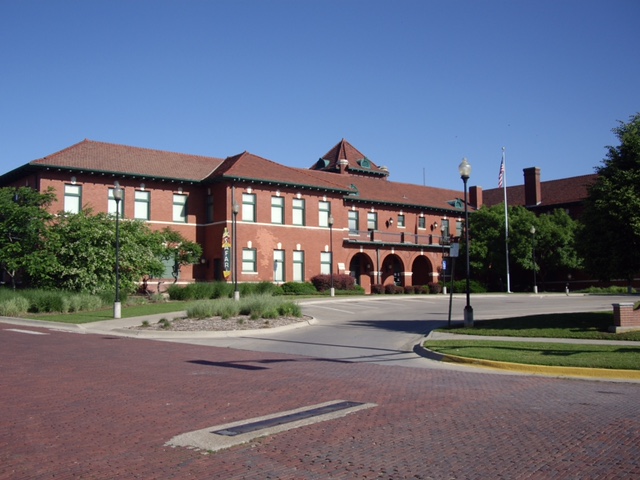
One of the most unique museums in the world preserves the lost wildlife and tribal worlds of the Johnsons: the MARTIN AND OSA JOHNSON SAFARI MUSEUM.

The Museum is based in Chanute, Kansas — OSA’s hometown.

The Museum’s Director, Conrad Froehlich, is an Honorary Trustee of Elefence International.

Note: parts two, three, and four will follow in subsequent posts.

The Martin and Osa Johnson Safari Museum is the epicenter of the motion picture history of pioneering African safaris, Borneo, and South Sea Island adventures in the early 1900s.

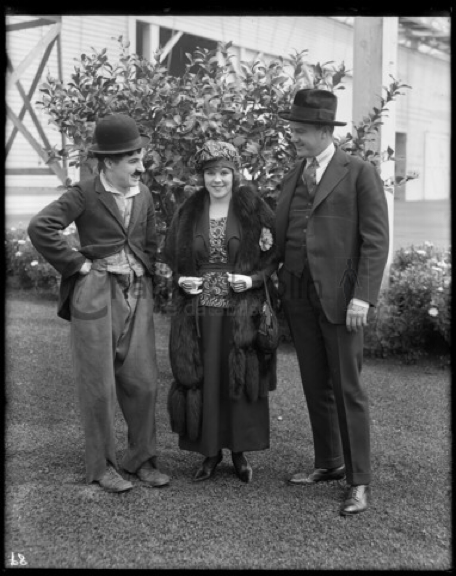
In the 1920s and 30s, Martin and Osa Johnson were household names as recognizable as Charlie Chaplin, Douglas Fairbanks, and Amelia Earhart.

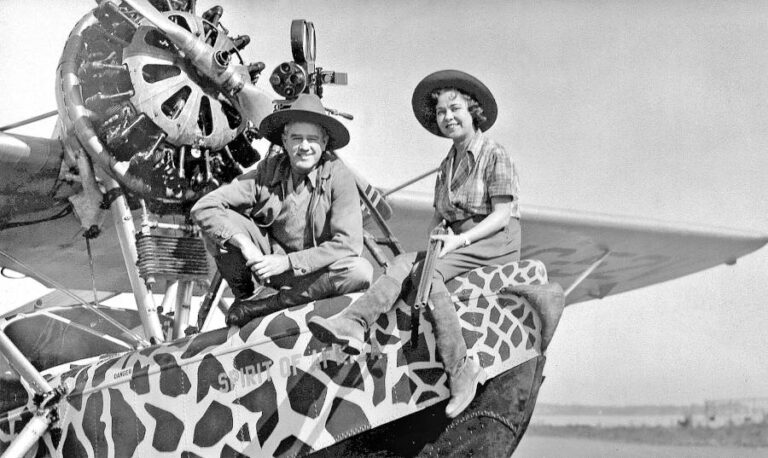
The Johnsons pioneered flights over Africa — some 60,000 miles over the Dark Continent of unexplored jungles. They used two Sikorsky amphibious planes, necessary to land on rivers and lakes since there were still few wilderness airstrips in Africa in the early 1930s.

They barely survived some harrowing near-death-defying experiences in flight. At that time, there was no radar, no airfield radio communication in remote Africa locales — flying blindly into horrific rain storms with ZERO visibility. One can only imagine the terror — and the guts it took to do that. As a result, they preserved aerial images of once pristine landscapes that no longer exist.

No wonder their motion pictures were always box office hits on Broadway — and at hometown theaters across America and around the world. The Johnsons also pioneered the first all-talking sound motion pictures in Africa.


Please stay tuned for Parts two, three, and four in succeeding posts. We’ll tell the fascinating story of the Johnsons in a little more detail. And how their historic photographic record is preserved — including their one-of-a-kind original artifacts of exotic travels — at the award-winning Martin and Osa Johnson Safari Museum.

And learn how the facility is a living museum today for research — and creates awareness for preservation of endangered elephants and Africa’s shrinking wild places.