This is a summary of an email we received from Lynn upon returning to Thuma Forest Reserve after a holiday back in her native country of Ireland. We were becoming concerned as we had not heard from her in several weeks.
“Sorry for the lack of response but my holiday turned into a remote job. Spent 2 weeks fundraising which was good but we did not meet our target for salaries and operations. That along with family sickness and a death in the family consumed all of my time.
I am back 5 days and it has been nonstop trying to resolve urgent things. 3 vehicles off the road with serious issues, 5 serious staff health crisis (one whole day taking them to doctors and hospital but we saved one’s life so it was worth it).
Poaching has risen sharply and we are overrun with wildlife and forest crime. It is scary and we have lost 4 rangers who have resigned as they feared for their lives. (See our earlier post about how being a forest ranger is one of the most dangerous job in the world).
We have a new president and things are changing rapidly. School fees, governance, sugar etc are hit with rapid prices. Fuel alone is up 33%. Beer too for which I am not happy.
The new government is stopping any child who has not done well from going on to high school even if they can afford it. This, however, is giving us an opportunity to promote 2 excellent students to go to a top government school. The drawback is that it is much more expensive but we believe it will be worth the extra cost. Of the 10 students we sponsored last year in secondary school 8 sat for different final exams and all passed. 1 failed and will repeat and one girl has not returned to school.
Fence materials have arrived – yippee – I spent Friday in the city clearing customs and transporting them to HQ. (We will have a report in the future about Elefence’s contribution to the next phase of construction).
We reintroduced Zebras before I left and they are doing great. One herd hangs around the lodge and the other around the HQ camp. Today I saw with my own eyes for the first time eland and nyala …..so exciting. We hope to get new ones reintroduced next month and after that my dream …. leopard.
A critical issue is that fertilizer costs have skyrocketed and we are short $3000 to purchase what is need for many local families. Anything you can do will be much appreciated.” ( Note: Elefence is going to fund $3000 from our generous supporters toward this cost. Planting season begins in December before the rains come. Without adequate fertilizer the yields will fall significantly making starvation a real threat.)
Contributed by Erin and Marianna B., Elefence supporters
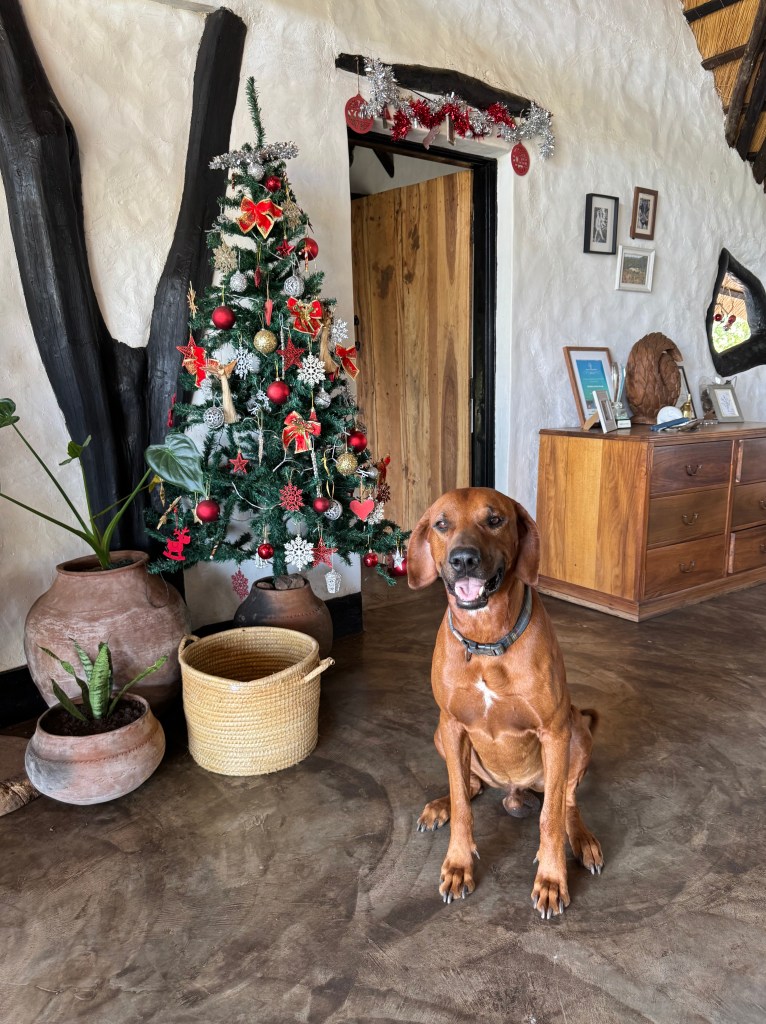
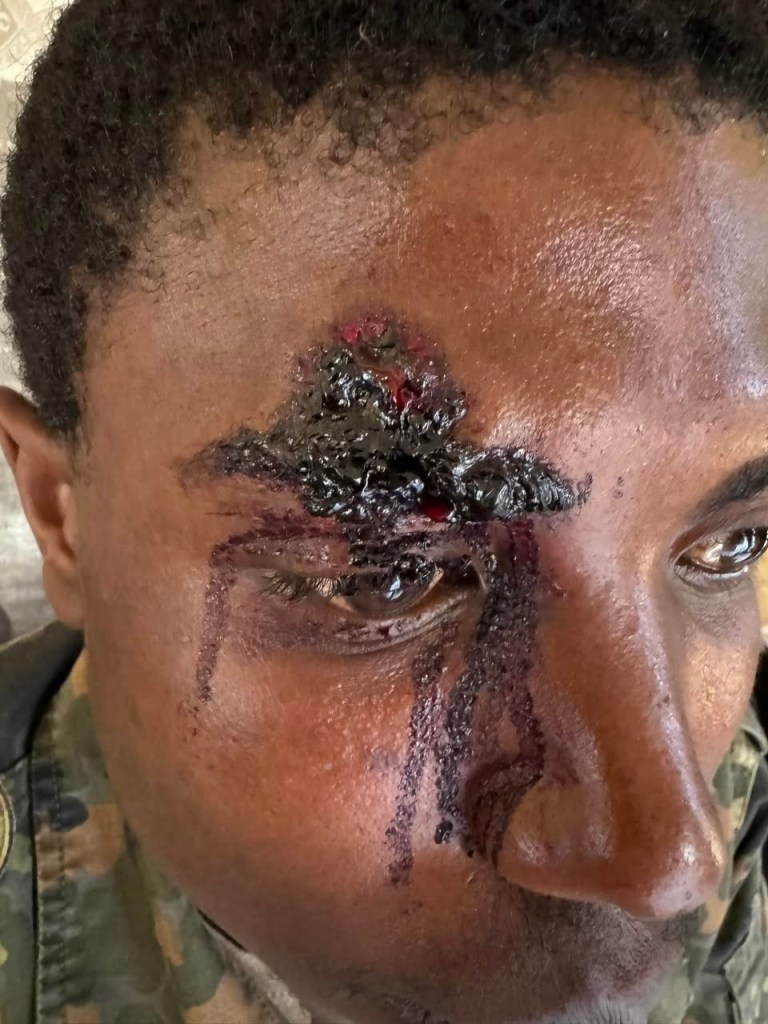
In an exclusive interview, brave canine cadet in the combat on poaching, Tarik, tells us about the dangers of life in the African bush–and why it’s worth the risk. After a concerning announcement was made by Wildlife Action Group and its partner organization, Elefence, on the rise of poaching in Malawi, we caught up with Tarik, one of WAG’s most devoted staff members, to learn more about the crisis. EB&MB: Tarik, thank you for taking the time to speak with the us about your mission in Malawi. After reading our interview with Dick Houston and Jon Stevenson of Elefence International last year, our readers may already be familiar with the work of Elefence and Wildlife Action Group in attempting to heal the poverty and poaching crisis which affects the lives of both people and animals in Africa today. However, we’d like to learn more from you about what life is really like on the ground for a WAG officer. Could you tell us a bit more about yourself? TARIK: “I’m a Rhodesian ridgeback, and my name means ‘Star,’ as I have a white 4 pointed patch on my chest which is somewhat typical of my breed. My sidekick, Lynn Clifford, is Field Manager for Wildlife Action Group, which is a Malawian non-profit conservation NGO. Our mission is to protect and restore Thuma and Dedza-Salima Escarpment Forest Reserves.” So how does your specific breed help you to carry out this mission? TARIK: “Well, my breed was originally developed in Rhodesia, now called Zimbabwe, where we were trained to hunt lions. So we can be really brave on the job. But actually, I myself had a very close call with a warthog. It was the last time Dick and Jon of Elefence were out here, and I can tell you, I learned a lesson the hard way. I took off chasing a warthog–because, you know, I can’t help myself–and unfortunately I came back with a large gash on my hindquarters. And that wasn’t my only close call. Here in Malawi, there are a couple of diseases carried by flies that are usually fatal to dogs. I barely survived one just before Dick and Jon arrived at the WAG base camp. The cure is almost as bad as the disease as they administer what is basically a poison to kill off the infection and many times the medicine kills the dog…but not me! Life is dangerous for a dog in the African bush, so I have to be brave, but my friend Jon says I’m just a big friendly puppy.” And as we’ve recently heard, life isn’t just dangerous for the dogs. Can you tell us about WAG Rangers’ recent encounter with poachers? TARIK: “Sadly, poaching is on the increase in Malawi and that keeps me and my co-worker, Lynn, busy on the job, trying to protect the special animals who live here and the forest they inhabit. It’s important to note that these poachers don’t hunt game for subsistence–no–it’s greed for profit. As Jon has told you before, pangolins, for instance, can be poached and sent as far away as China just to make a profit on the market for animal parts. And like pangolins, many of these animals–elephants, warthogs, kudus, duikers, and more —are threatened species, and on average a team of poachers can kill up to three animals each time they hunt! A huge loss for the Malawian government and the country’s prospects of being a tourism destination! It also touches me personally, because the poachers use dogs. The dogs track, hunt and catch the animal quickly which is then hacked and or speared to death by the poachers. I’m here to show that dogs can play a positive role in conservation. Between September and December 2024, our dedicated WAG rangers caught eleven dog poaching teams. I want to show that dogs can be on the right side of this war on wild animals.” And how do you help to play a positive role in supporting your fellow soldiers, Tarik? TARIK: “Well, I’m Field Manager Lynn’s constant companion. Basically, I’m her First Lieutenant. Together we make sure base camp is supplied and our rangers are supported. Poachers are aggressive and rangers are assaulted in the course of their duty! These rangers only make $3 bucks a day. That is why we rely on generous donors to keep these men in the field. Otherwise poachers would overrun the forest and kill more and more wild animals to oblivion.” WAG Rangers recently made several important arrests. Were any rangers injured in the line of duty? TARIK: “Yes, one of my ranger friends was badly injured, and I’m including a picture of him here just to show how brave he was. I knew how much that must hurt when I thought about my warthog gash. And poachers are scarier than warthogs. They go armed into the forest with dogs, bows, arrows and spears! They don’t understand what we’re trying to protect–but, like Nelson Mandela said, “If we do not do something to prevent it, Africa’s animals and the places in which they live will be lost to our world and her children forever.” So we are here taking these risks. Last week two suspects were arrested and this morning our brave anti-poaching rangers arrested 3 more, one being one of the most notorious poachers from Dedza who has been a very large thorn in our side all of this year! A second offender! All suspects have been handed over to the police for prosecution. Another win for our rangers!!” Tarik, our Head Biologist, who is both a dog lover and passionate conservationist, is concerned about the fate of the dogs involved in the poaching. What happens to them when the poachers get arrested? TARIK: “Many times the dogs escape when the owners are caught and run loose to kill again. Sadly the dogs that are caught must be euthanized. They have been trained to hunt and bring down game and are loyal to only one master. Lynn is a dedicated dog lover, and she and I are heartbroken that this step has to be taken but there is no hope of rehabilitating these dogs. It is our goal to make poaching with dogs so unprofitable and have such strict penalties that the practice will stop. Life is hard in the African bush–but it’s worth it.”
Interview conducted by Erin B. and Marianna B., with the assistance of Lynn Clifford of WAG and Jon Stevenson of Elefence.
A wounded ranger is pictured after a recent encounter with a gang of poachers. Fortunately it was only a flesh wound. But a WAG ranger was killed by a poacher a few years ago and another ranger was recently killed by an elephant while a third was gored by a cape buffalo. A forest ranger’s job is one of the most dangerous in the world. About 150 rangers worldwide die each year protecting wildlife according to the Thin Green Line (TGL) Foundation, an international charity.
Conflicts with poachers are responsible for 50 to 70% of ranger deaths on the job, according to data from TGL. The rest are attributed to daily challenges such as hazardous environments and dangerous animals – especially elephants and Cape buffalos.
Africa is know for its vast nature reserves, ecotourism and educational approach to conservation. Unfortunately, armed poachers and militant gangs are targeting African rangers. In Africa, an astounding 82% of rangers said they have faced a life-threatening situation in the line of duty.
WOULD YOU TAKE ON THIS JOB FOR $3 A DAY? This is why Elefence, in partnership with Malawi’s Wildlife Action Group (WAG), works to find financial support for the 51-man strong team of rangers. Elefence and WAG initiated a Ranger Cash Reward Program for various rangers who’ve shown meritorious work in the field protecting elephants and other highly endangered wild animals.
Keep in mind, these men struggle to feed their families while they are on patrol in the forest 25 days a month living in primitive conditions with no access to emergency medical care. If badly wounded in the field their chances of survival are slim. There are no medics on the patrol teams. ( Our pioneer Elefence trustee, Max Seymour, was a battlefield medic in Viet Nam, and knows well how crucial immediate emergency care is in the field.) {see Elefence team bios on our website, http://www.elefence.org.}
Elefence has just given the 51 rangers Christmas bonuses of $10 each. It is humbling and emotionally gripping to see these men so thrilled to receive such a modest amount. We wish it could be more , but we can only give what is contributed since Elefence and WAG are small organizations, continually and frustratingly, challenged to find funding. Sad that in a world run by billionaires these brave rangers who work to save fragile ecosystems and wildlife for the world’s future, scramble for crumbs.
Without funding, the rangers of Thuma and Dedza-Salima forest reserves will not be able to continue their work. If you are interested in helping these brave men, please contact us directly or make a contribution directly on the Elefence website. If you have donated recently we thank you -and be assured that donations go directly to our efforts in Malawi. Elefence International Inc. is a USA registered 501(c)3 charity and all contributions are tax-exempt.
Please remember to frequently check our blog for more stories about the rangers and their ongoing work to protect the forest and its wildlife
Merry Christmas everyone from ELEFENCE and WAG. Thank you for reading.
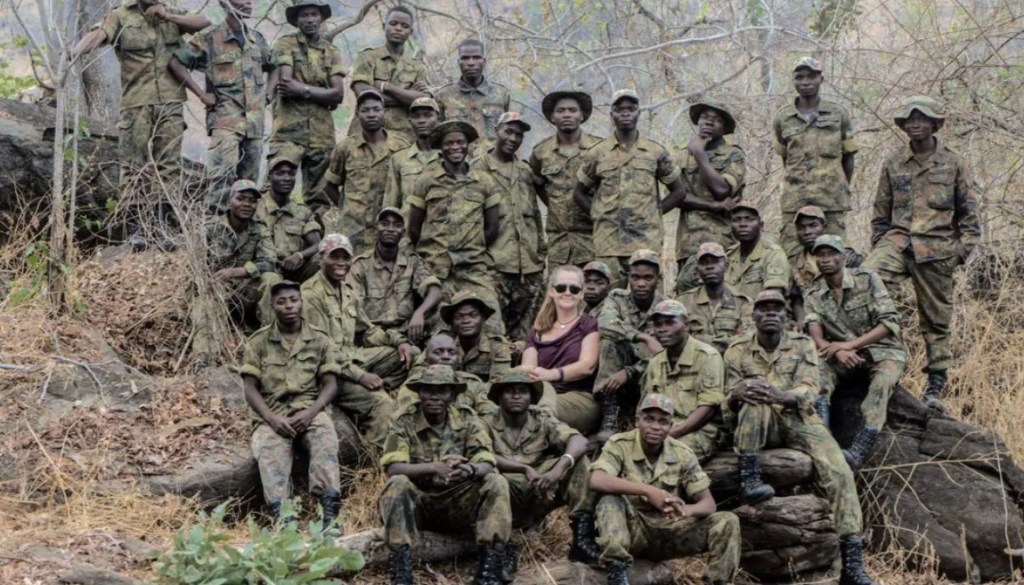
Lynn Clifford, WAG Field Officer Of Thuma and Dezdza-Salima Forest Reserves, is seen surrounded by her brave anti-poaching rangers who have recently expanded to 51 members. Thanks to Lynn and her team the Thuma Forest Reserve is now the most protected forest in Malawi. Work continues in the Dedza-Salima Reserve.


 Elefence International, Inc.