

As we have stated on our opening page the production of charcoal is the primary driver of the destruction of Malawi’s forests. Malawi has no significant natural resources, i. e. gas or oil and no significant amount of minerals. It produces little of its own electricity which it must purchase from outside the country often causing blackouts and shortages because it cannot pay for it. The only fuel for cooking or heating comes from charcoal which is produced by cutting trees and heating the wood in crude kilns. This is totally illegal but the government does not enforce it since there is no viable alternative for its population.
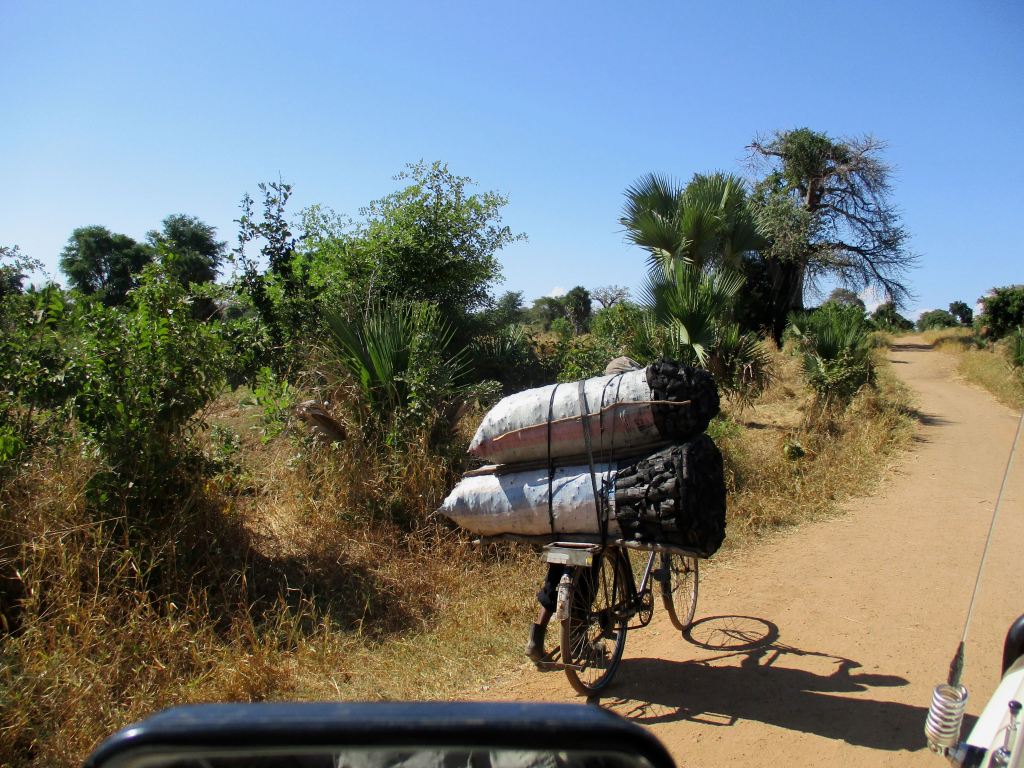
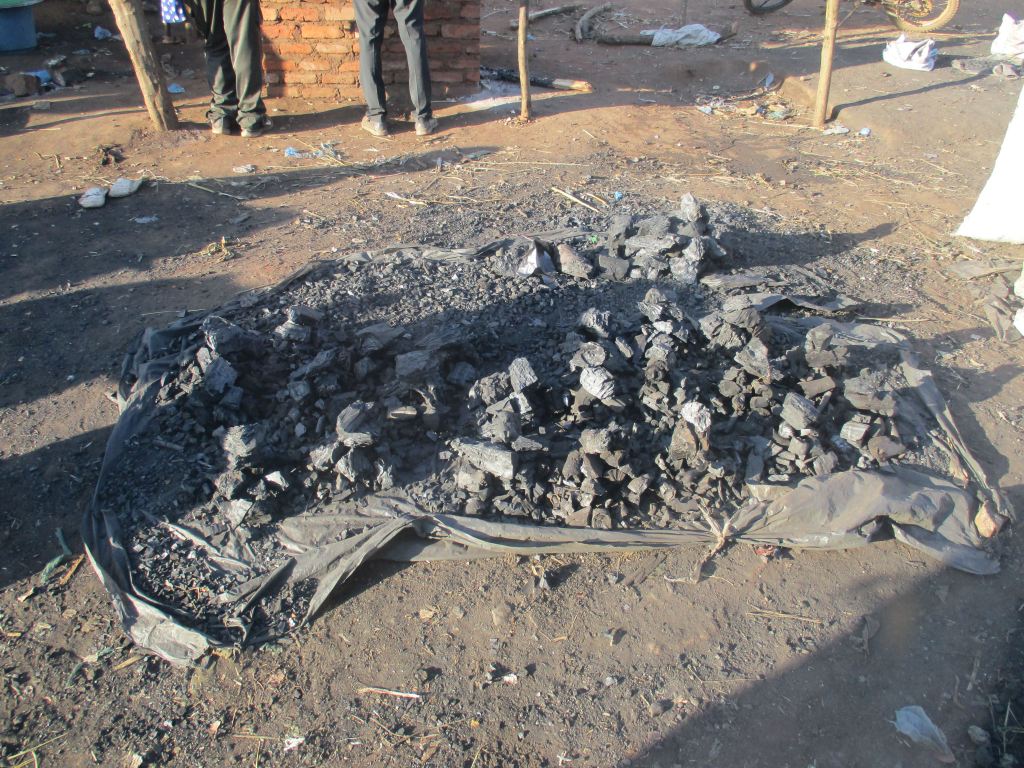
The charcoal is produced in remote locations and then must be transported to population centers for sale. Every day we saw individuals pushing loads of charcoal stacked high on bicycles. The men doing this would push the loads 6 – 10 miles, up and down hills and be paid a pittance for their efforts. The charcoal was spread on the ground and sold in small bags to women who could then go home and cook a hot meal for their family.

Malawi does have abundant sunshine and solar ovens are an alternative but the cost is prohibitive. There has been discussions about community solar ovens for cooking and baking but as yet there is no way to fund them. So for now the country continues in this death spiral of stripping itself of its beautiful forests.
A bright spot is the commercialization of bamboo which grows naturally in Malawi and is abundant. Villages are planting stands of bamboo which can be used as a fuel directly or made into charcoal. Villagers can secure a permit to go into the forest and harvest bamboo for a variety of purposes not the least of which is construction. Of course a ranger must escort them and stand guard to protect the workers from elephants and Cape Buffalo. Bamboo is light, strong, long-lasting, takes almost no care and grows quickly. Efforts are foregoing to expand the use of this versatile material.
 Elefence International, Inc.